
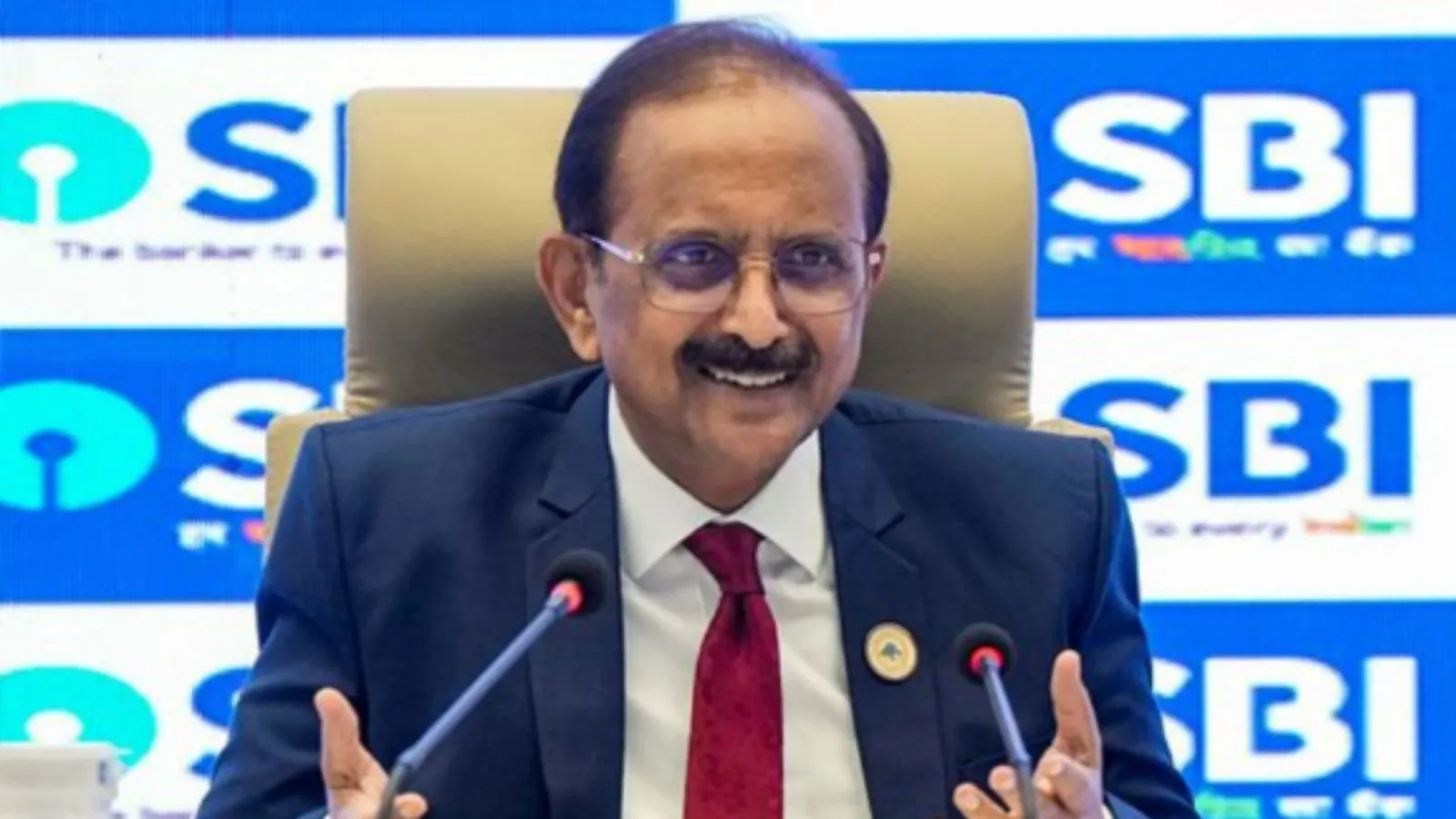
New Delhi: State Bank of India (SBI) Chairman CS Setty said India's economic growth momentum is likely to stabilise if the Reserve Bank of India (RBI) keeps policy interest rates unchanged, citing the importance of balancing growth and inflation amid persistent price pressures.
Speaking at the Citi 2026 India Conference, Setty noted that financial markets broadly expect the RBI's Monetary Policy Committee (MPC) to maintain the current policy stance when it announces its decision on June 5.
"Growth and inflation dynamics are more important. I think a pause will definitely help us to stabilise in terms of ensuring that smooth growth rates are achieved," Setty said.
Focus Areas for a Developed India
Setty said India's journey toward becoming a developed economy will require sustained attention to several key priorities:
* Promoting rural prosperity through greater financial inclusion and economic opportunities. * Accelerating urban transformation with improved infrastructure. * Investing in human capital to fully leverage India's demographic dividend. * Building globally competitive manufacturing capabilities.
He added that banks must continue evolving to support these ambitions by adopting artificial intelligence (AI), integrating environmental, social and governance (ESG) principles, and maintaining strong governance standards.
Banking's Digital Transformation
Reflecting on the banking sector's evolution over nearly four decades, Setty said the industry has moved from manual processes and limited credit availability to a highly digitised ecosystem that plays a central role in India's economic development.
He identified India's digital public infrastructure—including the JAM Trinity (Jan Dhan, Aadhaar and Mobile) and the Unified Payments Interface (UPI)—as a major driver of financial inclusion and efficiency.
According to Setty, SBI processes around **250 million UPI transactions every month**, while maintaining a technical decline rate of approximately **0.1%**, underscoring the scale and reliability of its digital banking operations.
Financial Inclusion and Women's Empowerment
Setty highlighted the contribution of microfinance in expanding financial access, noting that around **95% of borrowers are women**. He said wider access to financial services has supported rural development and contributed to poverty reduction by enabling entrepreneurship and income generation.
### AI as a Productivity Driver
Discussing technology, Setty described artificial intelligence as a productivity enhancer rather than a replacement for human capabilities. He said SBI is adopting responsible and ethical AI to improve operational efficiency while serving its customer base of more than **530 million** people.
CBDC Over Private Cryptocurrencies
Setty also emphasised the importance of the Central Bank Digital Currency (CBDC), saying it offers opportunities for programmable and targeted government benefit transfers. He contrasted this focus with private cryptocurrencies, indicating that the banking sector sees greater long-term potential in the RBI-backed digital currency.
Manufacturing and Infrastructure to Drive Growth
Looking ahead, Setty identified electronics manufacturing and the electrification of public transportation—including Indian Railways—as important engines of future economic growth. He said continued investment in infrastructure, innovation and digital technology will remain essential to sustaining India's long-term development trajectory.