
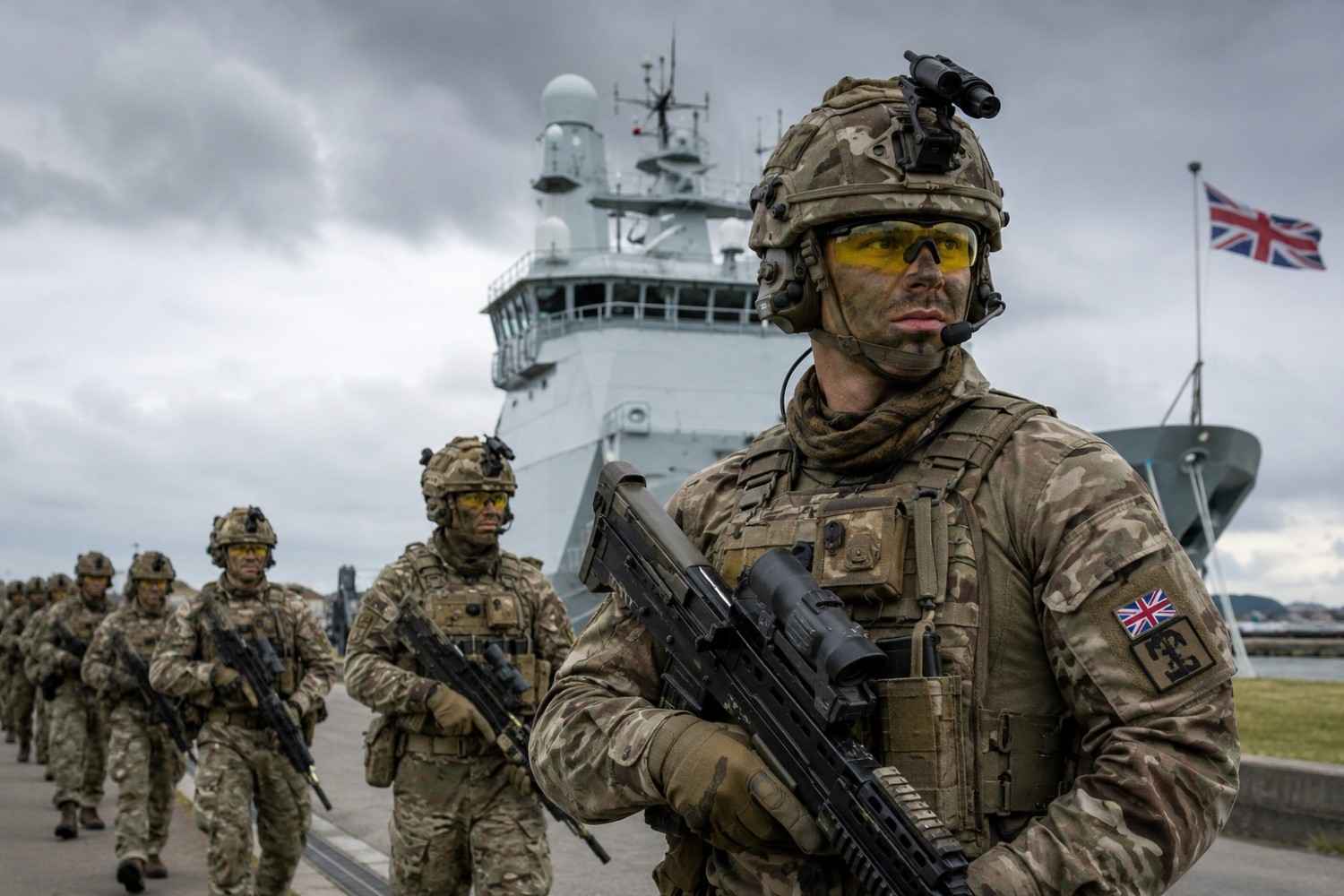
The government has unveiled its long-awaited Defence Investment Plan (DIP), promising a major overhaul of Britain's armed forces while reigniting debate over whether the money on the table is enough to match the ambitions being announced.
Ministers say the plan will deliver the largest increase in defence spending since the Cold War, taking the annual defence budget from £54 billion in 2024 to £80 billion by 2029. In total, £298 billion is earmarked for defence over the next four years, including an additional £15 billion in new funding.
However, defence chiefs had reportedly sought an extra £28 billion, and opposition parties have already labelled the package underfunded. The controversy has been increase by the recent resignation of Defence Secretary John Healey, who argued that the original plan did not provide sufficient resources to meet Britain's growing security challenges.
One of the biggest changes is a shift away from expensive, heavily crewed warships and aircraft towards smaller, cheaper, autonomous systems. Drawing lessons from the wars in Ukraine and the Middle East, the government wants the military to operate as a "hybrid force", combining traditional platforms with fleets of drones operating on land, in the air, and at sea.
For the Royal Navy, that means the planned Type 83 destroyers will no longer be built. Instead, new Common Combat Vessels will act as command hubs for autonomous vessels designed to patrol the North Atlantic and protect critical infrastructure such as undersea data cables.
The plan also commits £63 billion to maintaining Britain's nuclear deterrent, including warheads, submarines, and supporting infrastructure. New F-35A aircraft capable of carrying tactical nuclear weapons will be purchased to support NATO's nuclear arrangements, although they are not expected to enter service this decade.
Another £11 billion will replenish weapons and ammunition sent to Ukraine, while £8 billion is allocated to the next-generation combat aircraft programme being developed with Italy and Japan. The RAF's future vision includes pilots flying alongside swarms of autonomous drones rather than operating alone.
Air and missile defence receives £790 million for new radars, sensors, command systems, and counter-drone technology. Military officials have welcomed the investment but continue to warn that the UK lacks a extended defence against ballistic and hypersonic missiles.
Protecting critical infrastructure is another priority. The government is spending £330 million on safeguarding undersea cables and energy pipelines after growing concern about Russian interest in mapping vulnerable sections of the network that carries most of the UK's international data and financial traffic.
The Army is set to grow modestly from 74,000 to 76,000 personnel, but ministers argue the real increase will be in firepower rather than headcount. The goal is to make the Army ten times more lethal by integrating drones with traditional weapons systems.
Not every programme survives the review. The long-serving Storm Shadow missile will eventually be replaced by a cheaper successor called Stratus, while some civil service posts will be cut and the planned expansion of the cadet forces has been postponed until after 2030.
The result is a defence strategy that promises cutting-edge technology, more drones, stronger deterrence, and a military designed for future wars—while critics continue to ask whether Britain is trying to build a 21st-century force with a budget that still belongs to the past.