
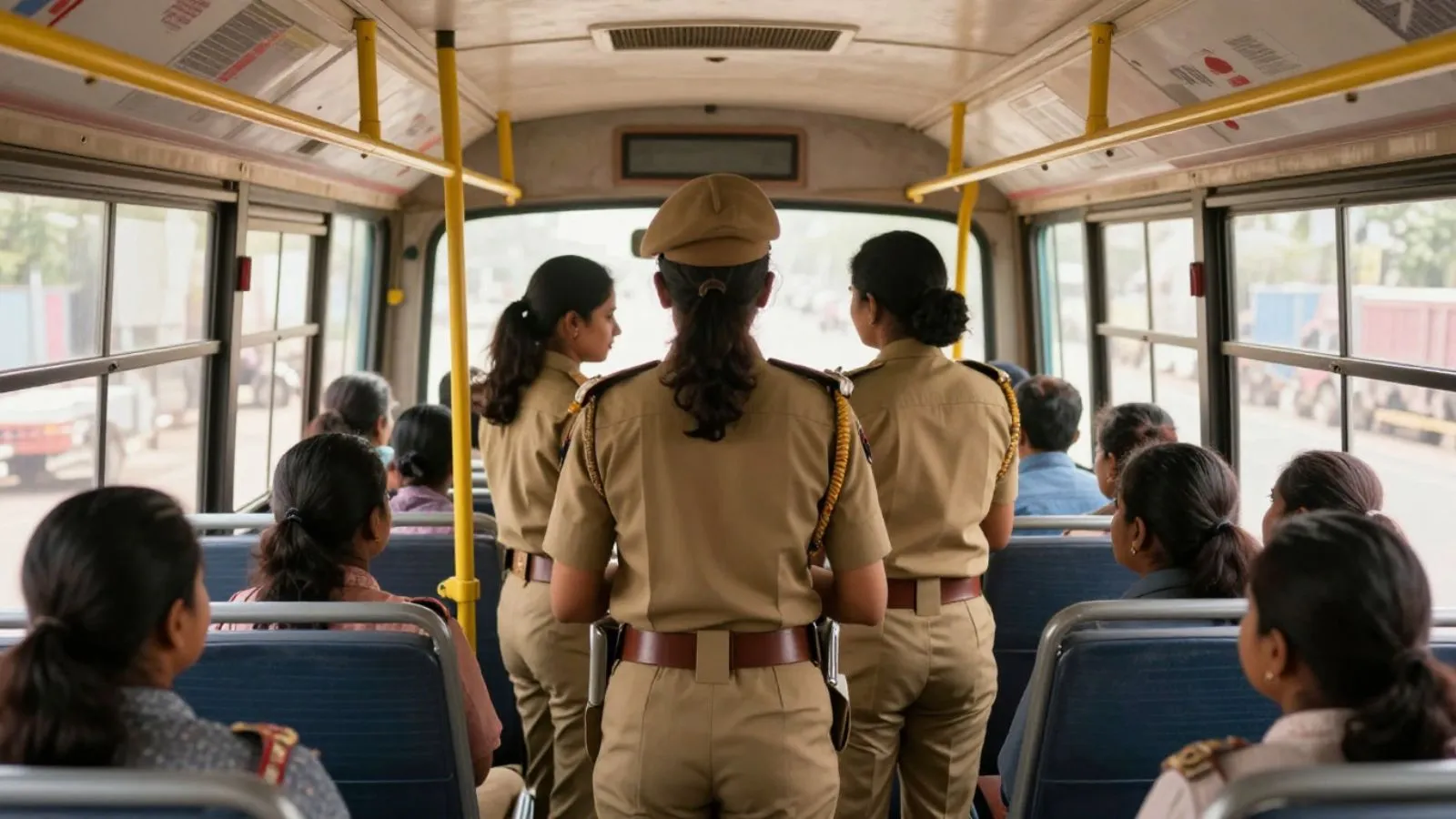
Delhi Lieutenant Governor Taranjit Singh Sandhu has directed the Delhi Transport Corporation (DTC) to deploy armed female police personnel on buses as part of a broader effort to strengthen the safety of women and children using public transport in the national capital.
The directive emerged from a high-level review meeting attended by senior officials from the Transport Department and DTC, where existing safety initiatives and future measures were discussed. The proposal envisions armed female police personnel serving as a visible security presence aboard buses, with the Transport Department instructed to coordinate with the Delhi Police for implementation.
Expanding Women's Safety Measures
During the meeting, the Lieutenant Governor reiterated that public transport should not only remain affordable and accessible but also provide a secure environment for women commuters.
Officials said the review covered several ongoing initiatives, including:
Expansion of security arrangements on DTC buses. Deployment of CCTV cameras across public transport infrastructure. Improvement of last-mile safety for women after they leave buses or transit stations. Better coordination between transport authorities and law enforcement agencies.
The LG also highlighted the importance of ensuring women's safety beyond the journey itself, extending security considerations to bus stops, depots, stations, and the final stretch to commuters' destinations.
Saheli Pink Smart Card Expansion
The review also acknowledged the rollout of the Saheli Pink Smart Card, a scheme designed to improve access to public transport for women.
The Lieutenant Governor suggested expanding the card's usability across multiple modes of public transportation, enabling seamless travel without requiring separate systems for different services.
Such integration could simplify daily commuting while encouraging greater use of public transport by women.
Focus on Last-Mile Connectivity
Another major focus was improving transportation options in underserved and peripheral areas.
Officials discussed increasing the availability of electric vehicles and other local transport services to improve connectivity in neighborhoods where access remains limited.
The objective is to ensure that women have reliable transportation options not only on major routes but also during the first and last segments of their journeys.
Women-Only Carpooling Proposal
The meeting also explored the possibility of introducing women-only carpooling services.
According to officials, the Lieutenant Governor encouraged the Transport Department to work with private mobility aggregators such as Uber, Ola, Bharat Taxi, and Rapido to develop women-focused ride-sharing options.
Supporters argue that such services could provide additional travel choices, particularly during late hours or in areas with limited public transport availability.
Armed Female Police on Buses
The proposal to deploy armed female police personnel represents one of the most visible components of the safety strategy.
Advocates suggest that a stronger security presence could deter harassment and improve passengers' sense of safety during travel.
At the same time, public discussions are likely to examine broader questions about public transport security, including infrastructure improvements, policing, surveillance, reporting mechanisms, urban planning, and long-term investments aimed at reducing crimes against women.
Looking Ahead
Implementation of the proposal will require coordination between the Delhi Transport Department and the Delhi Police regarding deployment, staffing, logistics, and operational planning.
The initiative forms part of a wider effort to improve women's safety through enhanced public transport security, expanded mobility options, integrated ticketing, improved last-mile connectivity, and collaboration with both public agencies and private transport providers. As these measures move forward, their effectiveness will likely be evaluated based on commuter experience, operational feasibility, and measurable improvements in safety outcomes.