
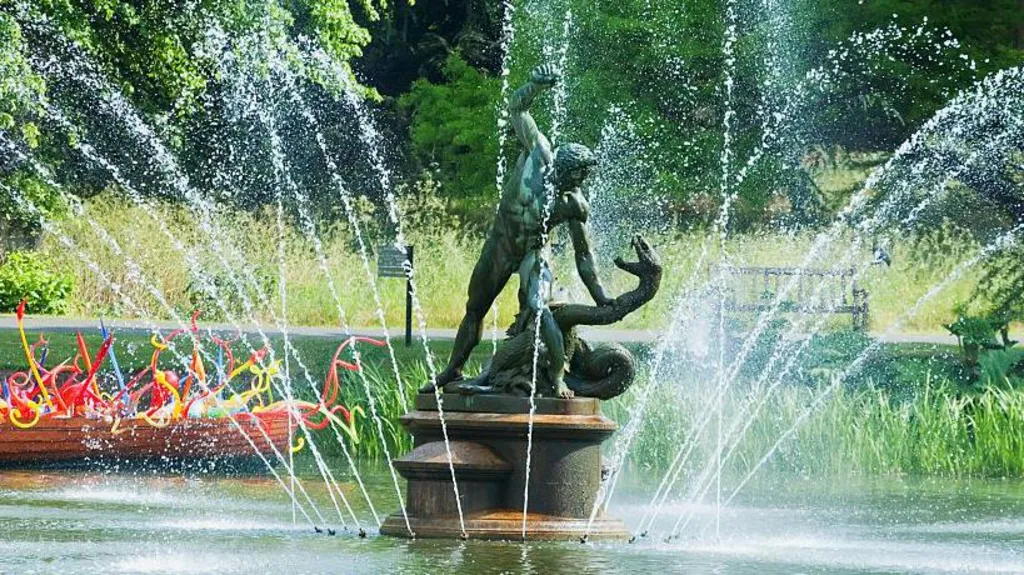
The statue is owned by the Royal Collection Trust and has a long association with the British monarchy. It was purchased by King George IV in 1829 and was eventually installed in Windsor Castle's Venus Garden—then known as the East Terrace Garden—in 1909.
Art historians believe the sculpture had been at Windsor Castle even earlier. Photographs show it standing on the castle's North Terrace in 1860, and records suggest it may have been installed there by 1848. Before that, it stood on a plinth against the castle's north curtain wall, although its original intended location remains unknown.
Cast from Recycled Cannons
One of the statue's most especial features is its unusual origin. Commissioned by George IV, the bronze sculpture was cast in France using recycled cannons, transforming former weapons into a work of classical art depicting Hercules wrestling the serpent-like river god Achelous.
The sculpture reflects the 19th-century suggestion with classical mythology and remains an important piece within the Royal Collection.
Decades Away from Windsor
The statue's journey has taken it across several royal properties.
Following a redesign of the East Terrace Garden in 1957, the artwork was moved to Hampton Court Palace with the intention of placing it on public display. However, those plans never pull off because funding was unavailable.
Instead, the sculpture remained in storage until 1963, when it was transferred to Kew Gardens, where it became a familiar feature for visitors for more than 60 years.
Its removal in autumn marked the beginning of preparations for its return to Windsor Castle.
Restoring the Venus Garden
The statue's return forms part of the wider restoration of Windsor Castle's Venus Garden.
The historic garden occupies the site of King Charles II's former bowling green and has recently undergone extensive renovation based on designs approved by King Charles III. The restored landscape aims to reconnect visitors with the garden's historic appearance while showcasing important works from the Royal Collection in their intended setting.
Once installed, the Hercules statue will once again become a central feature of the garden, echoing its earlier role more than a century ago.
Public Access
Visitors will have the opportunity to see both the restored Venus Garden and the returning sculpture during the garden's public opening, which is scheduled to continue until September.
The relocation represents not only the return of an important artwork to Windsor Castle but also another step in preserving and presenting Britain's royal heritage within its historical context.