
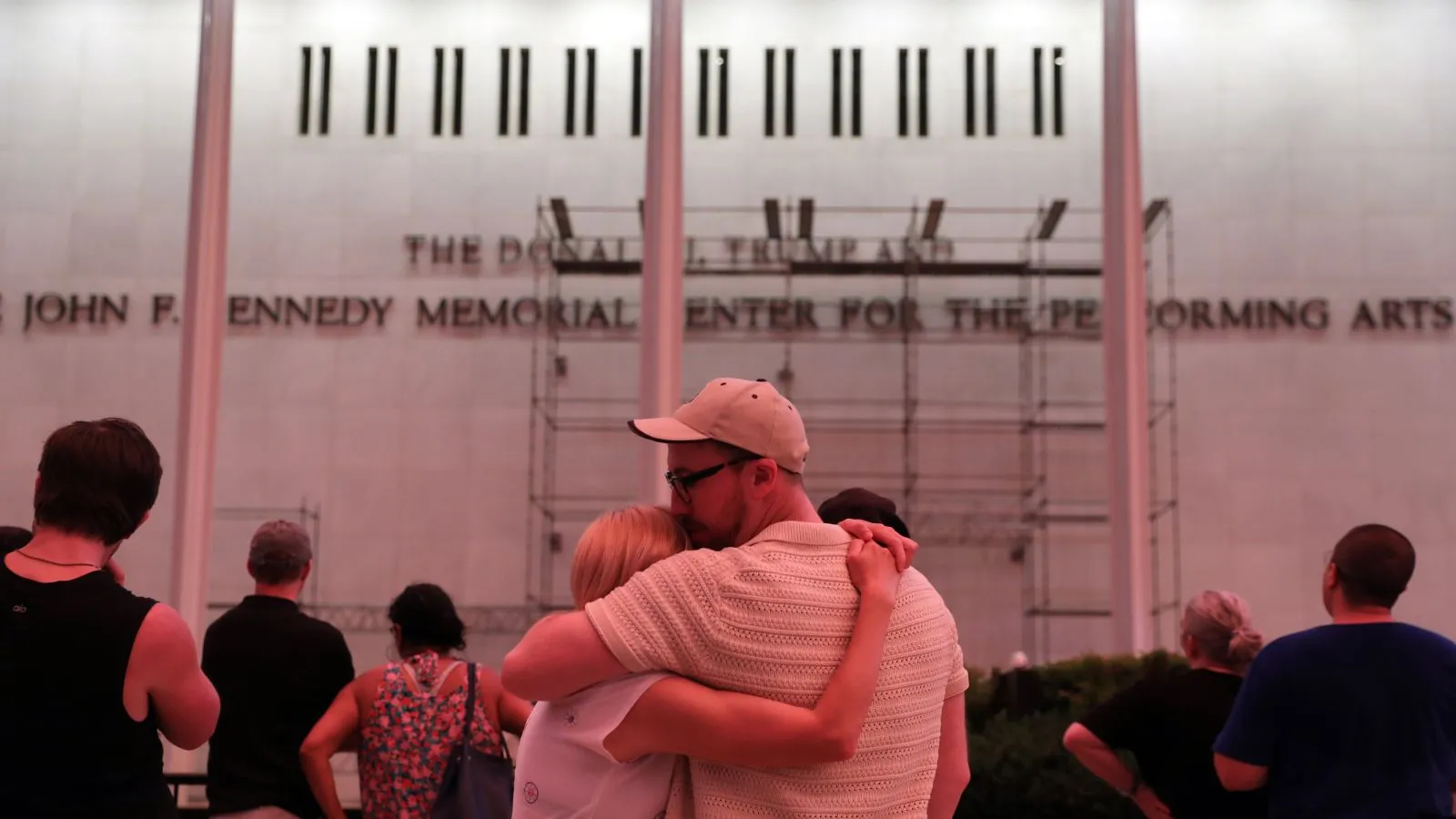
In a striking development that unfolded overnight in Washington, workers reportedly removed U.S. President Donald Trump’s name from the Kennedy Center, acting in compliance with a court order that blocked any renaming of the iconic performing arts institution without congressional approval. The quiet, predawn operation has added a new layer to an already contentious debate over political influence in national cultural landmarks.
The Overnight Operation
According to accounts of the incident, the removal took place in the early hours of Saturday morning to avoid public disruption. Maintenance crews were seen dismantling signage that had been installed less than six months earlier, when Trump’s name was added to the venue during a broader initiative to “rebrand and restore prominence” to major public institutions.
Officials involved in the operation described it as legally mandated rather than politically motivated. However, the timing and secrecy of the removal quickly drew attention from media outlets and political observers in Washington.
Legal Backdrop and Court Order
The action followed a court ruling and that determined the Kennedy Center could not be renamed without explicit authorization from Congress. The ruling effectively paused efforts by the administration to maintain or expand naming rights tied to the institution.
Legal experts note that disputes over naming rights of cultural institutions are rare but can become symbolic flashpoints when they intersect with political identity and legacy building efforts. In this case, the court’s deadline reportedly passed without compliance, prompting the expedited removal process.
Political and Cultural Implications
The incident has reignited broader discussions about the role of political figures in shaping national cultural spaces such as the John F. Kennedy Center for the Performing Arts. Critics argue that naming public institutions after sitting political leaders risks undermining institutional neutrality, while supporters often view such actions as symbolic recognition of leadership and influence.
The Trump administration’s approach to institutional branding has been a recurring theme since his return to office, with supporters framing it as cultural restoration and opponents describing it as politicization of civic spaces.
A Symbolic Flashpoint
Beyond the legal and administrative dimensions, the removal has taken on symbolic weight. For some observers, it represents the limits of executive influence over long-established public institutions. For others, it underscores the ongoing tension between political authority and judicial oversight in shaping national identity.
The fact that the operation occurred quietly and overnight has only amplified public curiosity, turning a procedural compliance action into a widely discussed political moment.
Conclusion
While the physical removal of signage may appear routine, the broader implications continue to resonate across political and cultural discourse. As debates over institutional naming and legacy continue, the Kennedy Center incident stands as another example of how symbolic gestures can quickly become national talking points in an increasingly polarized environment.