
“Ken-Betwa Project Promises Water for Bundelkhand, But Protesters Say Rivers and Forests Were Left Out of the Blueprint”
The Ken-Betwa River Linking Project has faced protests over concerns about the displacement of communities, the submergence of forest areas, and potential ecological damage, particularly in the…
Politics
Indian Edition
By CMS Admin
🕵 AI Narrative Audit
The headline frames the Ken-Betwa project as a contested development plan, highlighting protesters’ environmental concerns while implicitly questioning the project’s balance between water security and ecological costs.
The Ken-Betwa Link Project has become the centre of a growing dispute in Madhya Pradesh, with villagers raising concerns about land, forests, displacement and the potential impact on their livelihoods.
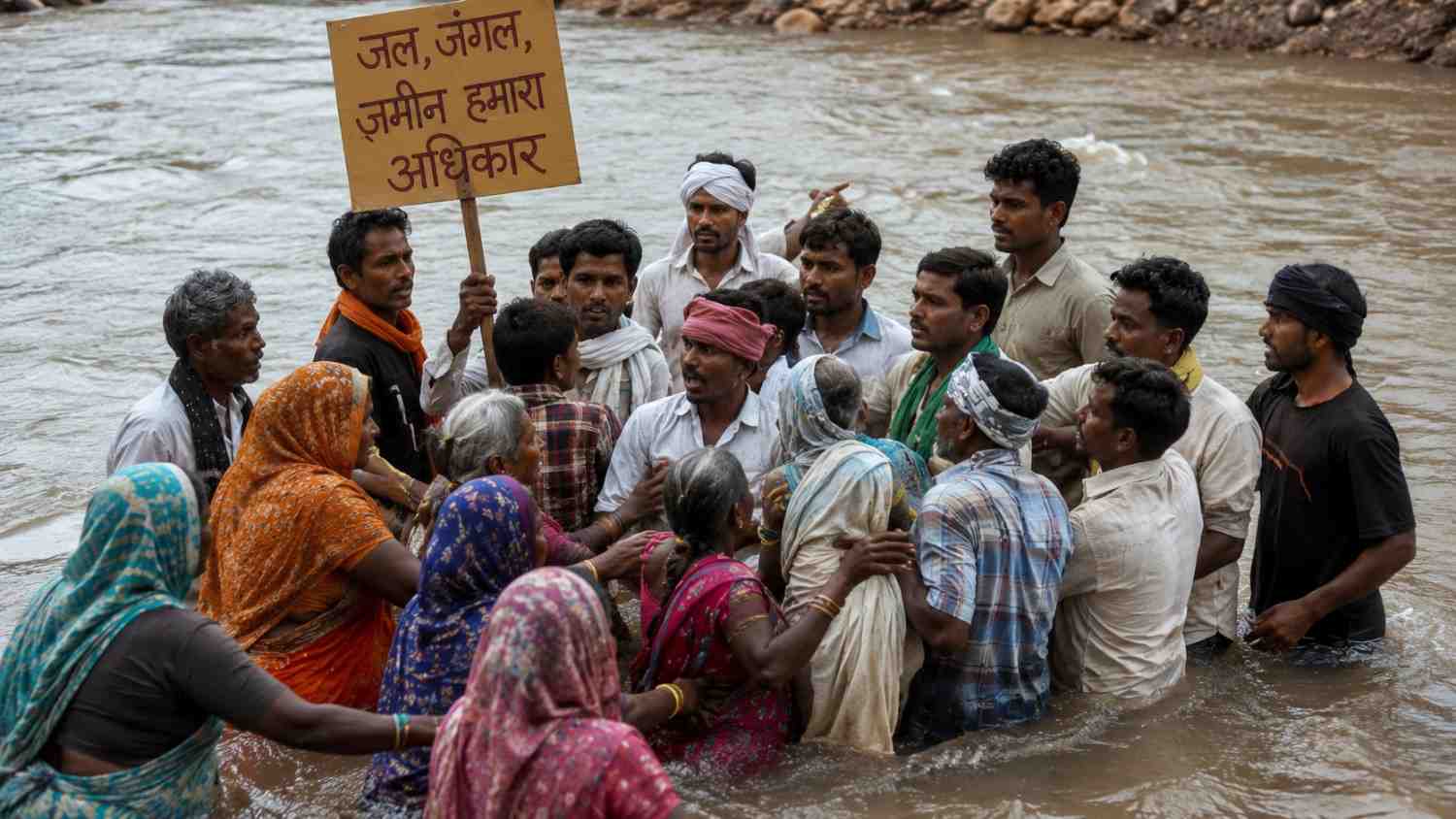
The latest flashpoint came on July 19, when Madhya Pradesh police personnel reached the banks of the Barana river stream in Kupi village of Chhatarpur district and cleared a protest site where hundreds of villagers, mostly tribal people, had been demonstrating for nearly two weeks.
The protesters were opposing the Union government's ₹44,000 crore Ken-Betwa Link Project, described as India's first river-linking project, as well as two irrigation projects being pursued by the Madhya Pradesh government.
What is the Ken-Betwa Link Project?
The Ken-Betwa Link Project is part of India's wider plan to link rivers in an effort to transfer water from areas considered water-surplus to regions facing water shortages. The project aims to transfer water from the Ken river basin to the Betwa river basin and is expected to provide irrigation and drinking water benefits in parts of Madhya Pradesh and Uttar Pradesh.
Government authorities have argued that the project could help address chronic water shortages in Bundelkhand, a region that has frequently faced drought and inadequate irrigation facilities.
The project is also expected to support agricultural activity and improve water availability for communities in the region.
Why are villagers protesting?
For many protesters, however, the issue goes beyond irrigation and water supply.
Villagers, particularly tribal communities, have expressed concerns about the possible impact of large-scale infrastructure and irrigation projects on their homes, agricultural land, forests and traditional livelihoods.
Environmental concerns have also been at the centre of opposition to the Ken-Betwa project. Critics have raised questions about the impact of the project on forests and wildlife, including areas connected to the Panna landscape.
For communities that depend directly on forests and natural resources, the proposed changes to the local environment have generated fears about losing access to resources that have supported their livelihoods for generations.
The protest site cleared
The clearing of the protest site in Kupi village has added another layer to the controversy.
According to the account provided, villagers had been demonstrating for around two weeks before police personnel arrived at the Barana river stream on July 19. The action to clear the site has drawn attention to the tensions between local opposition and the government's push to advance major water and infrastructure projects.
For protesters, the question is whether development can be pursued without adequately addressing the concerns of communities living in the project's impact zones.
Development versus environmental concerns
The Ken-Betwa controversy reflects a larger debate in India over how major infrastructure projects should balance economic development with environmental protection and the rights of local communities.
Supporters of the project see it as an important step towards improving irrigation and tackling water scarcity in Bundelkhand. Critics, meanwhile, argue that the benefits must be weighed against the possible ecological consequences and the social costs faced by affected communities.
The debate is therefore not simply about connecting two rivers. It is also about who benefits from large development projects, who bears the costs and how decisions are made when the interests of governments, environmental groups and local communities collide.
As protests continue to draw attention to the project, the challenge for authorities will be to address concerns over displacement, environmental impact and livelihoods while explaining how the promised benefits will reach the people living in the region.
The Ken-Betwa project may have been designed as a solution to Bundelkhand's water problems, but the protests show that questions about its environmental and social consequences remain central to the conversation.
Source: Editorial
View Original Source →