
150+ Migrants Rescued After Channel Crossing Takes a Fiery Turn
More than 150 migrants were reportedly rescued in the English Channel after the boat they were travelling on caught fire, turning the crossing into a major emergency. The incident highlights the…
Politics
UK Edition
By CMS Admin
🕵 AI Narrative Audit
The headline uses a light fiery turn metaphor that adds sensationalism to a serious rescue while keeping the focus on the migrants and the emergency rather than the broader migration context.
More than 150 migrants were rescued from a small boat in the English Channel after its engine caught fire while the vessel was attempting to reach the UK, French authorities said.
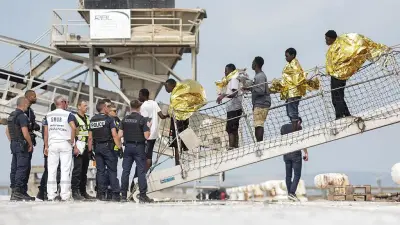
A total of 157 people were rescued and taken to the French port of Boulogne-sur-Mer following the emergency on Tuesday morning. There were no immediate reports of anyone being killed or injured.
The incident happened as concerns continue over the dangers associated with small-boat crossings of the Channel.
Engine Fire Triggers Major Rescue Operation
According to the French maritime prefecture of the Channel and North Sea, the boat had left France on Monday night and was attempting to cross towards Britain.
During the overnight crossing, five people on board required assistance. However, the remaining passengers reportedly declined help offered by French patrol boats.
French authorities said the condition of the vessel was also a factor in their decision not to intervene further at that stage, describing the boats used for such crossings as structurally fragile.
The situation changed dramatically on Tuesday morning when the boat's engine caught fire.
Authorities said the vessel's condition deteriorated rapidly, prompting an emergency response involving rescue teams from both France and the UK.
French and British Crews Rescue 157 People
Two French rescue vessels took part in the operation and rescued 103 migrants, while British vessels rescued a further 54 people.
Among the British vessels involved were the RNLI Eastbourne lifeboat and UK Border Force vessels BSC Contender and BSC Courageous.
All 157 people were taken to Boulogne-sur-Mer following the rescue.
The operation demonstrated the close cooperation between French and British authorities in responding to emergencies in the Channel, even as both governments continue efforts to reduce irregular crossings.
UK Government Warns of Dangers
A UK government spokesperson said the country's Border Security Command had been alerted to a migrant small boat in distress in French waters.
British vessels subsequently assisted the French-led rescue operation.
The government said there had been no reported fatalities and described the incident as another reminder of the dangers associated with attempting to cross the Channel in small boats.
Officials said Britain would continue working with France and other international partners to prevent people from making what they described as perilous journeys.
Political Debate Continues
The rescue came just a day after Prime Minister Andy Burnham pledged that his government would be "relentless" in efforts to reduce the number of people arriving in the UK by small boats.
The Channel crossings remain one of the most politically sensitive migration issues in Britain, with successive governments under pressure to reduce the number of people making the journey.
The latest incident is likely to add to that debate, particularly because it involved a vessel suffering a serious emergency during the crossing.
A Dangerous Channel Journey
The Channel is one of the world's busiest shipping routes, and small boats attempting to cross it can face difficult conditions, heavy maritime traffic and mechanical problems.
The French maritime prefecture said the structural weakness of many vessels used for crossings can make rescue operations particularly challenging.
In this case, the engine fire caused the condition of the boat to deteriorate quickly enough to require a full-scale emergency response.
The successful rescue of all 157 people meant that the incident ended without reported fatalities, but it once again highlighted the risks involved in attempting to make the Channel crossing in unsuitable vessels.
For French and British rescue crews, the priority was to bring everyone safely to shore. For governments on both sides of the Channel, however, the incident is likely to fuel the continuing debate over how to prevent dangerous crossings while responding effectively when vessels get into distress.
Source: Editorial
View Original Source →