
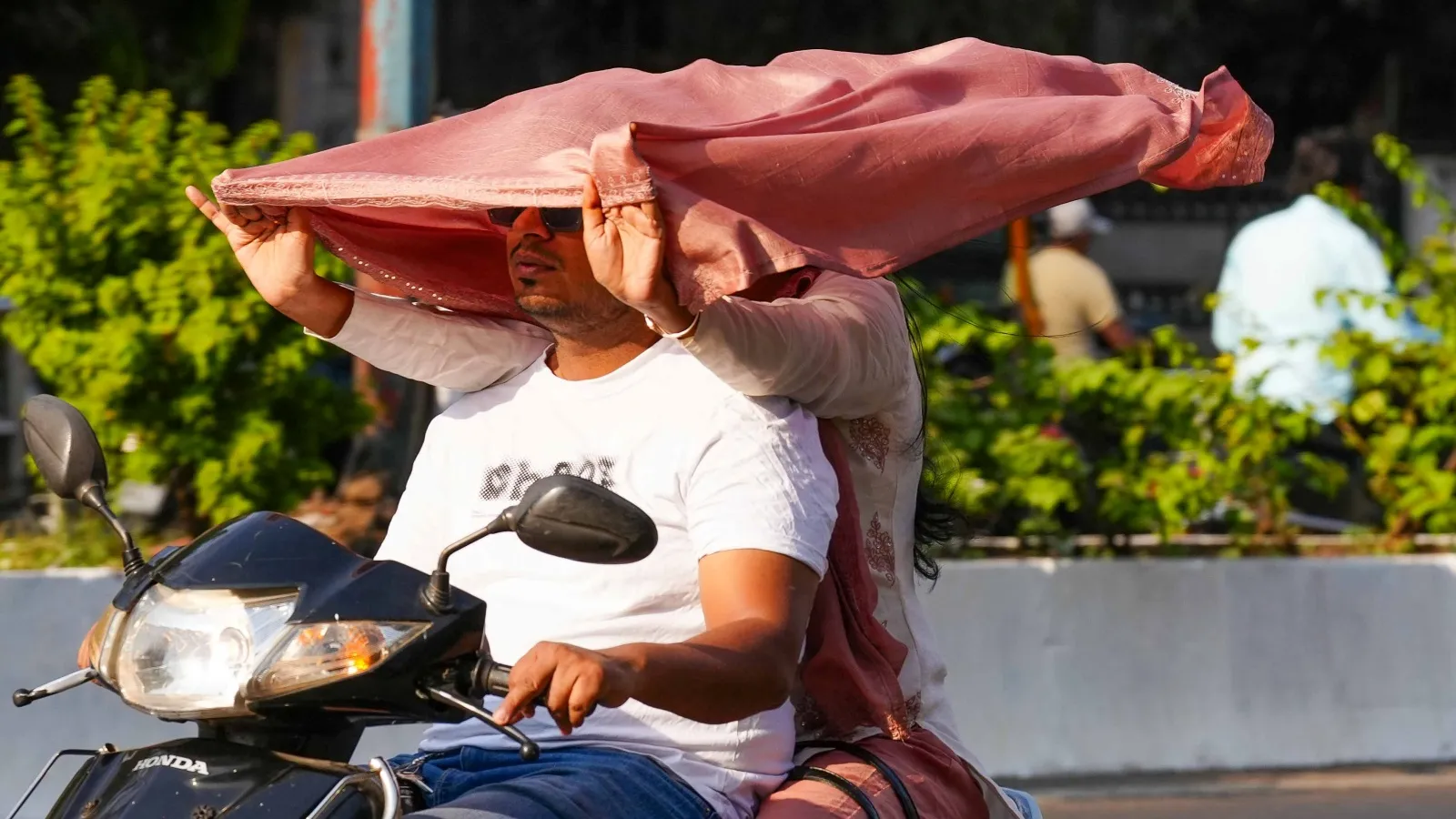
Mumbai: Mumbai, Nagpur and Pune have been ranked among the world's 50 most heat-vulnerable cities, according to a new study by the University of Oxford that assessed how extreme heat affects urban populations beyond just rising temperatures.
The research highlights that vulnerability to heat is shaped not only by weather conditions but also by social, economic and infrastructural factors that determine how well cities can cope with increasingly frequent heatwaves.
Oxford Study Examined 205 Global Cities
The study, titled "Moving Beyond Exposure: A Globally Comparable Framework for Heat Risk Assessment in Cities," analysed 205 cities worldwide** with populations exceeding one million.
Researchers evaluated cities using a comprehensive heat-risk framework based on three major components:
* "Hazard Exposure:" The extent to which cities experience extreme heat. * "Vulnerability:" Demographic and socio-economic characteristics that increase people's susceptibility to heat. * "Coping Capacity:" The ability of infrastructure, healthcare systems, governance and public services to respond to heat-related challenges.
Rather than focusing solely on temperature records, the study examined how environmental and societal conditions combine to influence overall heat risk.
Maharashtra Cities Feature Prominently
Among Indian cities, Maharashtra featured prominently in the rankings.
According to the report:
* Nagpur ranked 4th globally. * Pune ranked 23rd. * Mumbai ranked 46th.
Nagpur emerged as the "second most heat-vulnerable city in India", behind Ahmedabad.
Fourteen Indian Cities in Global Top 50
India had the highest representation in the global rankings, with 14 cities appearing among the top 50 most vulnerable to heat risk.
The leading Indian cities included:
| City | Global Rank | | --------- | ----------: | | Ahmedabad | 2 | | Nagpur | 4 | | Madurai | 7 | | Bhopal | 15 | | Kanpur | 20 | | Pune | 23 | | Mumbai | 46 |
The report also noted that **Nigeria** had five cities in the top 50, while "Pakistan" had four.
The findings underline that heat vulnerability is becoming a widespread urban challenge across rapidly growing cities in developing countries.
Heat Risk Goes Beyond High Temperatures
Researchers stressed that extreme heat alone does not determine how vulnerable a city is.
The study found that several interconnected factors influence overall heat risk, including:
* High humidity levels * Mean radiant temperature * Wind speed * Population density * Income levels * Access to healthcare * Housing quality * Availability of green spaces * Urban infrastructure * Emergency response capacity
This means two cities experiencing similar temperatures may face very different health and economic impacts depending on their preparedness.
El Niño Intensifying Heat Across India
The report comes as India experiences unusually high temperatures linked to "El Niño", a climate pattern that develops when Pacific Ocean trade winds weaken, allowing warmer ocean waters to move eastward.
El Niño typically contributes to:
* Higher global temperatures * Reduced rainfall in some regions * More frequent and intense heatwaves * Increased stress on water resources
Since March, several Indian cities including Mumbai, Nagpur and Pune, have experienced prolonged heatwave conditions, prompting weather authorities to issue orange alerts in many areas.
Why Urban Heat Is Becoming a Major Concern
Rapid urbanisation has intensified heat-related challenges in Indian cities.
Large metropolitan areas often experience the "Urban Heat Island (UHI)" effect, where concrete buildings, asphalt roads and limited vegetation absorb and retain heat, making cities significantly warmer than nearby rural areas.
The consequences include:
* Increased heat-related illnesses * Higher mortality among vulnerable populations * Greater electricity demand for cooling * Water shortages * Reduced worker productivity * Increased pressure on healthcare systems
Children, elderly citizens, outdoor workers and low-income communities are generally the most affected during prolonged heat events.
Experts Call for Better Heat Preparedness
The Oxford researchers argue that future climate planning should move beyond simply monitoring temperatures.
Instead, cities should adopt targeted strategies that strengthen resilience by addressing:
* Urban planning and green infrastructure * Public health preparedness * Early warning systems * Climate-resilient housing * Access to cooling centres * Improved emergency response mechanisms
The report states that effective heat-risk management requires equal attention to "hazard exposure, population vulnerability and institutional capacity".
What Cities Can Do
Experts recommend several measures to reduce heat risk:
* Expanding urban forests and green spaces. * Increasing tree plantation along roads and residential areas. * Promoting cool roofs and reflective building materials. * Improving access to drinking water during heatwaves. * Developing heat action plans and public awareness campaigns. * Strengthening healthcare systems for heat-related emergencies. * Designing climate-resilient infrastructure for rapidly growing cities.
Such interventions can significantly reduce the health and economic impacts of extreme heat.
Conclusion
The University of Oxford's study highlights that heat risk is a multidimensional challenge shaped by environmental, social and infrastructural factors rather than temperature alone. With 14 Indian cities—including Mumbai, Nagpur and Pune—ranking among the world's most heat-vulnerable urban centres, the findings underscore the growing importance of climate adaptation, resilient urban planning and stronger public health measures as extreme heat events become more frequent in a warming world.