
Vance Rings Modi, Another Call, Another Round of Diplomacy.
The headline is factual in tone but offers no context about why U.S. Vice-President J.D. Vance contacted Prime Minister Narendra Modi or what was discussed. By emphasizing the act of dialing, it…
Politics
Indian Edition
By CMS Admin
🕵 AI Narrative Audit
The headline is relatively neutral but frames the call around Vance outreach to PM Modi without providing context on the purpose or substance of the conversation.
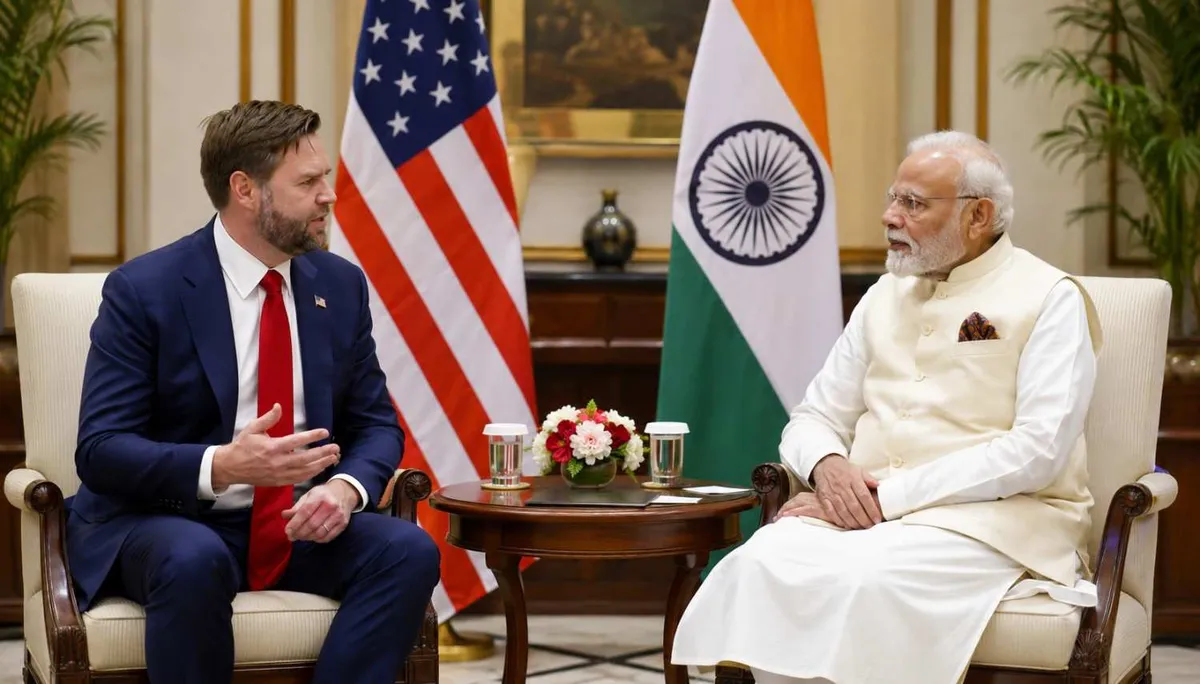
U.S. Vice President J.D. Vance spoke with Prime Minister Narendra Modi on Saturday (August 8, 2026), with the two leaders discussing ways to further expand the India-U.S. comprehensive global strategic partnership.
The conversation comes at a time of heightened geopolitical tensions in West Asia, making cooperation between New Delhi and Washington on trade, defence and energy security particularly significant. Both sides discussed the importance of maintaining close coordination on issues that affect regional stability as well as the broader bilateral relationship.
Focus on Trade, Defence and Energy
Trade and economic ties remain an important component of the India-U.S. partnership. The discussion between Vance and Modi focused on strengthening cooperation while continuing to address shared economic and strategic priorities.
Defence cooperation was another key area of discussion. India and the United States have expanded defence ties over the years, including through greater military cooperation and technology partnerships.
Energy security also featured prominently in the talks, particularly against the backdrop of instability in West Asia. Developments in the region have wider implications for global energy markets and countries that depend on international energy supplies.
Emerging Technologies and Critical Minerals
The two leaders also reaffirmed their commitment to cooperation in emerging technologies and critical minerals.
Emerging technologies have become an increasingly important part of the India-U.S. relationship, with areas such as advanced technology, innovation and strategic supply chains gaining greater importance.
Critical minerals are similarly viewed as strategically significant because they are essential for a range of modern technologies and industries. Strengthening cooperation in this area could help both countries build more resilient supply chains and reduce vulnerabilities linked to concentrated sources of key resources.
West Asia Adds Strategic Urgency
The conversation took place against a backdrop of continuing tensions in West Asia, giving the discussion on energy security and strategic coordination added significance.
For India, developments in the region have implications not only for energy supplies but also for trade routes, the safety of Indian citizens and broader economic stability. For Washington, closer coordination with New Delhi can strengthen cooperation with a major Indo-Pacific partner while addressing challenges that extend beyond the region.
A Broader Strategic Partnership
The latest conversation highlights how the India-U.S. relationship has expanded beyond traditional diplomatic and defence cooperation. Trade, energy, technology, critical minerals and supply-chain resilience are increasingly becoming central pillars of the partnership.
Vance call with Modi therefore comes as part of a broader effort to deepen coordination between the two countries at a time when geopolitical and economic uncertainties are reshaping international relations.
For New Delhi and Washington, maintaining momentum in these areas could be important to ensuring that their strategic partnership remains focused on both immediate challenges and long-term cooperation.
Source: Editorial
View Original Source →