
FCRA Tightens the Foreign Purse Strings, Ambassador Says America Does It Too
The statement frames FCRA regulation primarily as a sovereign policy choice, reinforced by the claim that the U.S. has comparable laws. It gives limited attention to concerns about transparency,…
Politics
Indian Edition
By CMS Admin
🕵 AI Narrative Audit
The framing is broadly supportive of the government’s position, emphasizing sovereignty and U.S. precedent while giving limited attention to potential concerns over the scope and implementation of FCRA regulations.
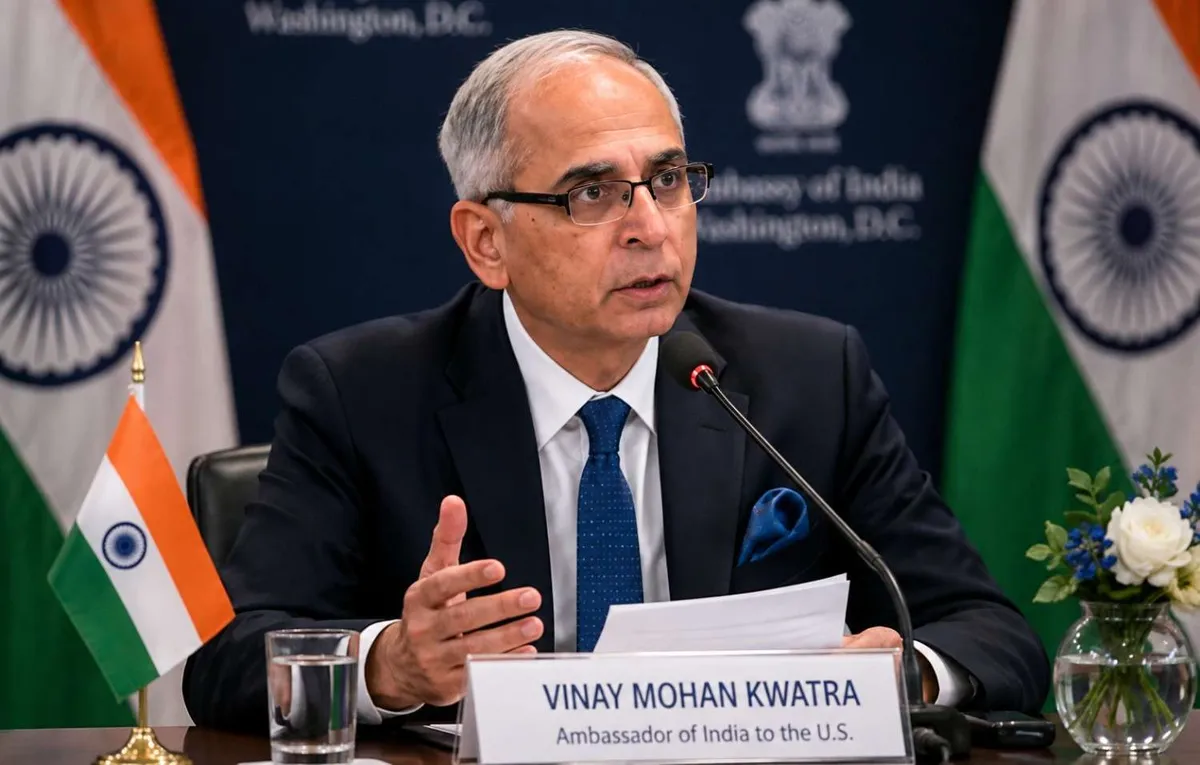
India’s Ambassador to the United States, Vinay Mohan Kwatra, has defended amendments to the Foreign Contribution (Regulation) Act (FCRA), saying the changes are intended to bring greater transparency to the flow of foreign funds and ensure that organisations receive contributions through a clearly defined process.
In a series of posts on X on Sunday, August 9, 2026, Kwatra said regulating foreign financial flows into public and political spaces is a sovereign decision. He linked such regulation to national security concerns and pointed to the United States as an example of a country that has enacted laws governing foreign influence and financial flows.
A focus on transparency
Kwatra explanation presents the amendments as an effort to strengthen oversight rather than simply restrict foreign contributions. Under this argument, organisations receiving overseas funds are expected to follow established procedures so that the source and movement of money remain transparent and accountable.
The emphasis on a laid down process also suggests that the government views regulation as necessary to create clearer rules for organisations receiving foreign contributions.
The national security argument
The ambassador also placed the issue within a wider national-security framework. Foreign financial flows can become a matter of concern for governments when they intersect with political activity, public campaigns or other sensitive areas.
By describing such regulation as a sovereign step, Kwatra remarks underline India position that it has the authority to determine how foreign funding entering the country should be monitored and regulated.
The U.S. comparison
One of the key points in Kwatra post was his reference to the United States. The comparison is intended to show that regulating foreign influence and financial activity is not unique to India and that other democracies also maintain legal frameworks dealing with foreign funding and influence.
However, the comparison also raises an important question: while countries may have laws dealing with foreign funding, their legal frameworks, definitions, enforcement mechanisms and protections for civil society can differ substantially.
Why the FCRA debate matters
The FCRA governs the acceptance and use of foreign contributions by eligible organisations in India. Supporters of tighter regulation argue that stronger monitoring can prevent misuse of overseas funds and improve financial accountability.
Critics, meanwhile, have historically raised concerns about whether stringent rules could make it harder for legitimate non-governmental organisations and civil society groups to operate or receive overseas support.
That makes the debate about more than financial compliance. It also touches on the balance between national security, regulatory transparency and the space available for independent organisations to function.
The larger picture
Kwatra remarks provide the government's broader justification for the amendments, foreign money entering sensitive public and political spaces should be subject to oversight, and that oversight is being presented as a matter of sovereignty and national security.
The central question going forward will be how these principles are translated into implementation. Transparency and accountability can strengthen public confidence, but the effectiveness of any regulatory framework will also depend on clear rules, consistent enforcement and safeguards against unnecessary restrictions.
In that sense, the FCRA debate is ultimately about finding a workable balance between financial transparency, national security and the legitimate functioning of civil society.
Source: Editorial
View Original Source →