
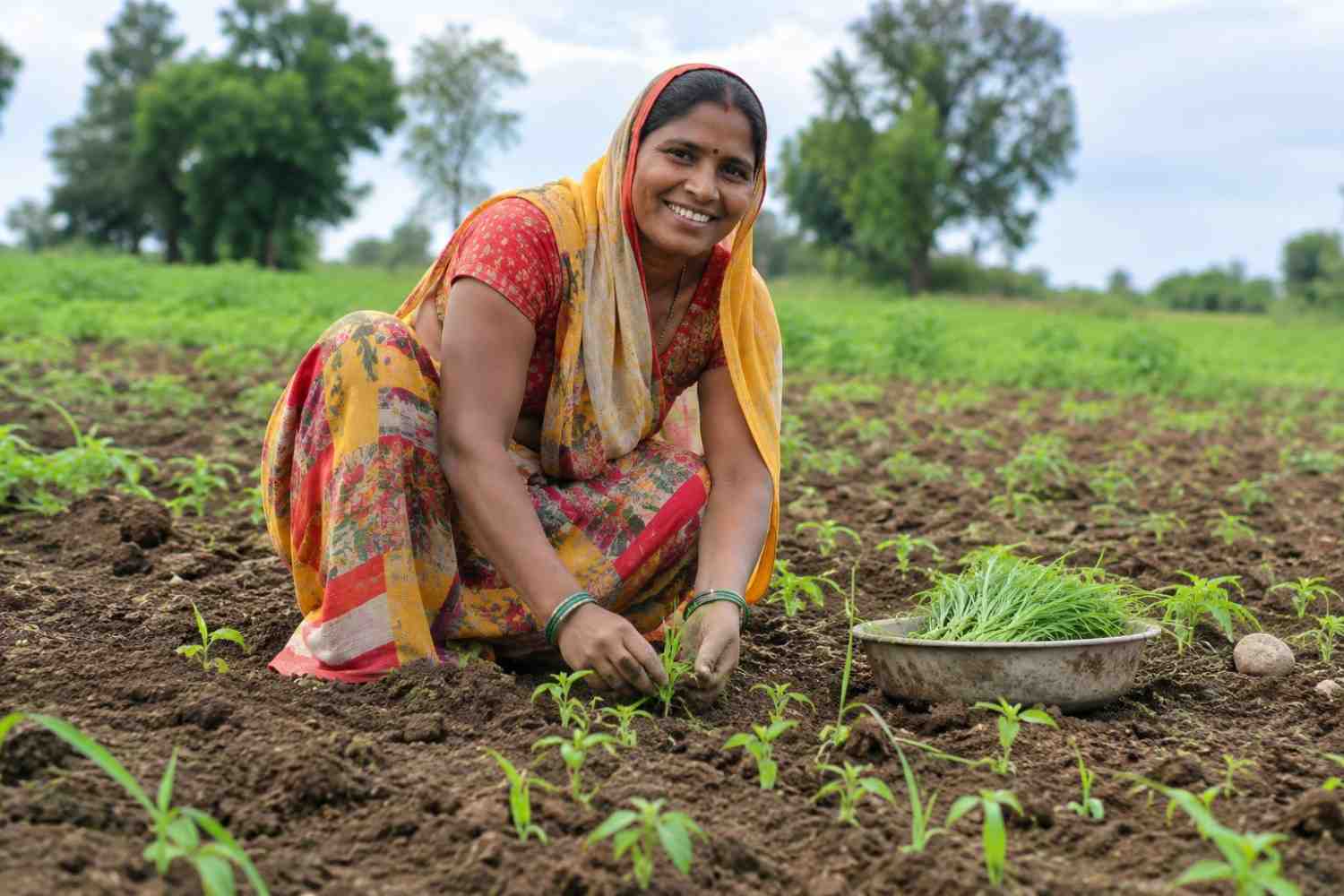
Maharashtra Women Farmers Empowerment Bill, 2026 Aims to Give Legal Identity, Credit Access and Social Security to Women in Agriculture
In a landmark move aimed at strengthening the role of women in agriculture, the Maharashtra government is set to introduce the Maharashtra Women Farmers Empowerment Bill, 2026 during the upcoming monsoon session of the state legislature. The proposed legislation seeks to grant women engaged in farming independent legal recognition as farmers, a long-standing demand of women's groups and agricultural activists.
Chief Minister Devendra Fadnavis announced the decision while chairing a high-level meeting at his official residence to review the draft legislation. The Bill is expected to establish a comprehensive legal framework that formally recognizes women involved in agricultural activities and enables them to access government welfare schemes, institutional credit, subsidies, crop insurance, and social security benefits in their own right.
A Historic Step Towards Women's Empowerment
Although women make up a significant share of India's agricultural workforce, many are not officially recognized as farmers because land ownership is often recorded in the names of male family members. This lack of legal recognition has prevented countless women from accessing financial assistance, agricultural subsidies, and government support programs.
The proposed legislation aims to bridge this gap by providing women farmers with an independent legal identity, irrespective of traditional ownership patterns.
According to Chief Minister Fadnavis, Maharashtra requires a dedicated policy framework to eliminate structural barriers that have historically limited women's participation in formal agricultural support systems.
Key Features of the Proposed Bill
The Maharashtra Women Farmers Empowerment Bill, 2026 is expected to include several provisions designed to improve the economic and social status of women engaged in farming.
Some of the major objectives include:
Granting women independent legal recognition as farmers. Improving access to government agricultural schemes. Facilitating institutional bank credit and farm loans. Extending eligibility for agricultural subsidies. Expanding access to crop insurance programmes. Providing social security and welfare benefits. Encouraging greater participation of women in agricultural decision-making.
The legislation seeks to ensure that women farmers receive the same institutional support that has traditionally been linked to land ownership.
Addressing Long-Standing Challenges
Women contribute substantially to agricultural activities such as sowing, transplanting, harvesting, livestock management, irrigation, and post-harvest processing. Despite their extensive involvement, many remain excluded from official farmer databases because they do not possess land titles.
As a result, they often face difficulties in:
Obtaining agricultural loans. Accessing crop compensation. Receiving government subsidies. Purchasing farm equipment through assistance programmes. Benefiting from crop insurance schemes. Participating in formal agricultural training initiatives.
The proposed law seeks to reduce these inequalities by creating a legal framework that recognizes agricultural work rather than ownership alone.
Strengthening Rural Economy
Experts believe that formally recognizing women as farmers could significantly strengthen Maharashtra's rural economy.
Legal recognition would likely improve women's financial independence, encourage greater investment in agriculture, and enhance access to modern farming technologies. It could also increase participation in self-help groups, farmer producer organisations (FPOs), and cooperative institutions.
Supporters of the Bill argue that empowering women farmers is essential for achieving inclusive agricultural growth and improving rural livelihoods.
Government's Vision
During the review meeting, Chief Minister Devendra Fadnavis emphasized that the state government is committed to removing systemic barriers faced by women in agriculture.
The government believes that recognizing women as independent farmers will not only improve access to welfare schemes but also contribute to more equitable and sustainable agricultural development across Maharashtra.
The proposed legislation reflects a broader effort to ensure that government benefits reach all individuals actively engaged in farming, regardless of gender.
What Happens Next?
The Maharashtra Women Farmers Empowerment Bill, 2026 is expected to be introduced during the upcoming monsoon session of the state legislature.
If passed, the law could become one of the first comprehensive state-level legal frameworks specifically designed to recognize women as independent farmers and expand their access to institutional support.
Implementation would likely involve coordination between departments responsible for agriculture, revenue, rural development, banking, and social welfare to update administrative processes and ensure eligible women can benefit from the new provisions.
Conclusion
The proposed Maharashtra Women Farmers Empowerment Bill, 2026 represents a significant policy initiative aimed at recognizing the indispensable role women play in agriculture. By granting women an independent legal identity as farmers and improving access to credit, insurance, subsidies, and social security, the legislation seeks to address long-standing structural inequalities in the agricultural sector. If enacted, the Bill could mark an important step toward strengthening rural livelihoods, promoting gender equality, and making agricultural support systems more inclusive.