
Kanwar Yatra 2026- Delhi,NCR Traffic Says ‘Har Har Mahadev’ and ‘Good Luck’
The coverage frames the Kanwar Yatra primarily through traffic disruption and inconvenience, potentially giving greater weight to commuters’ concerns than to the logistical and religious context. A…
Politics
Indian Edition
By CMS Admin
🕵 AI Narrative Audit
The framing emphasize disruption and commuter inconvenience, which may overshadow the religious significance of the Kanwar Yatra and the practical reasons behind traffic management measures.
The Kanwar Yatra 2026, the annual pilgrimage in which devotees collect water from the Ganges and carry it to Shiva temples in their respective towns and villages, has entered its final phase, with the pilgrimage set to conclude on August 11, 2026, on the occasion of Shivratri.
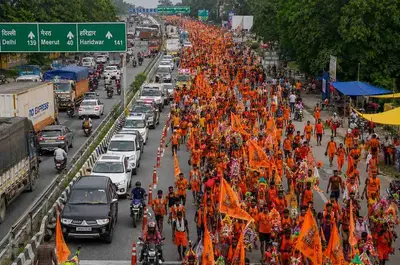
The yatra began on July 30 and has brought thousands of devotees onto major roads and highways across northern India. With large groups of Kanwariyas travelling on foot and by other means, authorities in Delhi, Uttar Pradesh and Haryana have introduced traffic management measures to keep the movement of pilgrims and regular commuters as smooth as possible.
Why the Kanwar Yatra Matters
The Kanwar Yatra is an important annual religious pilgrimage for devotees of Lord Shiva. Participants, commonly known as Kanwariyas, collect holy water from the Ganges and carry it over long distances before offering it at Shiva temples.
For many devotees, the journey is not simply a means of reaching a temple but an expression of faith, discipline and devotion. The pilgrimage also creates a distinctive atmosphere along the routes, with temporary camps and facilities arranged to support the travelling devotees.
Traffic Restrictions Across the Region
The large movement of pilgrims has also required extensive traffic planning. Authorities have been working to separate or regulate routes used by Kanwariyas and ordinary vehicles, particularly along highways and roads connecting major pilgrimage centres.
In Delhi-NCR and neighbouring areas, commuters may face diversions, altered traffic flows and restrictions on certain routes during periods of heavy movement. Police and traffic authorities have also been monitoring congestion and making arrangements for emergency access.
The restrictions can create additional travel time for people commuting for work, education or other daily activities. At the same time, officials have to account for the safety of large numbers of pilgrims travelling together, making traffic management a significant part of the annual event.
Pilgrims Prepare for the Final Day
As August 11 approaches, the number of devotees completing the final stages of their journey is expected to remain high. Many Kanwariyas will reach their destinations in time to offer the collected Ganga water at Shiva temples as part of the Shivratri observances.
The final phase is therefore likely to remain busy on several major routes, with authorities keeping a close watch on traffic and crowd movement.
A Balance Between Faith and Everyday Travel
The Kanwar Yatra highlights the challenge of managing a major religious gathering while maintaining normal life in densely populated parts of northern India.
For devotees, the journey represents an important spiritual tradition. For authorities, it involves coordinating roads, public safety, emergency services and crowd movement. For commuters, temporary diversions and restrictions can mean longer journeys and changing travel plans.
A balanced approach to the annual pilgrimage therefore requires both respect for religious practices and careful planning to minimise disruption for the wider public.
Yatra Set to Conclude on August 11
With the Kanwar Yatra 2026 scheduled to conclude on August 11, the final days will mark the culmination of weeks of pilgrimage for thousands of devotees.
As Kanwariyas complete their journeys and return home, traffic restrictions are expected to be adjusted according to crowd movement and local conditions. For authorities across Delhi, Uttar Pradesh and Haryana, the priority remains managing the final stretch safely while allowing regular traffic to gradually return to normal.
The conclusion of the yatra will bring an end to another major annual pilgrimage season in northern India, combining long standing religious traditions with one of the region's largest recurring movements of people.
Source: Editorial
View Original Source →