
"Torres Writes the Final Chapter as Spain Sends Argentina Off the Throne."
Spain defeated Argentina 1-0 after extra time, with Ferran Torres scoring the decisive goal to secure the championship. The closely contested final ended Argentina's title reign and crowned Spain as…
Entertainment
World Edition
By CMS Admin
🕵 AI Narrative Audit
The framing emphasizes Spain's triumph and Argentina's fall through dramatic language, which heightens the sense of dominance while downplaying the closely contested nature of an extra-time final.
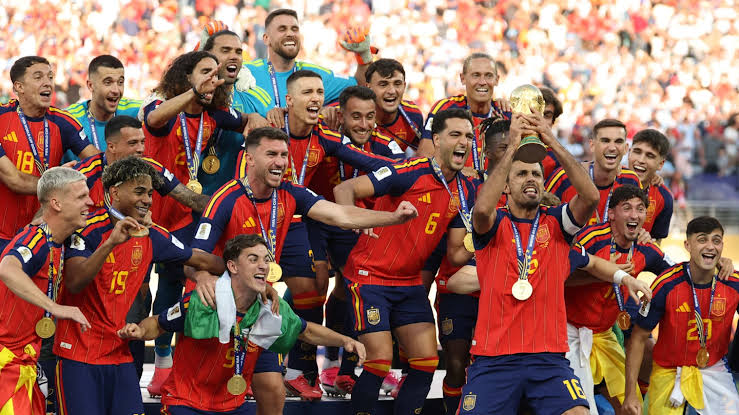
Spain etched their name into football history once again after defeating defending champions Argentina 1-0 in an intense FIFA World Cup final at MetLife Stadium. A decisive extra-time strike from Ferran Torres secured Spain's second World Cup title, ending Argentina's reign and capping off a memorable campaign with a dramatic finish.
The final was far from a goal-filled spectacle. Instead, it was a fiercely contested tactical battle, with both teams cancelling each other out through disciplined defending, relentless pressing, and physical duels across the pitch. For more than 100 minutes, neither side managed to find the breakthrough.
Ferran Torres Delivers the Defining Moment
The deadlock was finally broken in the 106th minute when Ferran Torres found the back of the net with the only goal of the match. The strike proved decisive, sending Spanish supporters into celebration and leaving Argentina with little time to respond.
As the referee blew the final whistle, Spanish players rushed toward Torres, creating a sea of red shirts around the match-winner. The emotional celebrations reflected not only the significance of the goal but also the journey Spain had taken throughout the tournament.
Torres emerged from the celebrations visibly emotional, exhausted after delivering the most important goal of his international career.
A Goal That Will Be Remembered
The winning strike immediately invited comparisons with Andrés Iniesta's famous extra-time winner in the 2010 World Cup final, another moment that secured football immortality for Spain.
Although Torres had not scored during the tournament before the final, his first goal arrived when it mattered the most. One decisive finish was enough to write his name into Spanish football history.
Torres Reflects on the Historic Triumph
Speaking after the match, Torres dedicated the victory to the people of Spain rather than claiming individual glory.
"The goal belongs to 47 million people, not me, nor the 26 players here," he said after the final whistle.
Reflecting on the criticism he faced during the tournament, Torres described the goal as a moment of liberation.
He acknowledged that his performances had drawn scrutiny during the competition but expressed gratitude for persevering through difficult moments, saying he believed persistence and faith had ultimately been rewarded.
Spain's Tactical Discipline Pays Off
Spain's triumph was built on patience, defensive organisation, and composure under pressure. While Argentina enjoyed spells of possession and created opportunities, Spain remained compact and disciplined throughout the contest.
Both goalkeepers delivered solid performances, but Spain's defence successfully neutralised Argentina's attacking threats before Torres finally produced the breakthrough in extra time.
The victory highlighted Spain's ability to combine technical quality with defensive resilience when it mattered most.
Argentina Fall Short in Title Defence
Argentina entered the final hoping to retain the World Cup crown, but despite a determined performance, they were unable to break down Spain's organised defence.
The defending champions battled until the final whistle but ultimately finished runners-up after conceding the decisive goal in extra time.
Despite the defeat, Argentina's run to another World Cup final reaffirmed their place among the world's elite football nations.
Spain Reach the Summit Again
Winning the World Cup for the second time marks another landmark achievement for Spanish football. The triumph reflects the depth of talent within the squad, effective tactical planning, and resilience displayed throughout the tournament.
For Ferran Torres, one goal transformed months of criticism into a career-defining moment. For Spain, it delivered another golden chapter in the nation's football history, proving that championships are often decided not by the number of goals scored, but by who rises when the biggest moment arrives.
Source: Editorial
View Original Source →