
Spain, Italy Friendship Gets a Border Check as Ceuta Crisis Heats Up
The report highlights Spain decision to impose border controls on Italy amid tensions over the influx of migrants through Ceuta. However, its framing may understate the broader political, diplomatic…
Politics
World Edition
By CMS Admin
🕵 AI Narrative Audit
The headline frames the Spain, Italy dispute around migration tensions and border restrictions, but risks oversimplifying the wider political and diplomatic context behind the Ceuta migrant influx.
Spain and Italy have taken a significant step backwards in their normally border-free European travel arrangement, with Madrid introducing temporary controls on air and sea travel from Italy amid a growing dispute over migration and security.
The Spanish measures began at midnight local time and are scheduled to remain in place for a month. They come just days after Italy introduced its own restrictions on travellers arriving from Spain, citing concerns that migrants who entered the Spanish territory of Ceuta could eventually make their way onward to Italy.
A dispute between two EU governments
The disagreement has brought Spanish Prime Minister Pedro Sánchez and Italian Prime Minister Giorgia Meloni into a direct political confrontation.
Italy's government has defended its decision to temporarily suspend parts of the Schengen arrangements for certain third-country nationals arriving from Spain, arguing that the move is necessary because of security and terrorism concerns.
Madrid has strongly rejected that justification. Spanish officials have argued that migrants who entered Ceuta could not simply move into the wider Schengen area, describing Italy's reasoning as lacking a factual basis.
Spain subsequently demanded that Rome withdraw its controls by Sunday. Italy, however, rejected what it described as an ultimatum and said its measures would remain at least until 15 August.
Madrid responds with its own checks
Spain's counter-measures mean passengers arriving from Italy can face checks involving passports, nationality and visas.
The Spanish government said the restrictions were introduced because of what it described as continuing irregular migration pressure.
The controls are currently scheduled to remain until 7 September, although Madrid has left open the possibility of ending or modifying them earlier if circumstances change.
The dispute is particularly striking because Spain and Italy do not share a land border. Under normal Schengen arrangements, travellers between the two countries can generally move without routine internal border checks.
Queues and disruption for travellers
Although Italy has stressed that Spanish citizens are exempt from the additional checks and that the measures apply primarily to non-EU residents, the restrictions have already caused inconvenience.
Reports have described queues at some Italian airports, with passengers arriving from Spain being directed into separate lines for additional checks.
Spain's latest decision could create similar disruption for people travelling between the two countries, potentially affecting tourists, business travellers and other passengers during the busy summer travel period.
The Ceuta crisis behind the dispute
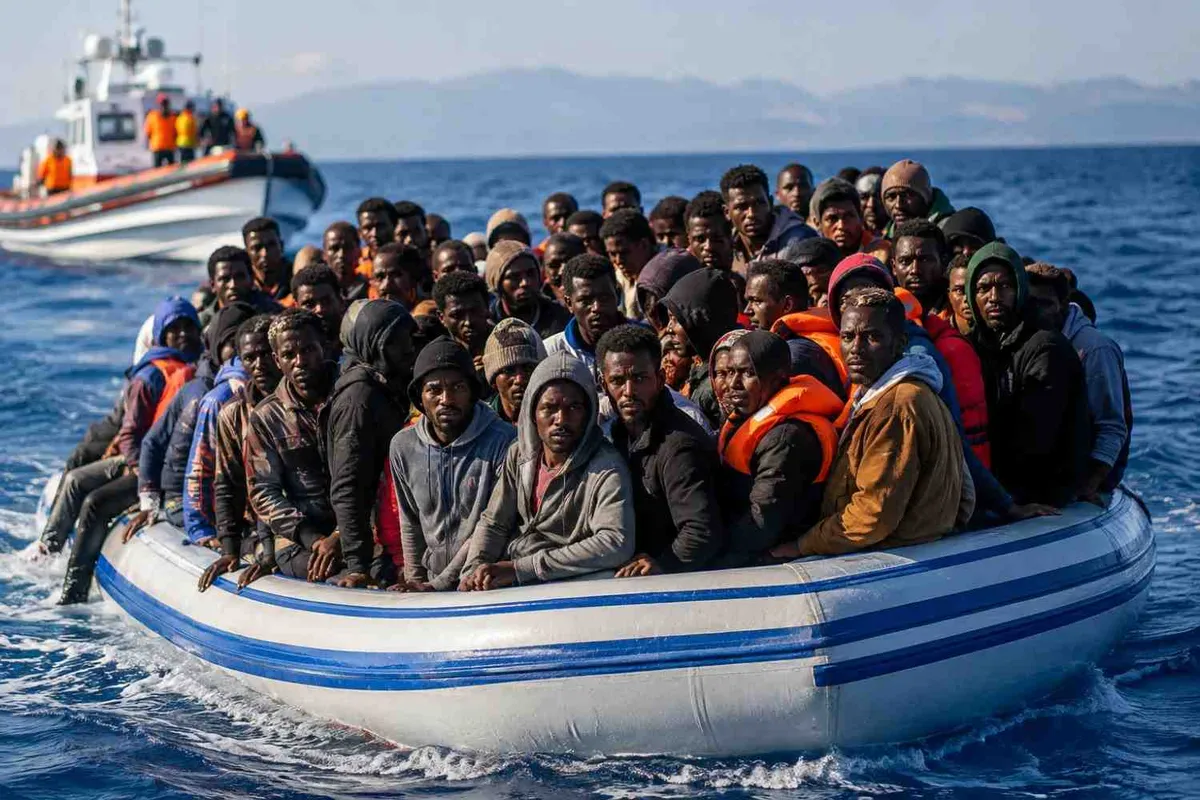
At the heart of the disagreement is the extraordinary influx of migrants into Ceuta, the Spanish exclave on Morocco northern coast.
About 78,000 migrants reportedly entered the territory during the recent crisis, although most were subsequently returned to Morocco. The crossing also resulted in deaths, while hundreds of minors remained in Ceuta.
The episode has raised difficult questions about border management, migration policy and Spain's relationship with Morocco.
Ceuta and Spain other North African exclave, Melilla, have long been sensitive points in relations between Madrid and Rabat. Morocco does not recognise Spanish sovereignty over the territories.
Questions over a possible second wave
Concerns about another large-scale crossing have added another layer to the dispute.
Spanish authorities have not announced that a second major influx from Morocco is expected. However, social-media posts have reportedly circulated calls for another attempted crossing in mid August.
Some online groups promoting the idea have attracted large audiences, prompting further scrutiny of social-media activity. Meta has said it removed posts that violated its policies.
Spanish authorities have said they are monitoring the situation but do not currently expect a repeat of the scenes witnessed during the previous influx.
Why did so many migrants attempt the crossing?
The precise reasons behind the mass movement remain unclear.
EU Migration Commissioner Magnus Brunner has suggested that criminal networks and disinformation may have played a role, an explanation supported by the Spanish government.
Morocco, however, has pointed towards a different explanation, criticising a Spanish Supreme Court ruling concerning migrants intercepted at sea while attempting to reach Ceuta or Melilla.
The ruling has become part of the wider political argument surrounding the crisis, with questions also being raised about why Moroccan border authorities did not prevent such a large number of people from attempting the crossing.
Schengen under pressure
Temporary internal border controls are not unprecedented within the Schengen area. Italy, for example, also maintains controls along its border with Slovenia.
Italy's decision regarding travellers arriving from Spain received support from Finland and Denmark, while the Czech Republic went further by calling for Spain Schengen membership to be temporarily suspended.
Such reactions underline how quickly a bilateral migration dispute can develop into a wider European debate over border security and free movement.
A political and humanitarian challenge
The confrontation between Madrid and Rome reflects two competing pressures facing European governments, the desire to maintain freedom of movement within the EU while also responding to irregular migration and security concerns.
For travellers, the immediate consequence is more checks and potentially longer journeys. For Spain and Italy, however, the dispute is about much more than airport queues.
It raises fundamental questions about who should control Europe external borders, how responsibility for migrants should be shared between EU states, and how far individual governments can go in restoring internal controls when faced with a sudden migration crisis.
With Spain restrictions scheduled to continue into September and Italy maintaining its own measures at least until mid, August, the coming weeks could determine whether the dispute is resolved through diplomacy or becomes another major test for Europe's border-free travel system.
Source: Editorial
View Original Source →