
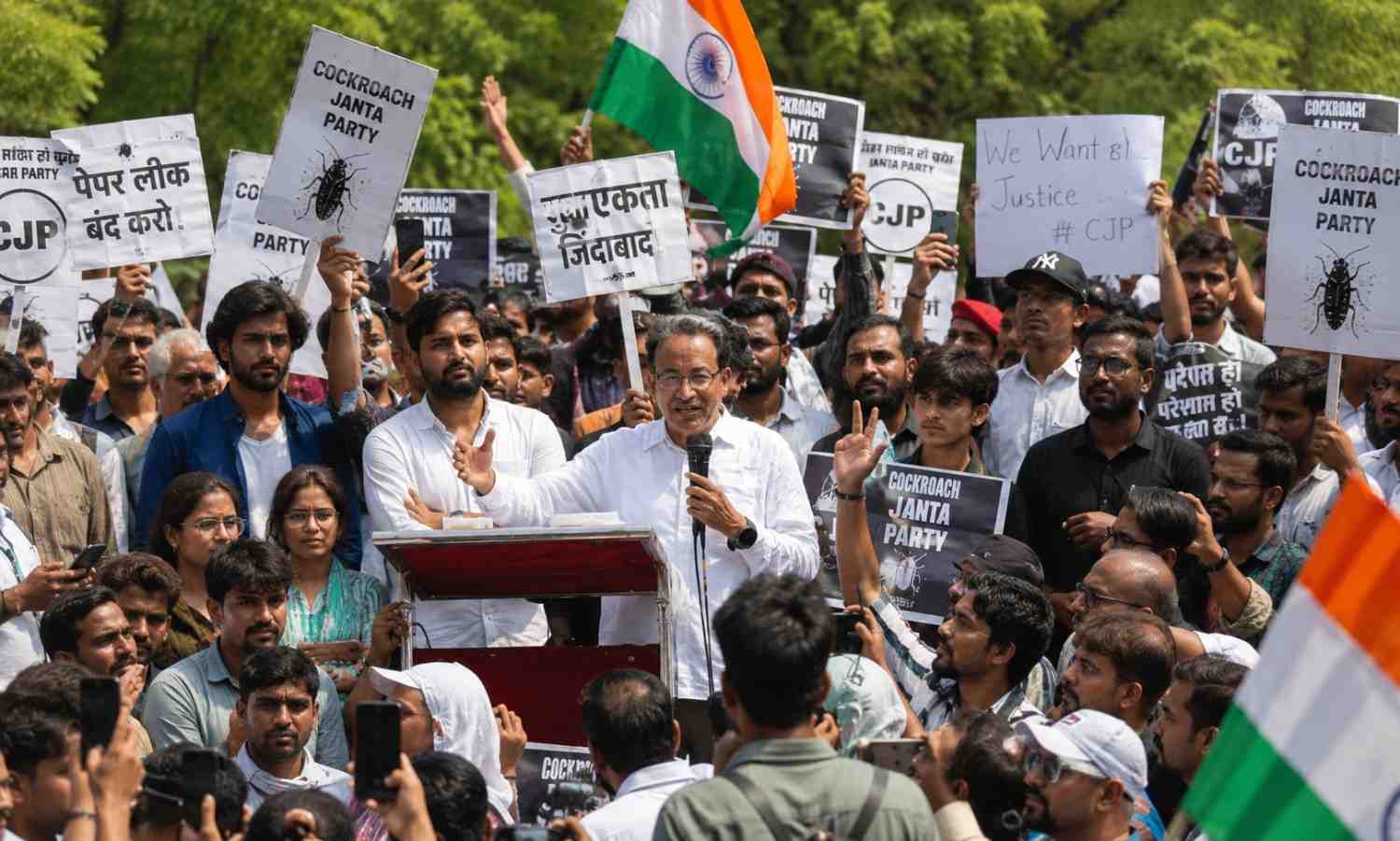
Education reform activist Sonam Wangchuk delivered an unexpected message at the Cockroach Janta Party (CJP) protest in New Delhi on Saturday, thanking the government for allowing demonstrators to gather peacefully while urging citizens to keep the movement constructive and focused on long-term reforms.
Speaking at Jantar Mantar, Wangchuk described the peaceful conduct of the demonstration as a positive sign for democracy and encouraged protesters to view the gathering as an appeal for change rather than an act of confrontation.
Peaceful Protest Deserves Recognition
Addressing hundreds of students, education aspirants, and supporters, Wangchuk said the government deserved credit for permitting the protest to proceed without obstruction.
He called the development "a major achievement" and "a victory for India and even for the government," arguing that allowing peaceful democratic expression strengthens the country's institutions.
A day before the gathering, Wangchuk had appealed through social media for participants to make the demonstration "the most peaceful movement in India's history."
Appeal, Not Agitation
Rather than encouraging aggressive demonstrations, Wangchuk emphasized dialogue and respectful engagement with authorities.
"We are not fond of protests… we have come to make an appeal," he told the gathering.
He expressed hope that citizens in a healthy democracy should not have to rely on loud slogans or confrontation to have their concerns heard, adding that peaceful and creative public participation should become the norm.
Beyond Examination Irregularities
While the immediate focus of the protest was examination-related concerns, Wangchuk argued that India's education challenges extend far beyond recruitment tests and competitive exams.
He called for comprehensive reforms that ensure equal educational opportunities for students regardless of whether they study in metropolitan cities or remote villages.
According to Wangchuk, improving the quality and fairness of education is essential for India's long-term development and social progress.
Government Schools at the Centre of Reform
One of Wangchuk's strongest proposals focused on public education.
He argued that genuine reform would begin only when the children of elected representatives and policymakers attend government schools alongside ordinary citizens.
According to him, such a system would naturally increase accountability and improve the quality of public education, benefiting students across the country.
He stressed that the foundation of a truly developed India rests not only in elite urban institutions but also in strengthening schools located in villages and underserved regions.
Expanding the Movement
Wangchuk encouraged supporters not to limit their activism solely to examination issues.
He expressed hope that the movement would eventually promote reforms across multiple sectors, including education, governance, and environmental protection.
Calling it a shared national responsibility, he urged both citizens and public representatives to contribute constructively toward building stronger institutions and ensuring long-term policy improvements.
Looking Ahead
The Cockroach Janta Party movement, which began as a digital campaign following public debate over examination irregularities, continues to draw attention from students and civil society groups.
With Sonam Wangchuk lending his voice, the conversation expanded beyond exam reforms to include broader questions of educational equality, democratic participation, and institutional accountability. His message throughout the event remained consistent: peaceful civic engagement and systemic reform should go hand in hand if India is to build a more equitable future.