
When the Census Questions Become the Question- Kharge, Rahul Demand a Fresh Caste Count.
Kharge and Rahul Gandhi criticism focuses on the caste census questionnaire, arguing that its design could produce misleading or incomplete data. However, the summary would be more balanced by…
Politics
Indian Edition
By Honestly Biased Editorial Board
🕵 AI Narrative Audit
The framing foregrounds Kharge and Rahul Gandhi demand while using misleading questionnaire to cast the government’s caste census approach as questionable, without presenting the government rationale or response.
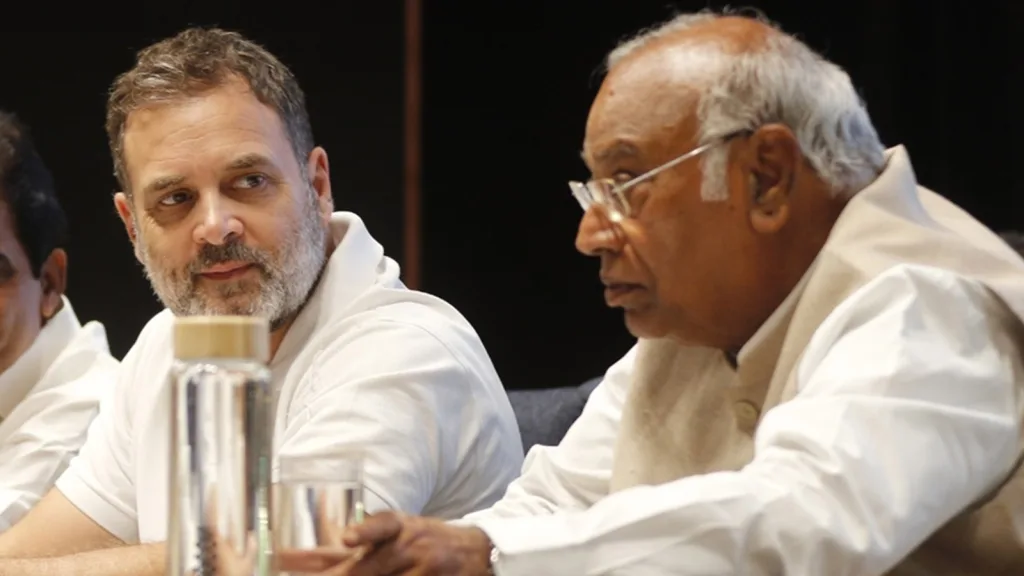
Congress leaders Mallikarjun Kharge and Rahul Gandhi have jointly written to Prime Minister Narendra Modi, demanding that the Centre scrap the existing questionnaire being used for the caste census and prepare a new one after wider consultations with political parties, experts and the public.
In their August 20 letter, the Leaders of Opposition in the Rajya Sabha and Lok Sabha respectively criticised the government decision to use an open ended format for recording caste details. According to them, allowing respondents to provide caste names in their own form could create inconsistencies because the same caste may be known by different names, sub castes or linguistic variations across India.
The “open-ended” problem
Kharge and Gandhi argued that simply recording whatever caste name an individual provides could fragment communities across thousands of different entrie.
Their concern is that such fragmentation could make the resulting database difficult to consolidate and analyse. If people belonging to the same social group are recorded under multiple names, the leaders said, the census could potentially produce an excessively large number of caste categories and fail to provide a reliable picture of India’s social composition.
Why the data matters
The Congress leaders linked the issue directly to social justice policies. They argued that reliable information about the population and socio economic conditions of different communities is necessary for designing policies concerning education, employment, welfare programmes and other forms of support.
They particularly raised concerns about the ability of the proposed methodology to establish the size and socio economic position of Other Backward Classes (OBCs).
According to Kharge and Gandhi, the term “Backward Class” itself is not included in the questionnaire, which they say could prevent the exercise from adequately capturing the OBC population.
Congress calls for wider consultation
The opposition leaders have therefore asked the government to abandon the existing questionnaire and develop a fresh format through consultations involving political parties, subject experts and members of the public.
Congress general secretary Jairam Ramesh also criticised the Centre's approach during a press conference, describing the ongoing exercise as a whitewash. He claimed that Congress leaders had already written three letters to the Prime Minister on the matter and said that their previous communications had not received a response.
A debate over how India should count caste
The disagreement highlights a larger challenge surrounding caste enumeration: collecting detailed information across a country where communities can have multiple names, regional identities and sub caste classification.
For the opposition, the central question is not simply whether caste should be counted, but whether the methodology can produce data accurate enough to guide future social justice policies.
The government response to the specific objections raised by Kharge and Gandhi would be important in assessing how the proposed questionnaire is intended to address variations in caste names and classification.
Ultimately, the controversy puts the spotlight on a basic question surrounding the caste census- if the counting method itself creates confusion, how reliable will the final count be?
Source: Editorial
View Original Source →