
Paper Leak Declared More Heinous Than Murder, Courtesy of Chhattisgarh HC
The report highlights the Chhattisgarh High Court’s unusually strong comparison of question-paper leaks with murder, framing exam fraud as a grave social and legal offence. However, the comparison…
Politics
Indian Edition
By CMS Admin
🕵 AI Narrative Audit
The framing strongly amplifies the court more heinous than murder comparison, potentially sensationalising the seriousness of paper leaks while giving limited context to the legal reasoning behind the observation.
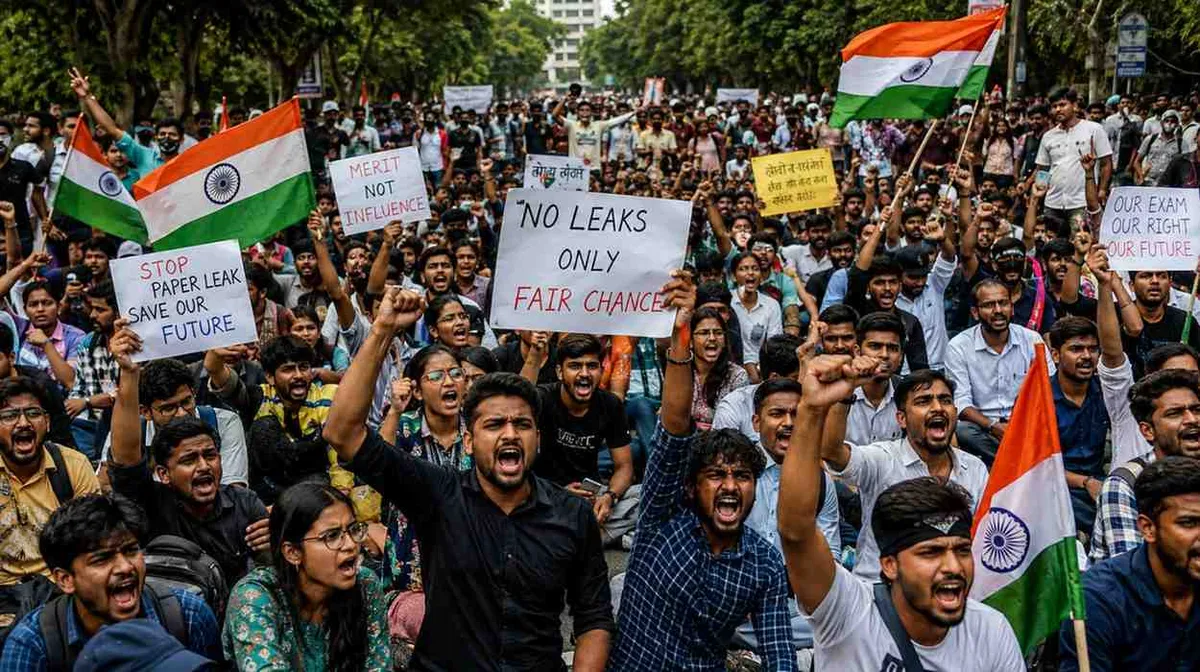
The Chhattisgarh High Court has made a strong observation on the seriousness of question-paper leaks in competitive examinations, stating that jeopardising the future of lakhs of students through such acts can be considered more heinous than murder.
The observation came while the court dismissed the bail plea of Janak Kumar Dhruv, who is an accused in the alleged Chhattisgarh Public Service Commission (CGPSC) recruitment scam.
The case relates to allegations of corruption, question-paper leaks and manipulation in the CGPSC State Service Examinations conducted in 2021 and 2022. The allegations suggest that the recruitment process was compromised and that relatives of influential individuals were allegedly selected through irregularities.
The court's remarks underline the wider consequences of examination fraud. Competitive examinations are often seen as a pathway to government jobs and career opportunities, with large numbers of candidates investing years of preparation in the hope of securing a position on merit.
A leaked question paper can therefore undermine confidence in the entire recruitment system and leave genuine candidates questioning whether their efforts have been fairly evaluated.
The allegations surrounding the CGPSC examinations have also raised concerns about transparency and accountability in public recruitment. While the accused are subject to the legal process and the allegations must ultimately be established through evidence, the court's comments reflect the seriousness with which such alleged manipulation is being viewed.
The observation also puts the focus on the need to protect the integrity of competitive examinations. Any proven leak or manipulation can affect not only individual candidates but also public confidence in institutions responsible for conducting recruitment examinations.
The High Court's decision to reject the bail plea keeps the legal proceedings moving forward, while the broader case continues to draw attention to alleged irregularities in the CGPSC recruitment process.
For thousands of aspirants, the issue goes beyond a single examination. It concerns the basic expectation that recruitment to public positions should be conducted fairly, transparently and on merit.
Source: Editorial
View Original Source →