
France Battles Wildfires and the Blame Game Heats Up.
The headline highlights the scale of the arrests and frames the story around the question of responsibility, potentially encouraging readers to connect the arrests with the fires before the facts…
Politics
World Edition
By CMS Admin
🕵 AI Narrative Audit
The headline is broadly neutral but its question-driven phrasing shifts attention toward assigning responsibility for the wildfires without establishing the evidence behind the arrests or the causes of the fires.
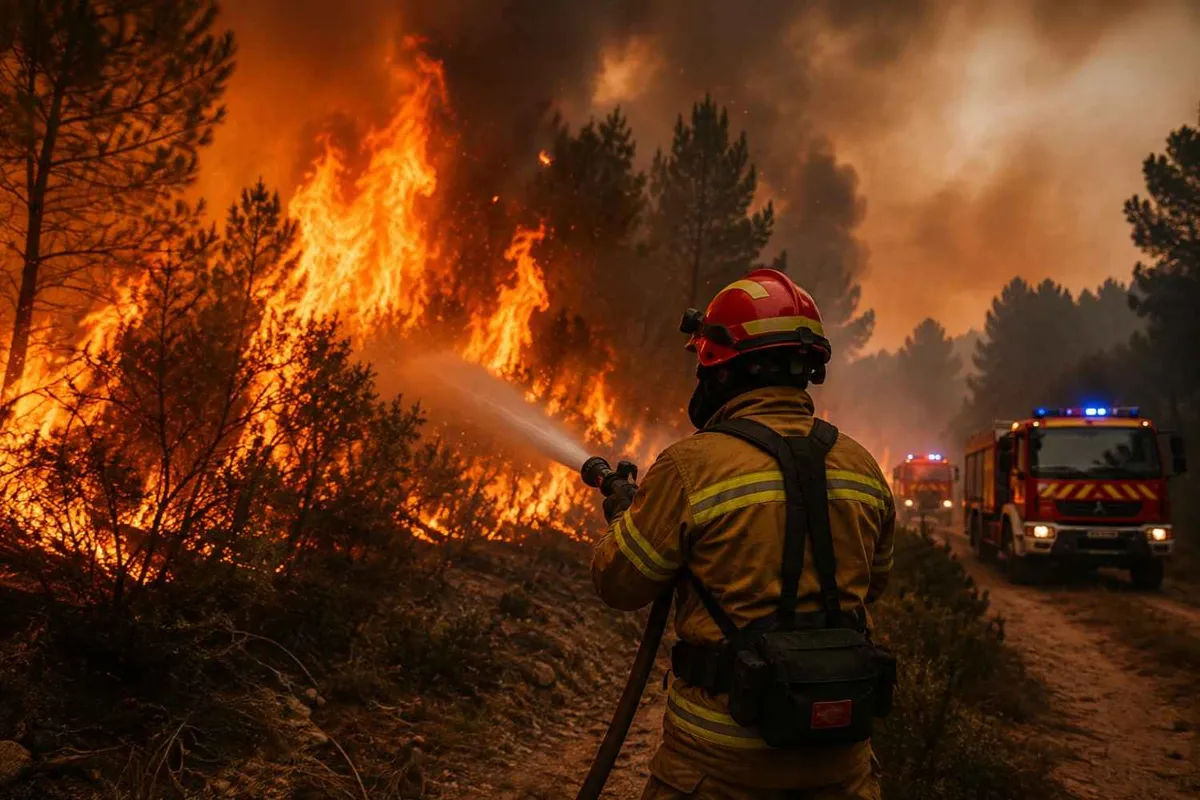
France is facing one of its most severe wildfire seasons in decades, with fires this year causing unprecedented damage and scorching more than 300,000 acres. As communities deal with the destruction, authorities are investigating how the fires began while facing growing questions over whether enough was done to prepare for increasingly dangerous conditions.
Climate Change Raises the Risk
A major factor behind the worsening wildfire threat is the changing climate. Rising temperatures and prolonged periods of drought are creating conditions in which vegetation dries out more quickly, allowing fires to start and spread more easily.
French authorities have also pointed to the significant human role in wildfire ignition. Around nine out of 10 fires are reportedly linked to human activity, whether deliberately or accidentally.
That has placed additional pressure on investigators to determine who was responsible for individual fires.
Hundreds Arrested
France interior ministry has announced 420 arrests involving people suspected of deliberately or accidentally starting fires. Among those arrested are 166 minors.
In one case, a 23-year-old man was accused of deliberately starting 10 fires over five days in the Var region of southeastern France. If convicted, he could face up to 15 years in prison and a €150,000 fine.
Other cases have already resulted in convictions. One man received a three-year prison sentence after being found responsible for starting three fires in the Raon-L'Étape forest in the Vosges region.
Questions Over the Arrests
The large number of arrests has also generated debate over whether authorities are taking an excessively broad approach.
Lawyer Muriel Gestas, who has represented several people accused of arson, including firefighters, has questioned how many of the cases will ultimately result in convictions.
French media have similarly raised questions about the speed with which some investigations are being conducted and the limited public information available about the individual allegations.
One important distinction is whether a fire was deliberately started or resulted from negligence. Authorities may pursue responsibility in both circumstances, particularly during extreme fire conditions, but the circumstances and evidence in each case can differ substantially.
Why Fires Can Spread So Quickly
Determining how a wildfire began is a complicated investigative process.
Fire investigators typically examine the boundary of a burned area and attempt to identify the likely point of origin. From there, they reconstruct how the flames travelled, taking factors such as wind direction and the shape of the burned area into account.
In extremely dry conditions, even seemingly minor human activity can potentially trigger a rapidly spreading fire.
Cigarettes, barbecues, construction activity and faulty electrical equipment are among the potential accidental sources. Deliberate ignition, meanwhile, represents a smaller proportion of cases, according to experts cited in the reporting.
The Challenge of Proving Intent
One of the most important questions in individual cases is whether a person deliberately started a fire or caused it accidentally.
Investigators may search for physical evidence and examine the circumstances surrounding a fire to determine its likely origin. However, establishing criminal intent requires evidence specific to the individual case.
The distinction is particularly important because the consequences of wildfire can be enormous even when there was no intention to cause widespread damage.
Different Motives Behind Deliberate Fires
Experts have identified several possible motivations for deliberate fire setting, including financial gain, revenge or other personal motives.
Psychiatrist Michel Lejoyeux has also discussed pyromania, although the condition is rare and should not be treated as an explanation for most cases of arson.
There have also been allegations involving firefighters who may have started fires in order to subsequently participate in firefighting operations. Such allegations require individual investigation and evidence rather than assumptions based on occupation alone.
Government Faces a Second Question: Preparedness
While authorities investigate suspected fire starters, another issue remains, whether France was sufficiently prepared for increasingly severe wildfire conditions.
The scale of the destruction has renewed debate about prevention, emergency response, forest management and adaptation to a warming climate.
French President Emmanuel Macron has described the fires as unprecedented and argued that France will need to rethink its forests to adapt to changing climate conditions.
The government faces a difficult balancing act: prosecuting people whose actions may have contributed to fires while also addressing the environmental conditions that allow fires to become increasingly destructive.
The Threat Is Not Over
The immediate danger may not disappear with the extinguishing of existing fires. Forecasts of another heatwave have raised concerns that dry and vulnerable areas could face renewed risks.
For communities that have lost homes, businesses and natural areas, the consequences extend well beyond the flames. Tourism, agriculture, local economies, air quality and ecosystems can all be affected by major wildfires.
The debate over responsibility is therefore likely to continue. Individual acts of negligence or deliberate fire setting may explain how particular fires began, but the broader scale of the disaster is also closely connected to increasingly extreme heat and drought conditions.
France's wildfire crisis ultimately raises two separate questions: who should be held responsible for individual fires, and how should the country prepare for a future in which extreme wildfire conditions become more frequent?
Source: Editorial
View Original Source →