
Colombia Quake Kills 111, Earth Decides It’s Time for a National Emergency
The earthquake in Colombia reportedly killed at least 111 people, prompting the President to declare an emergency. The summary highlights the human toll and government response without speculating…
Politics
World Edition
By CMS Admin
🕵 AI Narrative Audit
he headline uses dramatic and crisis focused framing by emphasizing the death toll and emergency declaration, potentially heightening the perceived severity of the disaster.
Colombia declared a state of emergency on Monday, August 10, 2026, after a powerful 7.4-magnitude earthquake struck the western part of the country, killing at least 111 people and leaving dozens of buildings damaged or destroyed.
The earthquake struck at 7:34 a.m. local time (1234 GMT), catching residents off guard and triggering panic in several cities. People rushed out of buildings as the ground shook, while emergency services began responding to reports of structural collapses and people trapped beneath debris.
Rescue Operations Underway
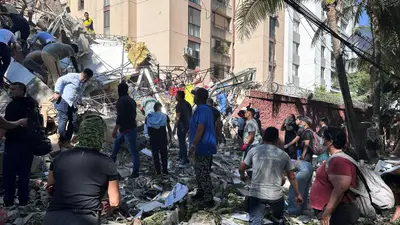
The immediate focus following the earthquake was the search for survivors. Emergency workers and rescue teams were deployed to affected areas, where damaged buildings had collapsed and trapped victims underneath.
Authorities faced difficult conditions as they attempted to reach people believed to be buried beneath the rubble. Rescue operations were conducted across several cities as emergency personnel assessed damaged structures and searched for signs of life.
The death toll of at least 111 people reflected the scale of the destruction, but officials continued to warn that the number could change as rescuers gained access to more affected areas.
Buildings Flattened by the Quake
The earthquake caused extensive structural damage, with dozens of buildings reportedly flattened or severely damaged. The destruction raised concerns about people who could still be trapped inside collapsed structures.
Resident in affected areas were urged to remain cautious around damaged buildings because weakened structures can pose additional risks after a major earthquake. Emergency teams also had to assess roads and other infrastructure needed to reach affected communities.
The earthquake triggered a frantic response as families searched for relatives and emergency workers worked to move through areas covered by debris.
State of Emergency Declared
The Colombian government decision to declare a state of emergency was aimed at enabling a coordinated response to the disaster. Such a declaration allows authorities to focus resources on rescue, medical assistance, emergency shelter and other immediate needs.
Government agencies and local authorities were expected to continue assessing the scale of the damage while coordinating relief efforts in the worst hit areas.
The emergency response also involved efforts to account for residents affected by the disaster and identify locations where additional assistance was required.
Search for Survivors Continues
Even after the initial rescue operations began, authorities faced the difficult task of determining how many people remained trapped or missing.
Search teams continued working through damaged areas, looking for survivors while simultaneously dealing with unstable structures and piles of rubble. Medical teams were also responding to injured residents as hospitals and emergency facilities dealt with casualties.
The situation remained fluid, with the number of casualties and the extent of property damage expected to become clearer as authorities continued their assessment.
Communities Face Major Challenge
For residents in the affected areas, the earthquake turned an ordinary Monday morning into a major emergency. Families were forced to leave damaged buildings, while communities faced uncertainty over missing relatives, damaged homes and disrupted services.
The disaster also placed significant pressure on local emergency services, which had to respond simultaneously to collapsed buildings, casualties and requests for assistance.
As rescue efforts continued, authorities faced the dual challenge of saving lives and assessing the longer-term needs of communities affected by the earthquake.
International Attention
The earthquake also drew attention beyond Colombia, particularly because reports indicated that the tremor was felt in neighbouring Ecuador. The powerful magnitude of the quake and the resulting destruction prompted concerns about the wider impact across the region.
Authorities were expected to continue releasing information about casualties, damage and rescue operations as teams reached areas that had initially been difficult to access.
For now, the priority remains finding survivors, treating the injured and providing support to people who have lost homes or been displaced by the disaster.
A Race Against Time
With at least 111 deaths reported, Colombia emergency response has become a race against time. Rescue workers are continuing to search collapsed structures while officials work to determine the full scale of the destruction.
The coming hours and days will be critical as authorities assess damaged communities and provide assistance to those affected.
The earthquake has left Colombia facing a major humanitarian and rescue challenge, with the country now focused on saving lives, supporting survivors and beginning the difficult process of recovery.
Source: Editorial
View Original Source →