
"Medical Recovery Meets Democratic Determination."
Sonam Wangchuk has reportedly written to Safdarjung Hospital seeking permission or discharge to participate in the Parliament March while receiving medical care. The development underscores the…
Politics
Indian Edition
By CMS Admin
🕵 AI Narrative Audit
The framing centers on Sonam Wangchuk's determination while leaving limited room for the hospital's medical rationale or administrative considerations.
Tensions escalated in the national capital on Monday as the Cockroach Janta Party's (CJP) proposed "Chalo Sansad" march prompted heightened security, negotiations between government representatives and protest leaders, metro station closures, and clashes between police and demonstrators.
According to sources, the Centre has initiated talks with the CJP through New Delhi Deputy Commissioner of Police (DCP) Sachin Sharma in an attempt to defuse the situation before the planned march towards Parliament. The discussions come after multiple rounds of outreach by the government.
Initially, CJP representatives were reportedly offered talks with the District Magistrate. This was followed by proposals for discussions with a Secretary to the Union Government and later a Minister of State. However, the protest leaders declined these offers, insisting that negotiations should take place directly with either the Prime Minister or a Cabinet minister.
Sources said the CJP has submitted a list of Cabinet ministers to the DCP, indicating the leaders they consider acceptable for meaningful dialogue. As of Monday evening, there was no official confirmation regarding whether the government would agree to the demand.
Police Action During Protest
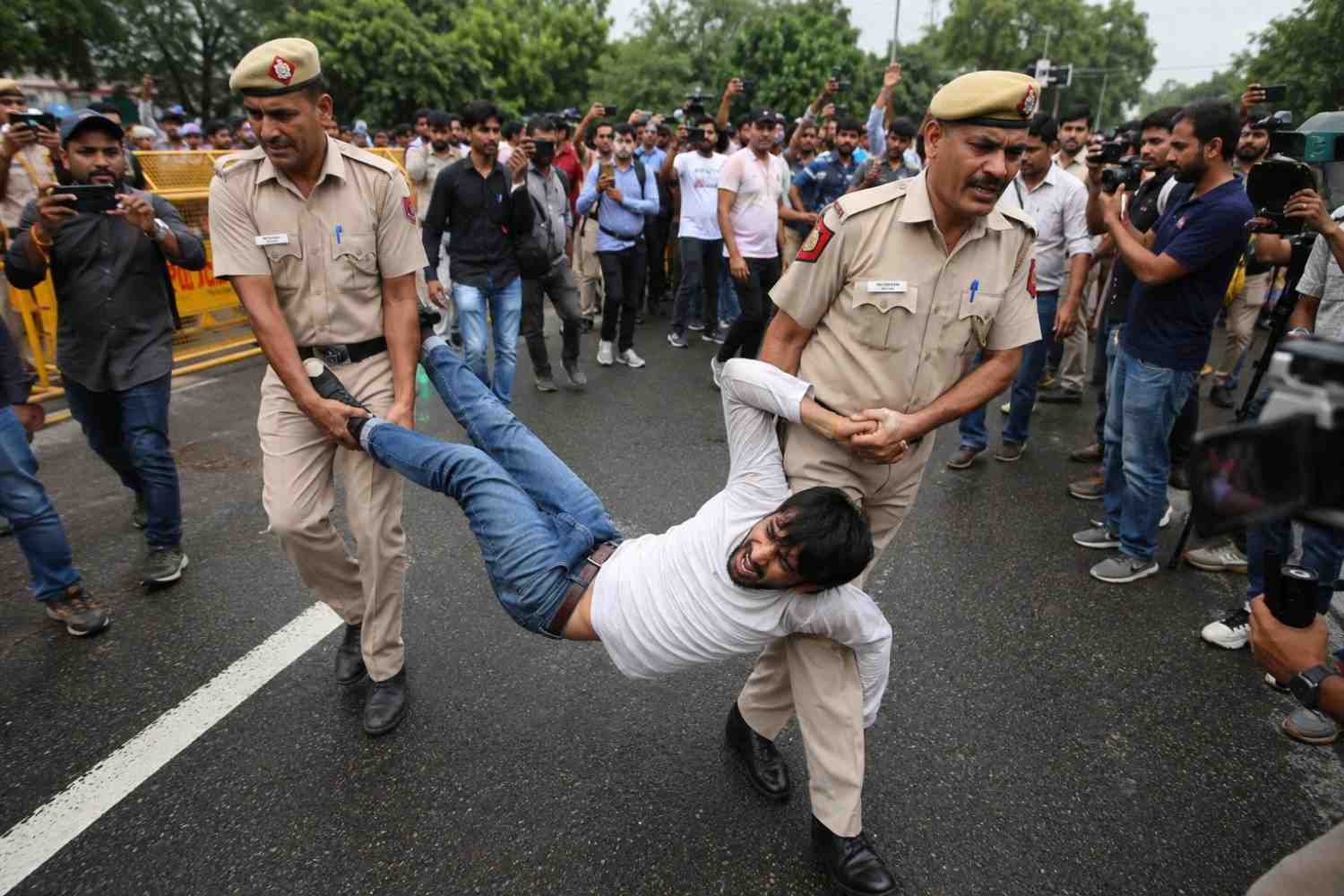
Meanwhile, protests intensified in parts of central Delhi. Eyewitnesses said Delhi Police used batons to disperse hundreds of students and youth activists who attempted to march from Mandi House Metro Station towards Jantar Mantar. The police action came amid tight security arrangements aimed at preventing large gatherings near Parliament.
While authorities maintained that security measures were necessary to maintain law and order, several protesters alleged that they were stopped from peacefully assembling.
Metro Services Disrupted
The protest also caused widespread disruption to public transport across the city.
The Delhi Metro Rail Corporation (DMRC) temporarily closed five metro stations citing security concerns ahead of the Parliament march. The closures resulted in long queues, stranded commuters, and delays across several metro routes.
Later in the day, authorities reopened the gates at Central Secretariat and Rajiv Chowk stations, restoring interchange facilities and easing commuter movement. Nevertheless, many passengers continued to face inconvenience due to altered travel routes and heightened security checks.
Sonam Wangchuk's Hunger Strike
Activist Sonam Wangchuk, who has been on a hunger strike, announced that he would end his fast on Monday if the government demonstrates accountability for alleged shortcomings in the education system or if Members of Parliament agree to formally raise the issue inside Parliament.
His statement linked the ongoing protest to broader demands concerning education policy and public accountability. Supporters described the hunger strike as part of a wider campaign seeking institutional engagement on education-related concerns.
Government Yet to Respond
Despite ongoing negotiations, no breakthrough had been officially announced by the time of reporting. The government's willingness to elevate talks to the level requested by the CJP remains unclear, while protest organisers continue to push for direct political engagement.
Security forces remain deployed across central Delhi as authorities monitor the evolving situation. With negotiations continuing and demonstrators maintaining pressure, the developments are expected to shape the course of the Parliament march and the government's response in the coming days.
Source: Editorial
View Original Source →