Pakistan Gives Foreign Media a New Travel Advisory, Keep Moving
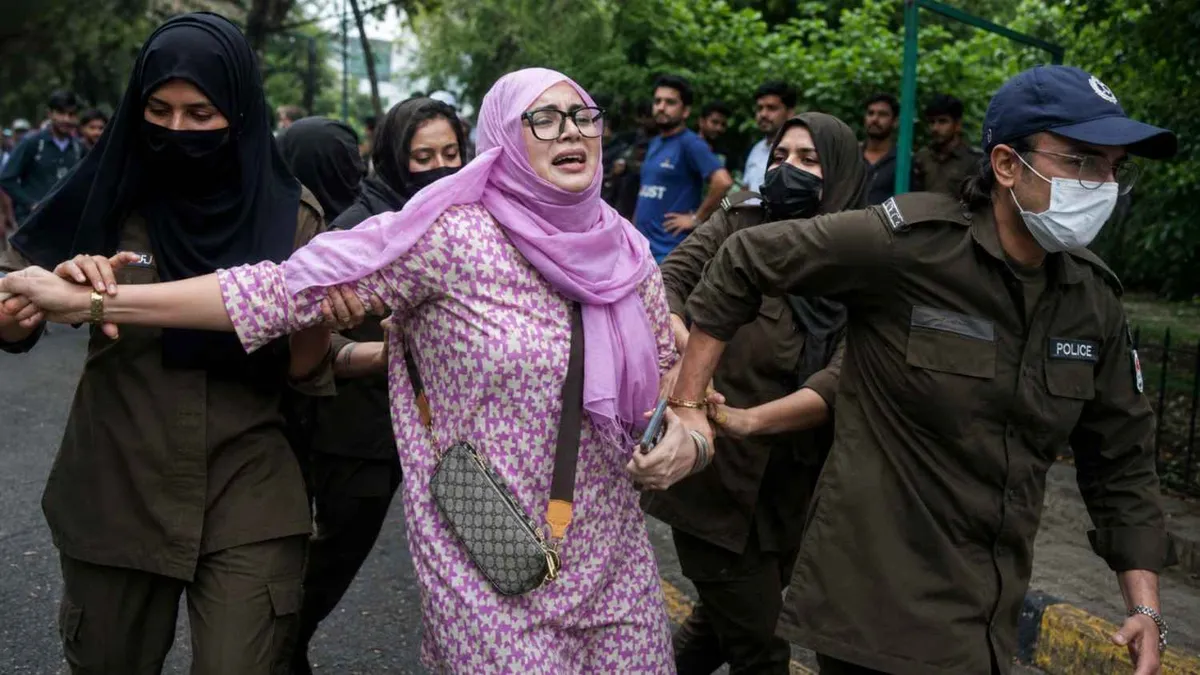
Pakistan has imposed restrictions on international media reporting, affecting the ability of foreign journalists and organizations to operate or report within the country. A balanced account should…
Politics
World Edition
By CMS Admin
🕵 AI Narrative Audit
The report states that Pakistan has restricted international media reporting but should also explain the legal basis for the restrictions and include the government's stated justification alongside any responses from affected media organizations.
Pakistan has introduced new regulations governing international media reporting, requiring journalists working for foreign news organizations—including Pakistani nationals contributing to international outlets—to obtain prior government permission before reporting from most parts of the country. The move has prompted criticism from journalists, media organizations, legal experts, and press freedom advocates, who argue that the measures could significantly restrict independent reporting.
What the New Guidelines Require
Under the Foreign Media Facilitation Guidelines, 2026, journalists working for foreign media can report freely only from Islamabad, Karachi, and Lahore. Reporting from any other location now requires obtaining a No Objection Certificate (NOC) from the authorities.
The new rules apply not only to foreign correspondents but also to Pakistani citizens, freelance contributors, and local journalists working with international media organizations. Critics argue that this expansion dramatically increases bureaucratic oversight of reporting across most of Pakistan.
One of the major concerns is that the guidelines do not specify how long authorities may take to issue an NOC. Journalists note that permission requests have historically taken weeks or even months to process, while some applications reportedly receive no response at all, making timely reporting on breaking events extremely difficult.
Journalists Warn of Greater Restrictions
Media organizations have expressed concern that the new policy could limit independent coverage of events occurring outside Pakistan's three largest cities.
Political commentator Mustafa Nawaz Khokhar criticized the policy, arguing that restricting international reporting creates additional space for misinformation rather than improving public understanding.
"These guidelines are tantamount to choking international media in an increasingly shrinking space," he said.
Khokhar added that many Pakistanis rely on international media for independent reporting, warning that greater restrictions could reduce access to diverse sources of information.
Dawn Editor Calls Rules Unprecedented
Zaffar Abbas, editor of Pakistan's leading English-language newspaper Dawn, described the measures as among the most restrictive he has witnessed during his journalism career.
He said requiring journalists to seek permission simply to travel and report outside three designated cities affects both freedom of movement and press freedom. Abbas noted that even during previous periods of military and civilian authoritarian rule, similar nationwide reporting restrictions had not been imposed in this manner.
Government Says Rules Are Administrative, Not Restrictive
Pakistan's government has rejected claims that the policy is intended to suppress journalism.
Officials say the guidelines were introduced to establish an administrative framework for verifying foreign media personnel, coordinating reporting requirements, and facilitating official access where necessary.
The government maintains that the policy does not amount to a blanket restriction on journalists' movement but rather creates a structured process for managing reporting activities involving foreign media organizations.
The guidelines also state that accreditation may be withdrawn if journalists engage in activities considered contrary to Pakistan's ideology, sovereignty, national security, or public order.
Government officials argue that accreditation systems worldwide commonly include provisions allowing authorities to act where national security concerns arise.
Legal Experts Question the Framework
Some legal experts have questioned whether the new guidelines possess a sufficient legal foundation.
Supreme Court lawyer Salhuddin Ahmed argues that the rules are executive guidelines rather than legislation enacted through Parliament. According to him, the government's internal Rules of Business regulate administrative functioning but do not themselves create legal obligations for journalists or media organizations.
This has raised questions about whether the guidelines could face legal challenges if implemented in their current form.
Impact on International Reporting
International media organizations frequently rely on Pakistani journalists and contributors based outside Islamabad, Karachi, and Lahore to verify developments in regions such as Peshawar, Quetta, and other provinces where international correspondents may have limited access.
Under the new framework, those local contributors would also require government approval before covering events, potentially slowing news gathering and limiting real-time reporting during major political, security, or humanitarian developments.
Pakistan currently ranks 153rd out of 180 countries in the World Press Freedom Index, and press freedom organizations have repeatedly raised concerns over restrictions affecting journalists operating in the country.
Journalists Seek Dialogue
In response to the announcement, a group of international journalists, together with representatives of Pakistan's Federal Union of Journalists, is reportedly seeking a meeting with the country's Information Minister to discuss their concerns and request clarification regarding implementation of the new guidelines.
The outcome of those discussions may determine whether modifications or additional explanations are issued in the coming weeks.
Looking Ahead
The introduction of the Foreign Media Facilitation Guidelines has renewed debate over the balance between national security considerations and freedom of the press. While the government maintains that the rules are administrative measures designed to improve coordination, journalists and legal experts warn that the broad approval requirements and undefined timelines could significantly hinder independent reporting across much of Pakistan.
As implementation begins, attention will focus on how consistently the guidelines are applied, whether permission requests are processed efficiently, and whether the policy faces legal or institutional challenges from media organizations and civil society.
Source: Editorial
View Original Source →