
No Room to Breathe, Palestinian Families Face a Settler Siege in the West Bank
The report focuses on claims that Israeli settlers are surrounding and restricting Palestinian families in a West Bank village, presenting the situation primarily through the experiences of those…
Politics
World Edition
By CMS Admin
🕵 AI Narrative Audit
The headline uses the strongly charged term besieging, framing Israeli settlers as active aggressors and Palestinian families as victims, while offering little context about the wider circumstances or competing accounts surrounding the confrontation.
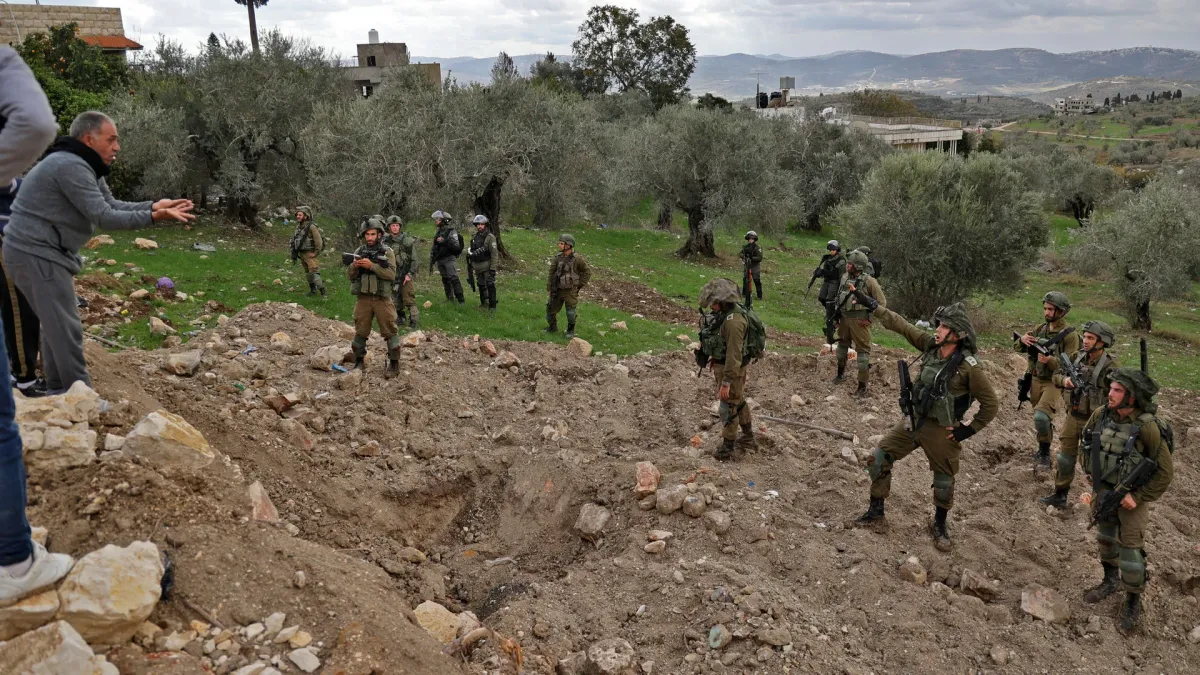
Two Palestinian families in the occupied West Bank say they have been confined to their homes since Sunday as Israeli settlers established a presence around their properties, with their supplies running low and rights groups calling for authorities to intervene.
The families, the Abu Ridi and Hassan households, are in the village of Qusra near Nablus. They say their water and electricity supplies were cut and that their food stocks were running out, prompting appeals for assistance on social media.
Families Say They Are Trapped
According to Palestinian security camera footage, settlers were seen tearing down a wall outside the Abu Ridi family's home on Sunday evening and using stones to block the nearby road.
The blockade reportedly left seven people, including two young girls, unable to leave their homes, while preventing other Palestinians from reaching them. The families live in Area B of the West Bank, where the Palestinian Authority exercises administrative responsibilities while Israel retains security control.
Qusay Abu Ridi described the situation as critical, saying his family was completely isolated.
The families' appeals drew attention from Palestinian officials and human rights organisations, which urged Israeli authorities to protect the residents and remove the settlers from the area.
Security Forces Withdraw After Confrontations
The situation escalated on Wednesday after Israeli security forces reportedly withdrew from a nearby Jewish settler outpost following clashes with a larger group of settlers. Around a dozen settlers were reported to remain at the site.
Earlier, when the Palestinian homeowners contacted the Israeli army, footage reportedly showed some of the first soldiers arriving at the scene praying alongside settlers.
Israeli forces later confronted settlers at the site, with Palestinian security camera footage showing the use of tear gas and stun grenades.
The Israel Defense Forces said the establishment of the new outpost was illegal and described the seizure or entry into Palestinian homes as unacceptable. It also said disciplinary action would be taken against security personnel who had previously been documented at the site.
Aid Finally Reaches the Families
For days, the families said they had struggled to obtain basic supplies. On Tuesday night, a Palestinian ambulance was eventually allowed to reach them, delivering food and taking one child away for medical treatment.
Israeli security forces also moved to dismantle part of the settlers' makeshift presence. The IDF said Border Police had evacuated a tent and were working to remove civilians who remained at the location.
The episode has also raised questions about access for journalists. Reporters from the Israeli newspaper Haaretz said settlers prevented them from reaching the Palestinian properties on Monday, while soldiers reportedly refused to assist them. The reporters said they were told the area was a closed military zone, although they claimed the restriction was not enforced against the settlers.
Rights Groups Call for Action
Israeli human rights organisation Yesh Din appealed to the head of the military Central Command to protect the Palestinian residents, remove the settlers from the outpost and hold those responsible accountable.
The incident comes amid wider concerns over violence and displacement in the West Bank.
Qusra mayor, Abdel Azim Wadi, told the BBC that residents had witnessed what he described as a continuing pattern of targeting in the village. Last month, a newly completed mosque was set on fire, with Hebrew graffiti reportedly found nearby.
There have also been previous confrontations in surrounding Palestinian communities, including an incident in Tal that was followed by an escalation in which four Palestinians and two Israeli soldiers were killed.
In July, settlers reportedly surrounded another Palestinian home in nearby Jalud for more than two weeks. The owners subsequently left the property, which settlers have occupied since then.
UN Warns of Escalating West Bank Violence
The latest incident came as the UN warned the Security Council that conditions in the West Bank were deteriorating.
Ramiz Alakbarov, the UN's Deputy Special Coordinator for the Middle East Peace Process, said the West Bank was "at breaking point" and described settler violence as reaching unprecedented levels.
According to figures cited by the UN, 76 Palestinians, including 18 children, have been killed in the West Bank during 2026 by Israeli forces or settlers. Three Israelis, including one civilian, have also been killed in confrontations with Palestinians and in an alleged ramming attack.
The UN says that since January 2023, 127 Palestinian communities have experienced either full or partial displacement, with more than 6,390 Palestinians affected. In 2026 alone, around 3,800 Palestinians nearly half of them children have reportedly been displaced because of settler violence, demolitions and evictions.
Israel Rejects Settlements as Obstacle Argument
Israel Ambassador to the UN, Danny Danon, rejected the argument that settlements are an obstacle to peace.
Speaking at the Security Council, Danon said Israel would maintain and expand its settlements, citing what he described as biblical, historical and legal rights to the land.
The contrasting positions underline the wider dispute surrounding Israeli settlements, Palestinian displacement and security in the occupied West Bank.
For the two families in Qusra, however, the immediate issue remains much more personal, remaining safe inside their homes, securing basic supplies and finding a way out of a situation they say has left them isolated.
Source: Editorial
View Original Source →