
Goyal Semicon Formula- More Chips, Fewer Rules
Goyal said the government plans to ease regulatory norms for high-tech industries as part of efforts to strengthen India’s semiconductor and advanced technology sectors. The proposal could reduce…
Tech
Indian Edition
By Honestly Biased Editorial Board
🕵 AI Narrative Audit
The framing presents Goyal proposed easing of regulatory norms as a positive step for the semiconductor sector, while leaving out potential concerns about oversight, implementation, and regulatory safeguards.
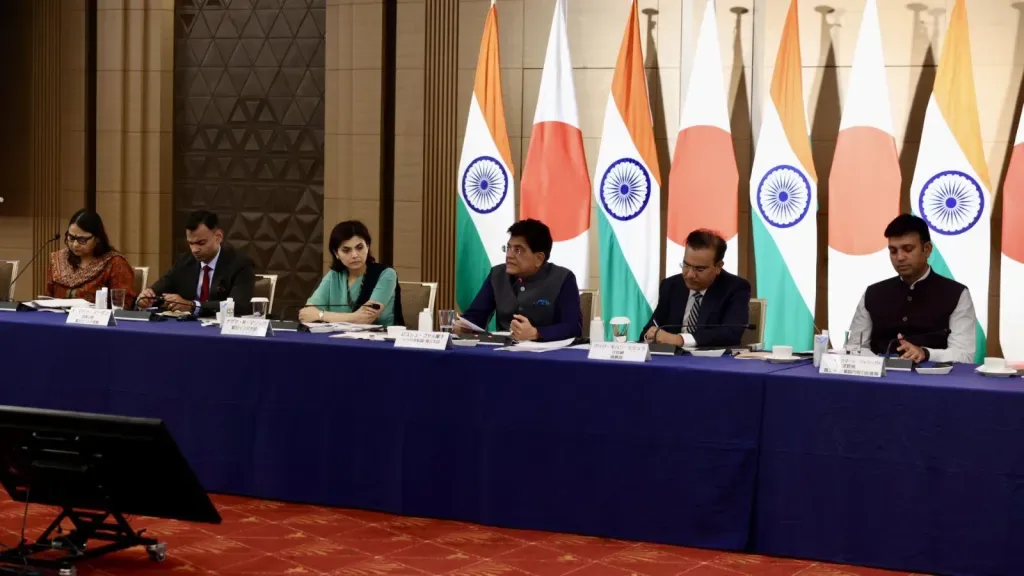
India is looking to deepen Japan’s participation in its semiconductor and electronics manufacturing ambitions, with Commerce and Industry Minister Piyush Goyal assuring Japanese companies that the government is prepared to reduce regulatory hurdles and strengthen infrastructure at key industrial hubs.
Speaking at a Semiconductor and AI roundtable attended by representatives of around 25 leading Japanese companies, Goyal said the government was working on a framework to address concerns over Bureau of Indian Standards (BIS) certification requirements for high tech equipment and components.
BIS certification rules may get exemptions
Goyal said the government had instructed the BIS and the Ministry of Commerce and Industry to develop a framework supporting high tech industries entering India under the Make in India programme.
One proposal involves exemptions from BIS certification requirements for equipment and components that companies need to bring into the country.
The minister indicated that exemptions could potentially be structured at the company or industry level. The government would also explore bulk, product-based or project-based exemptions, depending on the requirements of specific investments.
The proposed changes are intended to reduce regulatory delays for companies operating in technologically sensitive and capital intensive sectors such as semiconductors and advanced electronics.
Support beyond the Centre
Goyal also sought to reassure Japanese businesses that regulatory assistance would not be limited to the central government.
Addressing concerns about regulatory complexity, he said the Centre would be willing to support companies dealing with state and local authorities as well.
The objective is to create a smoother operating environment for Japanese firms considering investments in India's high tech manufacturing ecosystem.
Faster action on investment frameworks
The minister also addressed concerns surrounding notifications and incentives under several existing industrial frame work.
He said the government would take timely action on Special Economic Zone (SEZ) notification so that companies could access incentives available through the SEZ framework.
Companies could also potentially benefit from the Export Oriented Units (EOU) framework and the Manufacture and Other Operation in Warehouse (MOOWR) scheme, depending on the nature of their operations and eligibility.
Dholera aims to become more Japan-friendly
Beyond regulations, Goyal highlighted the importance of creating social infrastructure that could make Indian industrial hubs more attractive to Japanese professionals and their families.
He specifically referred to the area around Dholera and Sanand, where the government wants to develop facilities such as schools, accommodation, hospitals, restaurants and hotels.
The minister even mentioned the possibility of a golf course as part of a broader effort to make the environment more comfortable for Japanese expatriates.
The idea is to make investment locations not merely manufacturing sites but places where international employees and their families can live and work comfortably.
Focus on industrial infrastructure
Goyal also assured Japanese companies that the government would work to provide the core infrastructure required for advanced manufacturing.
This includes-
Reliable electricity supply
Ultra-pure water
Clean-room facilities
Waste-treatment systems
High-quality logistics
Supporting social infrastructure
These facilities are particularly important for semiconductor manufacturing, where production processes can require highly controlled environments, specialised utilities and dependable supply chains.
India’s semiconductor investment push
The outreach to Japanese companies comes as India seek to expand its position in semi-conductor and electronics manufacturing and attract global technology companies and supply chain investments.
Japan, with its established electronics, semiconductor materials and manufacturing ecosystem, is an important potential partner in that effort.
For India, easing regulatory procedures could help reduce some of the barriers faced by companies bringing specialised equipment and components into the country. At the same time, the success of such measures will depend on how exemptions are implemented and how regulatory oversight is maintained.
The government pitch to Japanese firms therefore combines regulatory flexibility with infrastructure development an attempt to make locations such as Dholera more attractive to companies looking to build India's next generation of high tech manufacturing capacity.
Source: Editorial
View Original Source →