
Rajya Sabha Clears More Supreme Court Judges as Justice System Expands Its Waiting Room
The summary presents the Bill as a step toward addressing judicial delays, but its impact may depend on factors beyond simply increasing the number of Supreme Court judges. It does not fully address…
Politics
Indian Edition
By CMS Admin
🕵 AI Narrative Audit
The framing treats the increase in Supreme Court judges as a straightforward solution to case backlogs, while giving limited attention to broader judicial capacity, vacancies, infrastructure, and other factors affecting delays.
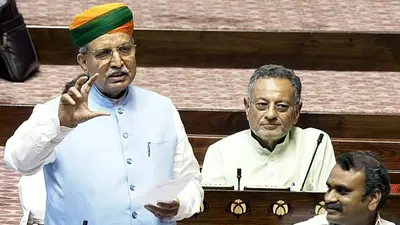
The Rajya Sabha has passed the Supreme Court (Number of Judges) Amendment Bill, paving the way for an increase in the sanctioned strength of judges at the country’s highest court.
The Bill was passed after Opposition members walked out ahead of the voting, objecting to the manner and urgency with which the legislation was brought before Parliament.
The legislation, which had already been passed by the Lok Sabha on Monday (August 5, 2026), increases the sanctioned strength of the Supreme Court from 34 judges to 37.
The Bill was introduced to replace an Ordinance issued by the government in May. The use of an Ordinance became a key point of contention during the debate, with Opposition members questioning why the government had not introduced the measure directly as legislation in Parliament.
Opposition Questions the Need for Haste
Congress MP and senior lawyer Vivek Tankha, who initiated the discussion, questioned the urgency behind the government's move.
Tankha argued that there was broad agreement on the need to increase the number of judges, but questioned whether adding a limited number of judges would be enough to address the much larger problem of pending cases.
His criticism centred on whether the measure would bring a substantial change to the judicial system or merely provide an incremental increase in judicial capacity.
He also questioned whether the addition of judges alone could make a meaningful dent in the large number of pending cases before the Supreme Court.
More Judges, But Is It Enough?
Increasing the sanctioned strength of the Supreme Court is intended to provide the court with greater capacity to hear and decide cases. However, judicial delays can depend on several factors, including the number and complexity of cases, vacancies, court infrastructure, administrative support and the overall functioning of the justice-delivery system.
The Opposition's argument therefore focuses on the difference between increasing judicial strength and solving the backlog itself.
The government, meanwhile, has moved ahead with the legislation, which replaces the May Ordinance and formally raises the sanctioned strength of the Supreme Court.
A Small Increase With a Larger Question
The legislation increases the sanctioned strength by three judges, from 34 to 37. While the move could provide additional capacity to the country's highest court, it does not by itself guarantee that the existing backlog will be cleared quickly.
The debate in Parliament has consequently raised a broader question: Can adding a few more judges significantly reduce India's judicial backlog, or does the justice system require a much wider set of reforms?
The passage of the Bill settles the immediate question of the Supreme Court's sanctioned strength, but the larger challenge of reducing pending cases remains.
Source: Editorial
View Original Source →