
Entertainment
Indian Edition
British Museum Pulls the Shutter on History, Bans Photos of Bayeux Tapestry
The British Museum has reportedly prohibited visitors from photographing the Bayeux Tapestry, drawing attention to how museums balance preservation, visitor access and cultural engagement. While the…
CMS Admin
Editorial · Honestly Biased
AI Narrative Bias Audit
The headline uses a mildly sensational framing around the photography ban but remains broadly factual about the British Museum visitor restriction.
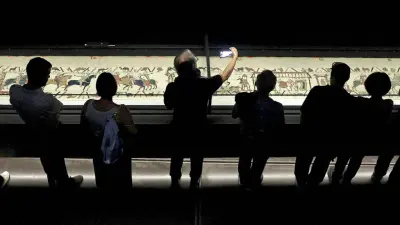
The British Museum has introduced a photography ban for visitors viewing the Bayeux Tapestry, after concerns that people stopping to take pictures were slowing the movement of crowds through the sold out exhibition.
Curators had initially permitted photography, but the policy was reversed after queues began to build as visitors spent additional time photographing the historic art work.
A 68-Metre Journey Through History
The 11th century embroidered artwork depicts events leading up to the Norman conquest of England and the Battle of Hastings in 1066. Measuring around 68 metres (230 feet), the work is being displayed in Britain for the first time.
Visitors are admitted in groups every 40 minutes and are required to move along the art work in a single direction. According to the British Museum, stopping to take photographs was disrupting that flow and causing delay for people waiting to enter.
A museum spokeswoman said the institution's priority was to ensure that all visitors could have a good experience and that photography had therefore been restricted while visitors move along the length of the embroidery.
From Normandy to London
Despite commonly being called a tapestry, the Bayeux Tapestry is actually an embroidered textile produced in England. It is currently on loan from Normandy, France, and is scheduled to remain at the British Museum in London until July 2027.
The loan followed a Franco British summit agreement in 2025, after years of planning between the two countries. The British Museum is covering the costs of transporting the artefact, while the UK government is providing insurance.
The art work journey to London was treated as a major logistical operation. It was packed inside a climate controlled crate and transported under police escort over an approximately 350 mile (560km) route from Normandy to central London.
Ticket Prices Add to the Debate
The exhibition has generated considerable public interest, but ticket prices have also attracted criticism from some visitors. Ticket can cost as much as three times the price of visiting the Bayeux Tapestry in France, with the museum citing the costs associated with hosting the exhibition.
Tickets are currently sold out through 31 December, although additional tickets are expected to be released in October.
For those unable to secure a ticket, full scale replicas offer an alternative. A replica of the Bayeux Tapestry can be viewed for free at Tewkesbury Abbey in Gloucestershire, while another is available at Reading Museum.
The photography restriction highlights a familiar challenge for major cultural exhibitions- allowing visitors to engage with and document historic works while ensuring that large crowds can continue moving through limited exhibition space.
Distribute This Chronicle
Independent commentary breaks corporate silence when readers circulate the ledger directly to their peers.
Attribution: Editorial
Examine Raw Source