
Entertainment
World Edition
No Artificial Hits Allowed, Australia Music Charts Say Humans Only
Australia’s decision to exclude AI-generated music from chart listing can be viewed as an effort to protect human artists and maintain trust in chart rankings. However, a critical assessment should…
CMS Admin
Editorial · Honestly Biased
AI Narrative Bias Audit
The framing presents Australia chart ban on AI-generated music primarily as a defence of human creativity, while giving less attention to the industry’s practical concerns around authenticity, copyright, attribution and chart integrity.
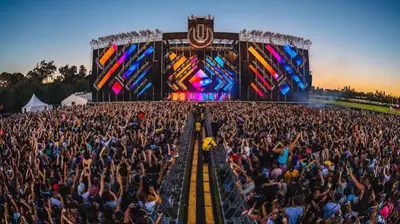
Australia music industry has drawn a clear line between human-made music and fully AI-generated tracks, with the Australian Recording Industry Association (ARIA) announcing that songs created entirely using artificial intelligence will no longer be eligible for its official charts.
The decision, announced on August 25, comes amid growing debate over the role of generative AI in the music industry and its potential to reshape how songs are created, promoted and consumed.
AI Track Climbs the Australian Charts
The policy follows the unexpected success of an AI-generated remix of Madonna 1989 song Like a Prayer. The remix was created earlier this year by Australian music producer and DJ Josh Fawaz and went viral online.
According to the Associated Press, the AI-generated track spent multiple weeks in Australia Top 20 chart and reached No. 2 on ARIA Top 20 Australian Singles chart. It also attracted more than 23 million views on YouTube.
The track success demonstrated how quickly Ai assisted or AI-generated music can attract a large audience, while also raising questions about whether such songs should compete directly with recordings made by human artists.
ARIA Draws a Line
Under ARIA new position, songs that are wholly created using AI will be excluded from chart eligibility. The move reflects concerns within the music industry about maintaining transparency and ensuring that chart rankings continue to represent music created through human artistic participation.
However, the policy also highlights a complicated question: where should the industry draw the line between human creativity and AI assistance?
AI tools are increasingly being used for tasks such as music production, sound design and editing. A blanket distinction between human-made and AI-made music may therefore become harder to apply as the technology becomes more deeply integrated into conventional production.
The Bigger Debate Over AI and Music
The controversy goes beyond chart ranking. AI-generated music has raised broader questions about copyright, ownership, consent, attribution and the use of existing artists' voices or musical styles.
Supporters of restrictions argue that listeners should know when a song is generated entirely by artificial intelligence and that human musicians should not have to compete anonymously against mass produced synthetic content.
Critics, meanwhile, may argue that AI is simply another production tool and that excluding certain forms of AI created music could limit innovation.
What Happens Next?
Australia decision could become an important test case for other music market as streaming platforms and chart organisations confront the rapid expansion of generative AI.
For now, ARIA policy sends a straightforward message: AI may be capable of producing music that attracts millions of views, but completely AI-generated tracks will not automatically earn a place on Australia official charts.
The challenge for the industry will be finding rules that protect human creativity without ignoring the technological changes already transforming the way music is made.
Attribution: Editorial
Examine Raw Source