
Health
World Edition
939 Dead, Nearly 4,000 Missing,Rescue Efforts Continue as the Numbers Keep Climbing
The report highlight the severe human toll, with 939 deaths and nearly 4,000 people missing, while emphasizing that rescue operations are still underway. A balanced assessment should also examine…
CMS Admin
Editorial · Honestly Biased
AI Narrative Bias Audit
The headline foregrounds the scale of deaths and disappearances while presenting the ongoing rescue effort as the central response, but it offers little context about the disaster causes, affected communities, or the challenges facing rescuers.
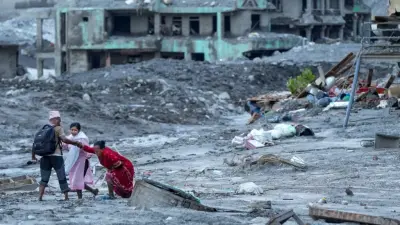
At least 939 people have died and 3,925 remain missing in Nepal following catastrophic flood that struck the Nepal-China border region on August 26, according to Nepal’s National Disaster Risk Reduction and Management Authority, as reported by CNN.
The disaster has also affected foreign nationals. The Nepal Tourism Board said 583 foreign nationals are among those missing, while 315 foreign nationals have been rescued and five others remain in contact with authorities.
Across the border in China, the situation remains serious as well. According to state broadcaster CCTV, at least 16 people have died and 546 remain missing following the flooding in Tibet.
Among those reported missing in China are 261 foreign nationals from 23 countries, including 104 Nepalis, 49 Indians, 33 Latvians, 18 Americans and 15 Britons.
Rescue Efforts Intensify at Hydropower Sites
Nepal has intensified rescue operations to reach hundreds of people believed to be trapped inside tunnels at hydropower projects, including the Trishuli 3A site, after the flash floods caused widespread destruction.
Rescue teams, including specialists from China and India, have been working to establish contact with people believed to be inside the tunnels. However, authorities have so far received no response from those trapped inside.
Officials estimate that hundreds of the approximately 2,500 people still unaccounted for could be workers employed at Nepal hydropower projects.
The tunnel rescue operation has therefore become one of the most urgent parts of the wider relief effort, with teams facing difficult conditions while attempting to determine whether people inside the facilities can still be reached.
Rising Toll and Uncertainty Over Missing Persons
Earlier figures from local officials had put Nepal confirmed death toll at 794, with more than 2,500 people reported missing. The latest figures indicate that the human toll has risen significantly as authorities continue collecting information from affected areas.
The difference between reported death and missing-person figures also reflects the rapidly changing nature of the disaster, as rescue teams continue searching isolated communities, damaged infrastructure and hydropower facilities.
Meanwhile, the floods have had a significant cross border impact in Tibet. Chinese state media reported 16 confirmed deaths and 546 missing people, with rescue teams continuing efforts to locate survivors.
As search and rescue operation continue on both sides of the border, authorities face the difficult task of reaching cut off areas, accounting for missing people and providing assistance to communities affected by the disaster.
The scale of the reported casualties and missing persons makes the Nepal floods one of the region most serious recent disasters, while the continuing rescue operations remain focused on locating survivors and establishing a clearer picture of the overall impact.
Attribution: Editorial
Examine Raw Source