
Health
World Edition
Mud Filled Tunnel Become Nepal Toughest Rescue Mission as Death Toll Passes 1,000
The headline highlight the enormous scale of the disaster by focusing on the mud filled tunnels, the difficult rescue effort, and the death toll surpassing 1,000. While it conveys urgency and human…
CMS Admin
Editorial · Honestly Biased
AI Narrative Bias Audit
The headline uses a dramatic, emotionally charged framing that emphasize the scale and difficulty of the rescue operation while presenting the death toll as a stark measure of the disaster severity.
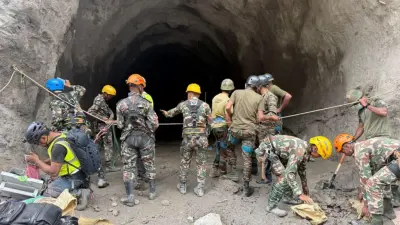
Nepal is facing a devastating humanitarian crisis after catastrophic floods along the border with Tibet pushed the death toll beyond 1,000, according to the country disaster agency.
More than 3,900 people remain missing, including over 600 workers believed to be trapped inside mud filled tunnels at hydropower projects along the Trishuli River. The rescue effort has become increasingly difficult as floodwaters, landslides and enormous quantities of debris have damaged infrastructure and obscured access routes.
Rescue teams have been pumping air into some of the tunnels in an attempt to maintain conditions for those who may still be inside. A team managed to enter one tunnel on Monday but withdrew after finding no workers.
For families waiting for news, the uncertainty has been devastating. Anushila Bhandari, whose 33 year old engineer husband Aurus is missing from a project site, told BBC Nepali: I wish we could find him. I wish he would come home.
Nepalese Prime Minister Balendra Shah said 279 people had been rescued from the affected sites as rescue operations intensified.
The operation involves Nepalese and Chinese military personnel, with experts from India, South Korea and Australia also assisting. Nepal Army personnel have been using heavy equipment and explosives to break through sections of the hillside and reach areas believed to contain trapped workers.
Hydropower projects across the region employ hundreds of people, ranging from local and migrant workers to engineers and other specialists. Authorities say at least 11 hydropower projects, either completed or under construction, were damaged by the floods.
Families of missing workers have expressed frustration over the pace of the rescue effort, particularly the delay in pumping air into the tunnels.
Sita Pandey, whose husband was working at one of the plants when the floods struck, told the Nepali newspaper Kantipur that she still had hope because an oxygen system was reportedly present inside the facility.
Another relative, Jiban Khadka, urged rescuers to accelerate their efforts, saying that every passing moment was significant for families waiting for their loved ones.
The disaster has also raised concerns about the increasing vulnerability of infrastructure in Nepal’s mountainous regions. Prime Minister Shah described the floods as an extraordinary event and linked the growing risks in the Himalayan region to climate change, calling for greater international attention to disasters affecting the area.
Nepal relies heavily on hydropower and has invested extensively in projects along its mountainous river systems. The destruction of multiple facilities has therefore created not only a humanitarian emergency but also a major challenge for the country infrastructure.
Australian tunnelling expert Arnold Dix, who has been assisting Nepalese authorities remotely, said the scale of destruction had made locating some of the tunnels exceptionally difficult. He described the landscape as resembling a lunar landscape, with enormous boulders and debris blocking potential access routes.
Rescuers now face a race against time as they attempt to identify the damaged tunnel networks, clear massive obstructions and reach workers who may still be inside. For the families gathered around the affected site, the rescue operation represents a desperate search for any sign that their missing relatives can still be brought home
Attribution: Editorial
Examine Raw Source