
Health
Indian Edition
Nepal Floods Get Another Indian Aid Drop, 5.5 Tonnes of Medicines and 11 Experts Arrive
India latest aid tranche highlights the scale of its humanitarian response to Nepal devastating flood, including medicines and a specialised rescue team. However, the framing centres India’…
CMS Admin
Editorial · Honestly Biased
AI Narrative Bias Audit
The headline is largely humanitarian and fact focused but it's emphasis on India aid may subtly frame New Delhi as the central saviour while giving less attention to Nepal own rescue and relief effort.
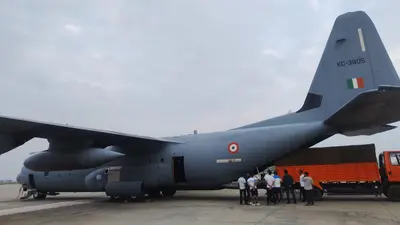
New Delhi, September 2, 2026- India has sent its fifth tranche of humanitarian assistance to flood hit Nepal, with an 11 member specialised rescue team and 5.5 tonnes of essential medicines heading across the border as the Himalayan nation continues to deal with the devastating aftermath of the floods.
External Affairs Minister S. Jaishankar announced the latest assistance on Wednesday, saying that the fifth Indian aircraft had departed for Nepal carrying rescue personnel equipped with specialised equipment as well as essential medical supplies.
In other words, India has once again put the relief operation on repeat because unfortunately, Nepal disaster is nowhere near the point where one flight of assistance can solve everything.
Fifth Flight, More Help on the Way
The fifth Indian aircraft has departed for Nepal, Jaishankar said in a post on social media. The aircraft is carrying an 11 member rescue team with specialised equipment and 5.5 tonnes of essential medicines.
With the latest consignment, India total relief assistance to Nepal has reached 68.5 tonnes, according to reports.
The assistance is being provided as Nepal continues a massive rescue and recovery operation following catastrophic flooding. The response includes medical supplies, relief materials and specialised teams aimed at helping authorities reach affected communities and people who may still be trapped.
The fifth aircraft therefore isn't exactly arriving empty-handed. It comes loaded with the sort of equipment that is considerably more useful during a disaster than the usual thoughts and prayers package.
Rescue Teams Face a Massive Challenge
The scale of the disaster has made rescue operations particularly difficult. Flood water, debris, damaged infrastructure and difficult terrain have complicated efforts in several affected areas.
Specialised rescue teams are also working around hydropower projects and tunnels where people are believed to remain unaccounted for.
India has already deployed technical personnel to support search and rescue operations in difficult underground locations. According to reports, an Indian tunnel rescue team has been working in challenging conditions, including restricted access and muddy terrain.
The latest 11 member team will add further specialised capacity to the ongoing response.
Because when the terrain is basically saying good luck getting through, specialised rescue equipment suddenly becomes a lot more important than a motivational speech.
Medicines Arrive as Nepal Battles the Aftermath
The 5.5 tonnes of essential medicines included in the latest shipment are expected to support medical requirements in flood affected areas.
India earlier relief assistance has included a range of emergency supplies such as blankets, sleeping bags, tarpaulins, hygiene kits, food packets, solar lamps, water purification tablet and generator.
The latest shipment adds another major medical component to the relief effort.
For communities dealing with displacement, damaged infrastructure and limited access to essential services, getting medicines and emergency supplies quickly can be critical.
Death Toll Crosses 1,100
The latest Indian assistance comes as the scale of Nepal disaster becomes increasingly clear.
Nepal Police reported that the death toll had risen to 1,127 by Wednesday, while thousand of people remained unaccounted for. Rescue teams continue to search affected areas, with particular attention being paid to locations where people could still be trapped.
The disaster has also created a major challenge in identifying recovered bodies. Authorities have been using scientific procedures and preserving DNA samples to help identify victims whose identities cannot immediately be established.
The grim numbers underline why international rescue assistance remains necessary.
India Continues Its Relief Operation
India response has gone beyond simply sending supplies. Doctors, paramedics, technical personnel and specialised rescue teams have also been deployed as part of the wider humanitarian effort.
Indian authorities have also been coordinating efforts concerning Indian nationals affected by the disaster. According to the Ministry of External Affairs, 163 Indian nationals had been rescued from disaster hit regions of Nepal as of the latest update.
An Indian forensic team has also been assisting Nepali authorities with identification efforts.
So while the fifth aircraft might sound like just another flight number, the operation behind it represents a much larger effort involving rescue personnel, medical teams, forensic experts and emergency supplies.
The Relief Flights Keep Coming
For now, the message from New Delhi appears straightforward: the assistance isn't stopping with one shipment.
The fifth aircraft has departed. More than 68 tonnes of relief material have been sent. Rescue teams are on the ground. Medical assistance is being delivered.
And Nepal is still facing a disaster of enormous proportions.
If anything, the latest flight is a reminder that humanitarian operations don't work like food delivery apps you can't simply tick disaster assistance delivered and close the order.
The rescue effort will continue for as long as people remain missing, communities require assistance and the enormous task of recovery lies ahead.
For India, the fifth relief flight is another step in supporting its neighbour through one of Nepal most devastating natural disasters in recent years.
Attribution: Editorial
Examine Raw Source