
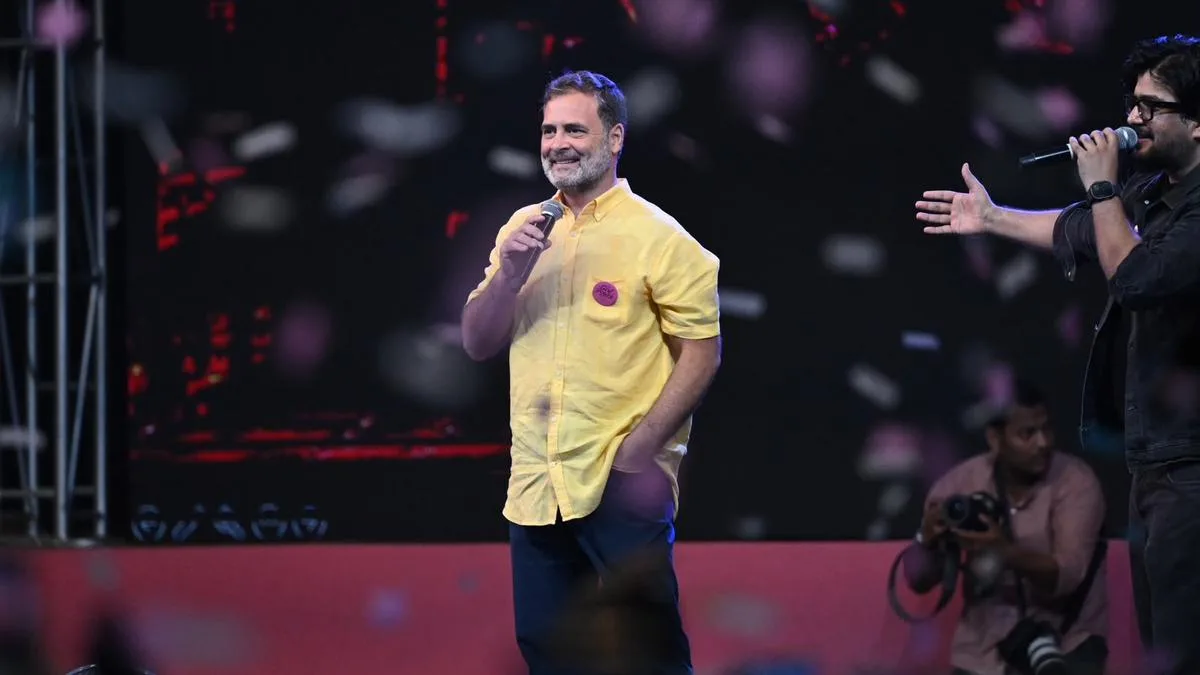
Congress leader Rahul Gandhi, during the fourth edition of his Chhatron ki Goonj address in Pune on Saturday, August 22, 2026, called on young women to challenge patriarchy and assert their place in society.
The event, held at the AISSMS ground, was Gandhi’s first Chhatron ki Goonj programme in Maharashtra. Addressing girl students, he encouraged them to speak confidently and participate more actively in society.
Be Loud, Be Proud
Gandhi urged the young women in the audience to be loud, be proud and fight for your space in society. His remarks focused on challenging social structures that, in his view, continue to limit opportunities and freedom for women.
He also called on the students to smash the patriarchy, presenting gender equality and greater participation by women as important elements of social change.
Connecting With Pune Students
The Congress leader received a warm reception from students at the event. Speaking in Marathi, Gandhi said, Pune mhanje prem, meaning Pune means love, which drew cheers from the young audience.
His use of Marathi appeared aimed at connecting directly with the students and the local audience during his first Chhatron ki Goonj programme in Maharashtra.
Focus on Young Women
The address placed particular emphasis on the confidence and participation of Gen Z women. Gandhi message encouraged young women not to remain silent when confronted with social barriers and instead to claim an active role in public and social life.
The event also formed part of Gandhi broader engagement with young voters and students, a demographic that remains significant to India's political landscape.
A Message of Empowerment
Gandhi Pune address combined a message of gender equality with an appeal to young people to become more vocal in society. His remarks are likely to add to the ongoing political discussion around womens participation, social equality and the role of younger generations in public life.
While the speech was framed as an appeal for empowerment, its political significance will also be viewed in the wider context of the Congress leader effort to engage with young voters and students.