
Politics
Indian Edition
At UNGA, Jaishankar Fires Back, Pakistan Gets a Terrorism and Indus Treaty Reality Check
Jaishankar UNGA remarks focused on India position that terrorism remains a central obstacle to regional peace, while also addressing Pakistan references to the Indus Waters Treaty. The exchange…
CMS Admin
Editorial · Honestly Biased
AI Narrative Bias Audit
The framing emphasises India rebuttal to Pakistan, potentially giving greater prominence to New Delhi’s position while presenting Islamabad claims mainly as the back drop to Jaishankar response.
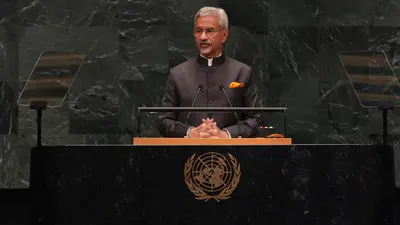
External Affair Minister S. Jaishankar delivered India’s national statement at the 81st United Nation General Assembly on Saturday, placing terrorism, global conflicts and the concerns of the Global South at the centre of his address. He also responded to remarks made a day earlier by Pakistan Prime Minister Shehbaz Sharif, who had raised Kashmir and warned that any attempt to stop or divert Pakistan share of Indus waters would be treated as an act of war.
Without naming Pakistan directly, Jaishankar said India would continue to maintain a zero tolerance approach towards terrorism and asserted the country’s right to defend itself against terrorist threats. He said attempts to normalise terrorism or seek immunity from its consequences would not be accepted.
Terrorism at the Centre of India’s Response
Jaishankar described terrorism as a continuing threat to international peace, particularly when it involves state sponsorship and cross border activity. He argued that diplomatic good will and normal relations cannot be separated from concerns over terrorism, adding that government responsible for supporting such activity should be held accountable.
The remark came after Sharif UNGA address in which the Pakistani Prime Minister criticised India action following the 2025 conflict and raised the Kashmir issue. India response therefore brought the long running dispute over terrorism and regional security back into focus at the UN forum.
Indus Waters Dispute Remains a Major Flashpoint
The Indus Water Treaty was another major point of disagreement. Sharif told the UN General Assembly that any attempt to stop, impede or divert Pakistan’s share of the Indus waters would be treated as an act of war, while Pakistan maintains that the treaty remains legally binding.
India has placed the treaty in abeyance, linking its position to the broader security situation and cross border terrorism. Pakistan dispute the legality of that move, creating a continuing disagreement between the two countries over the treaty and the management of the Indus river system.
Jaishankar Highlights Global South Concerns
Beyond the India, Pakistan exchange, Jaishankar also highlighted the wider consequences of ongoing conflicts for developing countries. He pointed to risk to commercial shipping and energy flows and called for restraint, de-escalation and protection of civilians.
He also emphasised India humanitarian and development assistance to countries facing conflict, natural disasters and other crises, presenting the Global South as an important part of India international engagement.
The UNGA exchange underscored how terrorism, Kashmir and the Indus Waters Treaty remain closely connected to the broader diplomatic tensions between India and Pakistan. While the two sides continue to present sharply different positions on these issues, Jaishankar address reaffirmed India stated emphasis on countering terrorism and defending its security interest.
Distribute This Chronicle
Independent commentary breaks corporate silence when readers circulate the ledger directly to their peers.
Attribution: Editorial
Examine Raw Source