
Politics
Indian Edition
BJP Gen Z Brainstorm Ends With Shocking Discovery, Gen Z Isn’t Actually One Person
The BJP brainstorming on Gen-Z outreach reportedly concluded that the generation is not a homogeneous group and therefore cannot be approached with a single political message. The finding highlights…
CMS Admin
Editorial · Honestly Biased
AI Narrative Bias Audit
The narrative uses humour to portray the BJP outreach exercise as belatedly recognising Gen-Z diversity, while giving limited attention to the practical reasons behind the party’s effort to understand younger voters.
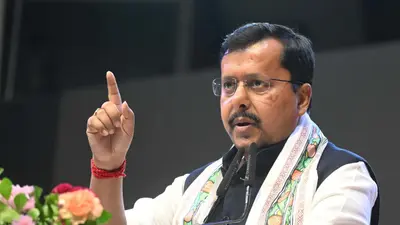
New Delhi: The BJP efforts to shape its outreach to younger voters took an interesting turn on Saturday (August 29, 2026), with a brainstorming session reportedly suggesting that the party reconsider its use of the term Gen Z altogether.
The meeting, led by BJP national president Nitin Nabin as part of a youth outreach initiative, discussed how the party should engage with younger sections of the electorate. One suggestion was to simply use the broader term youth rather than relying on the Gen Z label.
The discussion also reportedly recognised that younger voters cannot necessarily be treated as a single, uniform group, with different sections having different interests and expectations.
Around 45 Young Leaders Attend
The brainstorming session was held in New Delhi and was attended by around 45 young leaders. BJP general secretary Smriti Irani and Chhattisgarh Minister O.P. Choudhary were also present as committee members.
The meeting focused on possible approaches for strengthening the party’s connection with younger voters and understanding the issues that matter to them.
The suggestion to move away from the Gen Z label reflects a broader challenge for political parties attempting to engage with younger generations. Demographic labels can provide a useful starting point, but they do not necessarily capture differences in economic circumstances, education, location, interests or political priorities.
Outreach Beyond Gen Z
Interestingly, the discussions were not restricted to younger voters. The meeting also included suggestions for simultaneous outreach to the BJP older voters, indicating an effort to consider engagement across different age groups rather than concentrating exclusively on Gen Z.
For a political organisation with voters spanning multiple generations, balancing youth-focused messaging with the expectations of its existing support base presents a separate strategic challenge.
The BJP latest brainstorming exercise therefore appears to be less about finding a single formula for Gen Z and more about examining how its outreach should evolve. The proposal to simply refer to the cohort as youth may also signal an attempt to avoid treating an increasingly diverse generation as one homogeneous political constituency.
As parties increasingly compete for the attention of younger voters, understanding their diversity while maintaining connections with older supporters is likely to remain an important part of political outreach strategies.
Attribution: Editorial
Examine Raw Source