
Politics
Indian Edition
Capital of India, But Not Quite a Capital of Acceptance? Delhi Faces Northeast Bias Outcry
The report presents the killing of Manipur musician Chongtham Vikram Singh as a disturbing example of alleged discrimination against people from Northeast India in Delhi, highlighting public anger…
CMS Admin
Editorial · Honestly Biased
AI Narrative Bias Audit
The framing strongly emphasizes discrimination against Northeast Indians in Delhi, potentially steering readers toward a systemic racism interpretation while giving limited attention to the specific circumstances, evidence, and competing perspectives surrounding the killing.
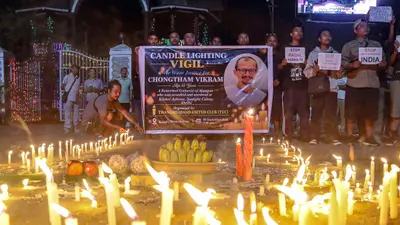
The killing of Manipur musician Chongtham Vikram Singh in Delhi has triggered widespread outrage and renewed concern over the safety and treatment of people from Northeast India living in other parts of the country.
Singh, a prolific musician from Imphal, was allegedly assaulted by a group of men in Delhi Ashram area on Sunday night, September 6, 2026, after he objected to loud noise. According to the reported account, the confrontation escalated into violence, resulting in his death.
Delhi Police have arrested seven men and a 15 year old boy in connection with the incident. Authorities are investigating the case as a suspected mob lynching incident.
Outrage Over the Killing
News of Singh death has prompted an outpouring of condolences from people in Manipur and across the Northeast, alongside demands for justice and accountability.
The incident has also revived a longstanding concern: the experiences of people from Northeast India who live, work or study in metropolitan cities outside the region.
For many members of Northeast communities, the killing is not being viewed solely through the circumstances of one violent confrontation. Instead, it has become a catalyst for renewed discussion about racial stereotyping, discrimination, harassment and the difficulties some Northeast Indians say they face in other parts of the country.
Calls for Justice
The arrest announced by police are likely to be closely watched as investigators establish exactly how the confrontation unfolded and determine the individual roles of those accused.
At the same time, calls for justice have extended beyond the immediate criminal investigation. Voices from the Northeast are urging authorities to ensure that the case is investigated fairly and transparently and that those responsible face appropriate legal consequences if found guilty.
It is important, however, to distinguish established facts from allegations as the investigation continues. The motive behind the attack, the precise sequence of events and whether prejudice played a role should be established through evidence and the legal process.
A Larger Debate About Discrimination
Singh death has nevertheless reopened a broader national conversation about how people from Northeast India are treated outside the region.
The Northeast is home to diverse ethnic, linguistic and cultural communities, but people from the region have for years raised concerns about being subjected to stereotyping or being treated as outsiders in other Indian cities.
Critics argue that addressing such concerns requires more than statements of condemnation after individual incidents. They point to the need for greater awareness, stronger institutional responses to discrimination and a broader understanding of the cultural diversity that exists within India.
Beyond Condolences
The killing has left Singh family, friends and fellow musician mourning a life lost in a violent confrontation. It has also prompted questions about whether greater attention should be paid to the experiences and safety concerns of Northeast communities in cities such as Delhi.
As the police investigation proceeds, the immediate priority remains establishing the facts, securing justice for Singh and ensuring that the accused are dealt with according to law.
But the public reaction suggests that the conversation will not end with the arrests. For many, Singh’ death has become a painful reminder that India’s promise of unity in diversity also requires confronting prejudice and ensuring that people from every region can live safely and with dignity wherever they are.
Distribute This Chronicle
Independent commentary breaks corporate silence when readers circulate the ledger directly to their peers.
Attribution: Editorial
Examine Raw Source