
Politics
Berkshire Edition
Could Retexturing Roads Save Money? Britain Finally Discovers Potholes Have a Budget
The article presents road retexturing as a promising way to improve safety and reduce maintenance cost, but its potential benefits should be assessed against evidence on durability, implementation…
CMS Admin
Editorial · Honestly Biased
AI Narrative Bias Audit
The headline is mildly sensationalist, framing a technical road maintenance proposal as a potentially transformative solution while implying financial and safety benefits that require evidence.
Wokingham, September 2026- A council in Berkshire is trialling a new way of restoring roads that could make them safer for drivers while costing considerably less than traditional resurfacing.
The secret? Apparently, the roads don't always need a complete makeover. Sometimes they just need the grime scraped off.
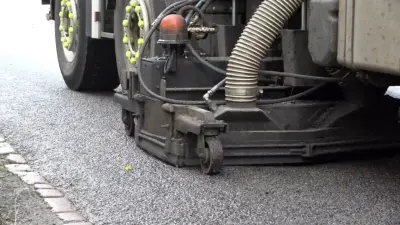
Wokingham Borough Council is deploying retexturing, a process designed to remove built up bitumen and expose the stone underneath, helping restore the grip that tyres need without covering the road in a whole new layer of material.
The council says the technique requires a fraction of the materials, energy and cost associated with conventional resurfacing, making it an attractive option at a time when local authorities are trying to make increasingly limited budgets stretch further.
In simple terms: instead of buying the road a brand-new outfit, Wokingham is trying to clean up the one it already has.
What Exactly Is Retexturing?
Over time, roads can become smooth and fat as traffic pushes bitumen towards the surface and effectively covers the stone chips that provide tyre grip.
That can reduce skid resistance, particularly in wet conditions.
Retexturing is intended to reverse some of that process by removing the excess bitumen and bringing the road's original texture back.
The council is using two techniques-
Hydro blasting- High pressure water is used to strip away excess bitumen from the surface.
Shot blasting- Small pieces of steel abrasive are fired at the road surface to rough it up and restore texture.
So yes, the council is essentially giving the road a very aggressive exfoliation.
And unlike resurfacing, the process does not require a fresh layer of road material to be laid down.
A Cheaper Alternative to Resurfacing?
Wokingham Borough Council says retexturing could help it get more out of its road-maintenance budget.
The authority claims the process can reduce carbon emissions by up to 96% compared with full resurfacing.
That is a considerable difference, particularly for councils facing the familiar problem of having plenty of roads but considerably less money than they would like to spend fixing them
.
Retexturing is also one of five treatments Wokingham Borough Council uses to maintain its roads and footway.
Rather than waiting until every road needs a complete reconstruction, the approach allow the council to target surfaces that may benefit from relatively limited intervention.
Basically, the road gets a repair rather than being sent straight to the expensive department.
Could It Actually Make Roads Safer?
The main purpose of retexturing is to restore skid resistance, which determines how well tyres grip the road surface, particularly when it is wet.
There is some encouraging evidence from other councils.
Aberdeenshire Council recorded no crashes at five treated sites during the eight months after retexturing, compared with 34 accidents at those same locations during the previous year.
That sounds impressive although, as with any comparison involving road accidents, it is important not to assume that retexturing alone caused the entire change.
There is another catch.
The improvement does not last forever.
Skid resistance can decline again over time, particularly on heavily trafficked roads. And retexturing cannot repair deeper structural problems such as serious deterioration underneath the road surface.
In other words, if the road has a structural problem, giving it better grip isn't going to magically rebuild the foundations.
The Road New Texture Has Been Around for Years
Although Wokingham is only now trialling the method, retexturing itself is far from a new idea.
Councils across the UK have been using the technique for more than a decade.
West Berkshire Council has operated retexturing programmes for several years, while Dorset Council says the process has saved it more than £1.2 million.
Dorset also estimates that it has avoided 335 tonnes of carbon emissions compared with resurfacing the same roads.
The method has also been used in West Sussex, Cumbria, Lincolnshire and across Wales.
So Wokingham isn't exactly inventing the wheel here.
It's more interested in finding out whether the same trick can work effectively on its own roads while helping the council maintenance budget go further.
Wokingham Puts the Method to the Test
The Wokingham trial is running throughout September and involves dozens of streets across the borough.
The council hopes the programme will provide another tool for maintaining roads without having to resort to more expensive resurfacing wherever it isn't necessary.
The idea is relatively simple, identify roads where the surface has become excessively smooth, restore the texture and extend the useful life of the existing road.
For drivers, the potential benefit is improved grip.
For the council, the attraction is lower cost and lower carbon emissions.
For the road itself, it's apparently time for a spa day although one involving high pressure water and steel shot rather than cucumber slices.
Not a Magic Fix for Every Road
Despite the promising claims, retexturing is not being presented as a universal cure for Britain road problems.
It works primarily on surface texture and skid resistance. It cannot solve every type of deterioration, and the benefits can fade as traffic continues to wear the surface.
That means councils still need conventional resurfacing and other maintenance techniques when roads suffer deeper structural damage.
Still, if retexturing can restore grip at a fraction of the cost and environmental impact of full resurfacing, it could provide councils with another useful weapon in the never ending battle to keep Britain roads usable.
Because when budget are tight, sometimes the answer isn't building a completely new road.
Sometimes, apparently, the road just needs someone to scrape off the years of accumulated grime and remind it what texture feels like.
Attribution: Editorial
Examine Raw Source