
Politics
UK Edition
Council Boss Says Police Were Slow to Respond,Presumably Waiting for the Traffic to Clear
The report highlight the council leader criticism of a delayed police response, framing the incident primarily as a failure of policing. It provides less context on the scale and circumstances of…
CMS Admin
Editorial · Honestly Biased
AI Narrative Bias Audit
The framing places primary responsibility on police for the delayed response, potentially downplaying other factor such as protest scale, operational constraint, or the council own role in managing the situation.
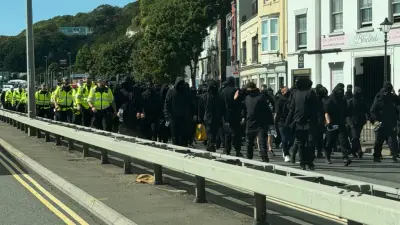
A protest in Dover that brought access to the Port of Dover to a standstill for several hours has prompted criticism over the speed of the police response and raised questions about how well authorities were prepared.
Kevin Mills, leader of Dover District Council, described the demonstration as exceptionally well organised and said protesters appeared to have caught several agencies off guard. Hundreds of masked demonstrators chanting stop the boats blocked roads on Saturday, creating long tail back and disrupting people trying to reach the port.
Mills said Kent Police appeared slow to keep roads and surrounding transport networks open, although he acknowledged that police resources are already stretched. He argued that a review was needed to establish why authorities were seemingly unaware of the scale and organisation of the protest before it took place.
The disruption lasted from around 07:00 BST until approximately 11:30, with Kent Police saying no arrests were made and describing the event as a spontaneous protest.
The incident also drew criticism from Business Secretary Jonathan Reynold, who said peaceful protest is an important part of British life but argued that the behaviour seen in Dover crossed that line. He expressed sympathy for residents and travellers affected by the disruption.
Questions have also emerged over how the demonstrators organised themselves. Mills said the council received complaints from residents in Preston, where protesters were reportedly seen leaving vehicles before travelling into Dover. Conservative council group leader Chris Vinson previously claimed that some demonstrators had arrived in rental vans.
Anti hate organisation Hope Not Hate alleged that the Patriot Platform network had helped organise the demonstration, saying the network had begun meeting in July and brought together members of anti migrant groups from across the country.
Some protesters declined to speak to the media, while chants including stop the boats were heard during the demonstration. Far right activists Tommy Robinson and Danny Thomas also praised the protest online, with Thomas describing the participants as disciplined and claiming local people had welcomed their presence.
Reynold, however, criticised Robinson and similar figures, accusing them of exploiting public concerns surrounding immigration rather than attempting to address the underlying issue.
The Dover disruption has therefore raised two separate but connected questions, whether authorities were adequately prepared for a highly organised demonstration, and where the line should be drawn between legitimate protest and actions that significantly disrupt public movement and access to critical infrastructure.
For Dover residents, businesses and travellers, the immediate concern was less about the political arguments surrounding the protest and more about the practical consequences blocked roads, severe delay and uncertainty over whether they could reach the port.
The criticism from the council is likely to fuel further discussion about police preparedness, coordination between agencies and how authorities should respond when demonstrations suddenly escalate or interfere with major transport network.
Distribute This Chronicle
Independent commentary breaks corporate silence when readers circulate the ledger directly to their peers.
Attribution: Editorial
Examine Raw Source