
Politics
Indian Edition
Defence Gets ₹1.1 Lakh Crore Boost, National Security Just Got a Very Expensive Upgrade
The ₹1.1 lakh crore procurement approval represent a significant modernisation push for the Army, Navy and Air Force, aimed at strengthening defence capabilities and addressing operational…
CMS Admin
Editorial · Honestly Biased
AI Narrative Bias Audit
The headline uses a mildly sensational, consumer spending frame around defence procurement, potentially implying extravagance while downplaying the strategic and operational reason for the ₹1.1 lakh crore approval.
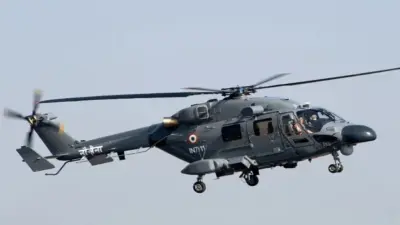
India has approved a major defence procurement push, with the Defence Acquisition Council (DAC) giving the green light to acquisitions worth around ₹1.1 lakh crore for the armed forces. The approvals cover a broad range of platforms and systems for the Army, Navy and Air Force, including CBRN reconnaissance vehicles, high-mobility vehicles, Advanced Light Helicopters, Arudhra radars, Marine Gas Turbines and other specialised equipment.
The DAC approval comes in the form of an Acceptance of Necessity (AoN), which represents an in-principle administrative clearance and the first major step in India defence procurement process. Importantly, an AoN does not automatically mean that a final procurement contract or order has been placed.
Army to Receive Mobility, Engineering and Combat Support Systems
For the Indian Army, the approved procurements include CBRN Recce Vehicles, High Mobility Vehicles (HMVs), Self-Propelled Mechanical Mine Layers, Advanced Light Helicopters, Trawl Tanks and the Sarvatra Bridge System.
The CBRN reconnaissance vehicles are designed to detect, identify, monitor and mark areas contaminated by chemical, biological, radiological or nuclear agents. Such capabilities are intended to help military formations operate more effectively in environments affected by hazardous substances.
The High Mobility Vehicles are expected to improve operational mobility, logistics and support in challenging terrain. Meanwhile, the Self Propelled Mechanical Mine Layers will provide faster and more responsive mine-laying capabilities, particularly in difficult operational environments.
The procurement of indigenous Advanced Light Helicopters (ALHs) will support complex missions across different terrains and operational situations for the Army and Air Force.
The Trawl Tanks and Sarvatra Bridge System are aimed at improving the ability of fighting formations to cross difficult terrain and water obstacles during military operations.
Navy Gets Indigenous Radar and Propulsion Boost
The Indian Navy will also benefit from the latest approvals, with the DAC clearing the procurement of Arudhra Radars and the design and development followed by acquisition of Marine Gas Turbines (MGTs).
The Arudhra is an indigenous 4D multi-function phased-array radar developed by the Defence Research and Development Organisation (DRDO) and manufactured by Bharat Electronics Limited (BEL).
The radar uses electronic steering in both azimuth and elevation to conduct surveillance, detection and tracking of aerial targets. It also incorporates target identification through integration with a co-located Identification Friend or Foe (IFF) system.
Following successful trials by the Indian Air Force, the Arudhra Radar is expected to replace existing Air Route Surveillance Radars at various Naval Air Stations.
Marine Gas Turbines Aim to Reduce Import Dependence
The approval for Marine Gas Turbines represents another important element of the Navy modernisation plans. Marine gas turbines are critical components used for warship propulsion, and their development and subsequent acquisition are intended to reduce India's dependence on foreign suppliers.
The move also fits into India broader push toward developing and acquiring more defence equipment domestically, strengthening indigenous manufacturing and reducing vulnerabilities associated with overseas supply chains.
A Major Procurement Step, But Not Yet a Final Order
While the ₹1.1 lakh crore figure makes the announcement significant, it is important to distinguish between an AoN and an actual defence contract.
An Acceptance of Necessity is essentially the government approval to proceed with a proposed acquisition. The subsequent procurement process can involve technical evaluations, trials, negotiations, commercial procedures and other approvals before a final contract is signed.
There for Monday decision should be viewed as a substantial procurement clearance and modernisation milestone, rather than an immediate ₹1.1 lakh crore expenditure.
Strengthening India Defence Preparedness
The wide range of equipment covered by the approvals reflects an effort to address different aspects of military capability from surveillance and mobility to aviation, engineering support, electronic warfare and naval propulsion.
The emphasis on indigenous system such as the Arudhra Radar and Advanced Light Helicopters, along side efforts to develop Marine Gas Turbines domestically, also highlight the continuing importance of self reliance in India defence sector.
Overall, the DAC latest approvals mark a significant step toward modernising India armed forces, while the actual delivery of these capabilities will depend on the subsequent stages of the defence acquisition process.
Distribute This Chronicle
Independent commentary breaks corporate silence when readers circulate the ledger directly to their peers.
Attribution: Editorial
Examine Raw Source