
Politics
Indian Edition
Don’t Bulldoze Us, Kharge Warns PM as Special Session Buzz Builds
The report highlight Mallikarjun Kharge warning against the government using its parliamentary majority to bulldoze decisions amid speculation about a special session. However, without clearer…
CMS Admin
Editorial · Honestly Biased
AI Narrative Bias Audit
The narrative presents Kharge warning as a confrontation with the Prime Minister, emphasizing political tension while leaving the government reasons for a possible special session less examined.
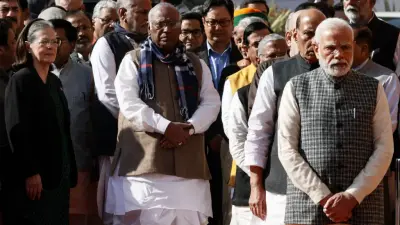
Congress president Mallikarjun Kharge has written to Prime Minister Narendra Modi seeking clarity on whether the government is planning to convene a special session of Parliament to pass the proposed delimitation Bill.
Kharge, who is also the Leader of Opposition in the Rajya Sabha, used his letter to reiterate the Congress demand for an all party meeting on the delimitation issue. His intervention comes amid speculation that the government could call Parliament back for a special session after Parliamentary Affairs Minister Kiren Rijiju indicated in a television interview that such a session could be considered.
Kharge asks: Why the delay?
In his letter, Kharge linked the possibility of a special session to what he described as the continued delay in proroguing the Monsoon Session.
The Monsoon Session had already been adjourned sine die, but the Lok Sabha had not formally been prorogued. Kharge questioned whether the delay was connected to the possibility of Parliament being reconvened specifically to consider the delimitation legislation.
The Congress has been seeking a broader political discussion on the issue, arguing that changes related to delimitation have significant implications for the country's electoral and political landscape.
Congress questions government’s plans
Kharge letter follows criticism from other Congress leaders over the delay in prorogation.
Congress general secretary Jairam Ramesh had earlier questioned the government's intentions, asking why the Lok Sabha had not been prorogued even after it was adjourned sine die.
Ramesh also raised the possibility that the government was seeking the numbers required to pass a Constitutional Amendment Bill on delimitation in a special session.
The reference to a two thirds majority is significant because constitutional amendments require special majorities in Parliament, making the government's numerical strength an important part of the political calculations surrounding any such legislation.
Why delimitation has become politically sensitive
Delimitation involves the readjustment of electoral constituencies and can affect the distribution of parliamentary seats among states and regions. Any major exercise therefore carries consequences beyond simply redrawing constituency boundaries.
That is why the Congress is pushing for an all-party meeting before the issue moves further through Parliament.
For the government, meanwhile, the possibility of a special session would provide an opportunity to take up legislation specifically if and when it decides to do so. But until an official announcement is made, the exact agenda and timing of any such session remain uncertain.
A special session or political speculation?
At present, the political dispute is being driven partly by statements, questions and speculation rather than a formally announced special session.
Kharge letter puts the ball back in the government's court: if a special session is being considered, what is its agenda and why has the Monsoon Session not yet been prorogued?
With delimitation carrying potentially far reaching political consequences, the Opposition is demanding consultation, while the government has yet to publicly confirm whether Parliament will indeed be summoned again.
Attribution: Editorial
Examine Raw Source