
Politics
Indian Edition
Election Chief Faces Legal Heat as Supreme Court Takes Up Suspension Plea
The Supreme Court decision to hear the plea place the Chief Election Commissioner position under judicial scrutiny, but merely hearing the petition does not imply that the court has accepted its…
CMS Admin
Editorial · Honestly Biased
AI Narrative Bias Audit
The headline carries an institutional and mildly adversarial framing by emphasising the CEC vulnerability to suspension while leaving the legal grounds and counter arguments behind the plea unexplained.
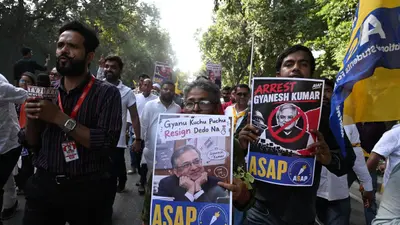
The Supreme Court is scheduled to hear on Monday, October 5, 2026, a batch of petitions seeking the suspension of Chief Election Commissioner Gyanesh Kumar and challenging the manner in which decisions have allegedly been taken with in the Election Commission of India (ECI). The petition raise question over whether certain decision were taken without the approval or recommendation of the other two Election Commissioners, Sukhbir Singh Sandhu and Vivek Joshi.
A bench comprising Chief Justice of India Surya Kant and Justices Joymalya Bagchi and V. Mohana is scheduled to hear the matter. The petitions have been filed by Patna resident Rakesh Kumar Singh and advocate Shailendra Mani Tripathi.
One of the petition challenge the functioning of the Election Commission in connection with the nation wide Special Intensive Revision (SIR) of electoral rolls. It argues that the Commission constitutional powers under Article 324 belong to the multi-member Election Commission rather than being exercised individually by the CEC. The petitioner has also sought to declare the SIR exercise and related decisions invalid, alleging that they lacked the necessary constitutional or statutory authority.
The controversy follows reports of differences within the three member poll panel, Election Commissioner Sukhbir Singh Sandhu and Vivek Joshi had recorded objection on multiple occasions concerning decision and orders linked to the SIR exercise, with the newspaper reporting at least 14 such objection over a 10 month period. The Election Commission, however, has disputed the characterisation of these matters, saying that the commissioners communication concerning an officer on deputation were not related to policy or IT division matters.
The second petition, filed by Shailendra Mani Tripathi, seeks an investigation by an independent judicial inquiry commission or a Special Investigation Team headed by a retired Supreme Court judge. It also raises allegation concerning the functioning of the ECI and seeks action in relation to decisions attributed to the CEC.
The petition come amid wider political and public controversy surrounding the SIR of electoral roll and demand for greater scrutiny of the Election Commission functioning. Protest calling for Kumar resignation have also taken place in Delhi and Mumbai in recent days.
However, the Supreme Court agreeing to hear the petition does not mean that it has accepted the allegation against the CEC. The court proceeding will determine whether the petition raise ground warranting judicial intervention and what, if any, direction should follow.
At the centre of the case is therefore a broader constitutional question, how should decision making power be exercised within India multi member Election Commission, and what safe guards apply when disagreement arise among its members? The Supreme Court hearing could provide further clarity on these questions as it examines the petitions and the material placed before it.
Distribute This Chronicle
Independent commentary breaks corporate silence when readers circulate the ledger directly to their peers.
Attribution: Editorial
Examine Raw Source