
Politics
UK Edition
Honeymoon at Gatwick, Romance Takes Off, Flights Don’t
The report highlights severe passenger disruption at Gatwick, using emotive descriptions of chaos and honeymoon to underscore frustration while noting the government support for the air traffic…
CMS Admin
Editorial · Honestly Biased
AI Narrative Bias Audit
The headline has a mildly sensational and critical framing, emphasising passenger frustration and airport chaos while presenting the government support for the air traffic control chief as a contrasting political angle.
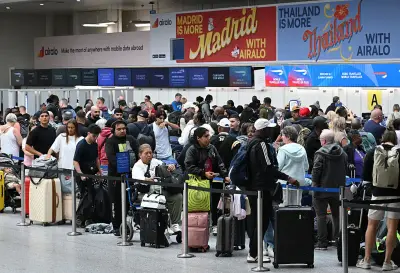
Hundreds of thousands of passengers have been caught up in widespread flight cancellations and delay after a technical failure affected the UK air traffic control system. The disruption, which began on Tuesday, hit major airports including Gatwick and Heathrow, leaving travellers facing long wait, cancelled journeys and overnight stay at terminal.
Images from airports showed exhausted passengers sleeping on floors as the disruption continued. Initial reports indicated that more than 300 flights had been cancelled, while the wider impact of the air traffic control failure eventually resulted in more than 1,000 cancellations and significant knock on delays across the UK aviation network.
What caused the disruption?
The problem was linked to a fault in the flight data processing system operated by the UK National Air Traffic Services (NATS). Although engineers implemented a fix and the immediate technical problem was resolved, the disruption continued because aircraft, crews and schedule had been left out of position.
Air traffic control system are central to the safe movement of aircraft, meaning even a relatively short technical failure can have consequences across an interconnected network. The latest incident has therefore renewed questions about the resilience of Britain's aviation infrastructure.
Passengers bear the brunt
For travellers, the technical explanation offered little comfort. Passengers faced cancelled flights, lengthy delays and limited information, with some forced to spend the night inside airports while airlines attempted to reorganise schedules and aircraft.
The disruption also spread beyond Gatwick and Heathrow, affecting airports across the UK and creating knock on problems for international services.
Pressure on NATS leadership
The incident has also triggered political and industry scrutiny of NATS chief executive Martin Rolfe. Airlines including Ryanair have called for stronger accountability, while the UK government has continued to express confidence in Rolfe and has demanded a full investigation into what went wrong.
Transport Secretary Heidi Alexander has asked NATS to provide a report on the failure, putting renewed focus on whether the UK air traffic control infrastructure is sufficiently resilient to withstand major technical problem.
A warning for Britain's aviation system
The latest outage is more than a story about delayed holidays. It highlights how dependent modern aviation is on complex digital infrastructure and how quickly a technical failure in one part of the system can ripple across airports, airlines and passengers.
With thousands of flights affected and disruption continuing after the original fault was fixed, the incident is likely to fuel debate over investment, resilience and accountability in Britain air traffic control network.
For passengers caught in the chaos, however, the immediate priority remains much simpler: getting home or finally reaching their destination.
Distribute This Chronicle
Independent commentary breaks corporate silence when readers circulate the ledger directly to their peers.
Attribution: Editorial
Examine Raw Source