
Politics
Indian Edition
India, China Corps Commanders Meet, Border Tension Takes a Brief Tea Break
The talks indicate continued military to military engagement between India and China aimed at managing tension along the disputed border. However, without details on the agenda, outcomes, or…
CMS Admin
Editorial · Honestly Biased
AI Narrative Bias Audit
The headline is relatively neutral, but its focus on military level talks may subtly frame India, China relations through the lens of border tension and security rather than broader diplomatic engagement.
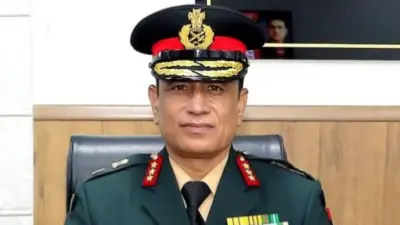
India and China held Corps Commander level talks in Arunachal Pradesh on Sunday amid report of recent tension in the Taksing area of Upper Subansiri district, marking a renewed effort by the two sides to manage issues along the Line of Actual Control (LAC).
Lt General Girish Kalia, commander of the Indian Army’s III Corps, also known as the Spear Corps, met his Chinese counter part and other officers at the Wacha-Damai border meeting point on the Indian side. The meeting focused on addressing ongoing issues along the LAC in the region.
Wacha, located in the Kibithoo sector of Arunachal Pradesh, is India easternmost border personnel meeting point. The location has gained significance as the two sides seek to prevent local tensions from developing into a wider confrontation.
Talks Follow Recent Local Level Engagement
The Corps Commander level meeting follows several meetings between local commanders from both countries in recent weeks. Those engagements were aimed at resolving issues arising along the border and maintaining stability in the area.
According to report, Indian troops continue to remain deployed in significant numbers in the region as a precaution against any escalation. The latest meeting is particularly notable because it represents the first senior military commander-level engagement between India and China in several months amid tensions along the Arunachal Pradesh section of the LAC.
The talks also come shortly after a high-level diplomatic engagement between the two countries. National Security Adviser Ajit Doval and Chinese Foreign Minister Wang Yi met in Beijing on August 25 as the special representatives of India and China for boundary negotiations.
Xi Jinping Expected India Visit Adds Significance
The latest military engagement comes at a time when broader India,China relations are also showing signs of diplomatic activity.
Chinese President Xi Jinping is expected to attend the BRICS summit in New Delhi on September 12-13. His potential visit would be his first trip to India since October 2019, when he travelled to Mamallapuram near Chennai for an informal summit with Prime Minister Narendra Modi.
A possible meeting between Modi and Xi during the BRICS summit could provide another opportunity for the two sides to discuss bilateral relations, including unresolved border concerns.
Relations Still Carry the Shadow of 2020
India,China relations have faced considerable strain since the military standoff along the LAC in eastern Ladakh began in 2020.
The two countries have conducted multiple rounds of military commander level discussion since then in an attempt to resolve differences and reduce the possibility of further confrontations. In eastern Ladakh, 23 rounds of Corps Commander level talks were held at the Chushul Moldo border meeting point.
The 23rd round took place in October 2025, following the formal agreement a year earlier on patrolling arrangements in the Depsang Plains and Demchok, two areas that had emerged as friction points along the LAC.
Prime Minister Modi and President Xi also met on the sidelines of the BRICS Summit in Kazan, Russia, in October 2024. Their discussions were followed by disengagement of troops from the friction points in eastern Ladakh.
Arunachal Pradesh Remains a Sensitive Sector
Unlike the clearly demarcated international border, the LAC reflects differing perceptions held by India and China. These competing perceptions have historically resulted in face-offs and tensions between troops operating in the region.
The latest talks therefore represent an important mechanism for preventing local disputes from escalating. However, military dialogue by itself does not resolve the larger boundary dispute.
For now, the focus remains on maintaining peace and communication along the Arunachal Pradesh frontier while India and China continue their broader diplomatic efforts to stabilize a relationship that has remained heavily influenced by unresolved border issues.
Distribute This Chronicle
Independent commentary breaks corporate silence when readers circulate the ledger directly to their peers.
Attribution: Editorial
Examine Raw Source