
Politics
World Edition
Indonesia Volcano Grounds 1,558 Flights, Passengers Stuck Waiting for Lava Clearance
The eruption of Mount Anak Krakatau disrupted air travel across Indonesia, affecting 1,558 flights and leaving about 170,000 passengers stranded as eight airports were closed because of volcanic…
CMS Admin
Editorial · Honestly Biased
AI Narrative Bias Audit
The headline emphasizes the scale of flight cancellations and passenger disruption, but its numerical framing may over shadow the under lying volcanic hazard and the safety rationale for suspending flights.
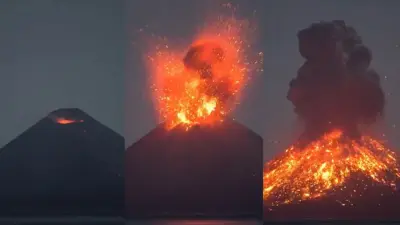
Indonesia Mount Anak Krakatau erupted multiple times over the weekend, sending volcanic ash as high as 50,000 feet and severely disrupting air travel across the country. The eruption forced the closure of eight airports, including both of Jakarta main airports, while more than 1,500 flights were cancelled or affected and around 170,000 passengers were impacted.
Anak Krakatau Erupts Multiple Times
Anak Krakatau, located in the Sunda Strait between the Indonesian islands of Java and Sumatra, began showing increased activity on Friday. The volcano erupted for around 30 seconds at 3:53 a.m. Sunday, followed by another shorter eruption several hours later, according to Indonesia’s Geological Agency.
The eruptions produced substantial ash clouds that spread across parts of the region. Authorities have warned that volcanic ash can pose a serious hazard to aircraft, particularly because it can affect aircraft engines and other systems.
Eight Airports Hit by Closures
The disruption extended well beyond the immediate vicinity of the volcano.
Eight airports were ordered to suspend operations, including Jakarta Soekarno Hatta International Airport and Halim Perdanakusuma Airport. Services at other airports were also disrupted, while flights to and from Bali and Medan were affected.
By Sunday evening, the closures had affected approximately 170,000 passengers and 1,558 cancelled flights, according to reports. Soekarno-Hatta alone accounted for hundreds of disrupted flights.
The airport shutdowns were primarily a precautionary measure because of the presence of volcanic ash in the airspace.
Airlines Cancel Flights as Ash Spreads
Several airlines cancelled or altered services because of the eruption. Passengers faced delays and uncertainty as airlines worked to rearrange flights and provide alternative arrangements.
The disruption also affected international services, with airlines monitoring ash conditions before deciding when flights could safely resume.
By Monday, authorities were still monitoring conditions, with some airport closure extended because weather conditions could continue to spread volcanic ash. Reuters later reported that seven airports, including the two Jakarta airports, remained closed as the situation developed.
No Immediate Evacuation Order
Despite the scale of the eruption and travel disruption, authorities did not issue a broad evacuation order. People were advised to stay away from the volcano and take precautions against volcanic ash.
Schools in some affected areas also shifted to remote learning because of concerns about ash exposure. Officials advised residents to remain alert and use protective measures where necessary.
A Volcano With a Troubled History
Anak Krakatau is one of Indonesia’s most closely watched volcanoes. It emerged in the Sunda Strait following the catastrophic 1883 Krakatoa eruption.
The volcano also produced a deadly eruption and tsunami in 2018, which killed more than 400 people. That history means authorities continue to closely monitor changes in its activity, although the current eruption has not resulted in a comparable disaster.
What Happens Next?
The immediate priority is monitoring the volcano and determining when airspace and airport operations can safely return to normal.
The latest disruption demonstrates how quickly volcanic activity can affect transportation far beyond the eruption site. With ash reaching high altitudes and weather conditions influencing its movement, airlines and aviation authorities are expected to continue assessing conditions before restoring normal operations.
For the thousands of passengers caught in the disruption, the return to normal travel will depend not only on the volcano becoming quieter, but also on airspace conditions becoming safe enough for aircraft to operate.
Distribute This Chronicle
Independent commentary breaks corporate silence when readers circulate the ledger directly to their peers.
Attribution: Editorial
Examine Raw Source