
Politics
Indian Edition
Law and Order on Notice, Supreme Court Flags Lax Patrolling After Sexual Assault Cases
The Supreme Court suo motu intervention places scrutiny on alleged lapses in patrolling and the broader response of authorities following recent sexual assault cases in Delhi NCR. The proceedings…
CMS Admin
Editorial · Honestly Biased
AI Narrative Bias Audit
The report highlights the recent sexual assault cases and the Supreme Court concerns over alleged lax patrolling, while largely framing authorities security measures through the lens of public safety concern.
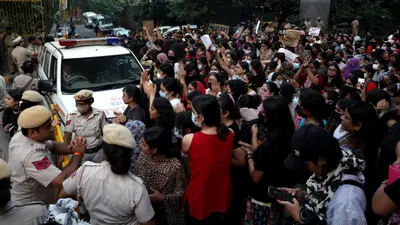
The Supreme Court on Monday, September 28, 2026, took suo motu cognisance of a series of recent sexual assault cases involving women and minors in Delhi,NCR, putting the spotlight on public safety, police patrolling and administrative preparedness.
A Bench comprising Justices J.B. Pardiwala and K. Vinod Chandran sought a response from the Delhi Police after taking note of several reported incidents of sexual violence in the national capital and surrounding areas.
The court observed that public spaces such as parks, buses and Metro stations cannot be allowed to become zones of high risk because of what it described as lax patrolling and other preventable administrative deficiencies.
The Supreme Court intervention follow reports of multiple sexual assault cases involving women and children in different parts of Delhi,NCR.
Among the incidents taken note of by the court was the alleged rape of a 17 year old at Astha Kunj Park near Lady Shri Ram College in Delhi. The Bench also referred to the reported gang rape of a minor in Swaroop Nagar and the alleged sexual assault of another minor inside a bus travelling from Greater Noida to Delhi.
The cases have renewed attention on the safety of public spaces and the effectiveness of preventive policing arrangements. Parks, public transport and transit points are among the locations where authorities are expected to maintain security measures and ensure that people can use these spaces without facing avoidable risk.
By taking suo motu cognisance, the Supreme Court has decided to examine the issue independently rather than waiting for a conventional petition seeking judicial intervention. The move places the functioning of the police and relevant administrative authorities under direct judicial scrutiny.
The Bench comment on lax patrolling also bring attention to the preventive side of policing. While investigations into individual cases will determine the circumstances and responsibility involved in each incident, the court is examining whether administrative shortcomings could have contributed to increased risks in public spaces.
The Delhi Police will now be required to respond to the concerns raised by the court. Its response is expected to provide details on patrolling arrangements, security measures and steps taken following the reported incidents.
The Supreme Court proceeding could also bring wider questions about public safety into focus, including the monitoring of vulnerable location, security on public transport and coordination between police and other civic authorities.
The intervention comes at a time when concerns over the safety of women and children in public places remain a significant issue in Delhi,NCR. The court’s observations indicate that preventing such incidents is not limited to investigating crimes after they occur but also involves assessing whether adequate safeguards are in place before hand.
The proceeding will determine what further directions, if any, are required from the authorities. Until then, the individual allegations remain matters for investigation and judicial consideration, while the Supreme Court broader scrutiny centres on whether existing policing and administrative arrangements are adequate to protect women and minors in public space.
Distribute This Chronicle
Independent commentary breaks corporate silence when readers circulate the ledger directly to their peers.
Attribution: Editorial
Examine Raw Source