
Politics
Indian Edition
Nepal Flood Mystery, Ice-Rock Avalanche Suspected, Nature Apparently Hit Unsubscribe on the River!
Scientist suggest that an ice-rock avalanche may have triggered the Nepal flash flood, offering a possible natural explanation for the disaster. However, the cause remains unconfirmed, so the…
CMS Admin
Editorial · Honestly Biased
AI Narrative Bias Audit
The report frames the ice rock avalanche as a possible scientific explanation for the Nepal flash flood, while appropriately presenting the trigger as a hypothesis rather than a confirmed cause.
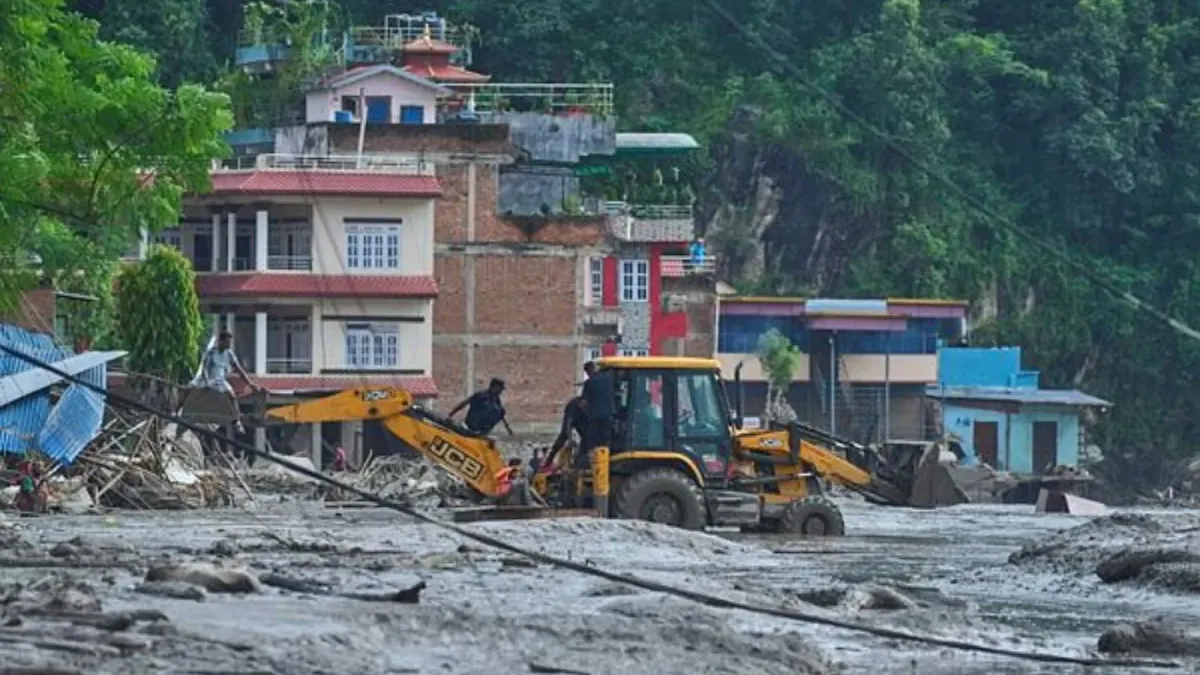
Scientists are investigating whether an ice rock avalanche from a high altitude area may have triggered the devastating flash flood and mudslide that struck Nepal’s Rasuwa district near the Nepal,Tibet border on Wednesday.
Researchers from the International Centre for Integrated Mountain Development (ICIMOD), along with partner institutions in Nepal and China, are examining evidence from the disaster zone to understand what caused the sudden surge of water, sediment and debris.
ICIMOD, a Nepal based intergovernmental organisation focused on the Hindu Kush Himalaya region, said preliminary assessments point towards a possible large scale movement of ice and rock debris into the Lende Khola, a tributary of the Bhote Koshi River.
Possible Avalanche Behind Sudden Flood Surge
The flash flood struck Rasuwa district downstream of Tibet, sending water, sediment and large boulders through the Bhote Koshi and Trishuli river systems.
According to ICIMOD preliminary assessment, video footage and information gathered from affected areas indicate that a substantial volume of ice and rock debris may have entered the Lende Khola.
Researchers believe such an event could have produced a sudden surge that swept water, sediment and boulders downstream, contributing to the destructive flooding and mudslides.
However, scientists have stressed that this remains a suspected trigger rather than a confirmed cause.
Unusual Seismic Signals Detected
Early analysis has also identified unusual signals in seismic records around the time of the disaster.
While these signals are being examined as part of the investigation, researchers have not established an immediate causal connection between the seismic activity and the flash floods.
The distinction is important because the presence of unusual seismic signals does not, by itself, establish what triggered the flood.
Further analysis of geological, seismic and visual evidence will be required before scientists can determine the precise sequence of events.
A Region Already Hit by Flooding
The latest disaster has raised additional concerns because the affected area was also struck by flooding last year.
Qianggong Zhang, Head of Climate and Environmental Risks at ICIMOD, noted that the same site affected by the previous Rasuwa flood is once again facing danger.
The rugged terrain of the Hindu Kush Himalaya makes the region particularly vulnerable to rapidly developing hazards involving glaciers, ice, rock, rivers and unstable mountain slopes.
Warning of Another Possible Flood
The situation remains potentially dangerous.
According to ICIMOD, a blockage remains lodged upstream near the Nepal,China border. Authorities have warned that another flood could occur if conditions change or the blockage fails.
Evacuation orders have consequently been put in place for Jilong port as officials continue monitoring the situation.
The warning underscores the uncertainty facing communities and travellers in the affected region, where damaged infrastructure and disrupted communication can make emergency response particularly difficult.
Scientists Continue Investigation
The investigation is expected to combine satellite and video observations, seismic data, field information and other evidence to establish how the disaster unfolded.
At present, the ice-rock avalanche theory provides a possible explanation for the sudden movement of water and debris, but researchers have not confirmed it as the definitive cause.
As authorities continue rescue and evacuation efforts, scientists are also working to determine whether the suspected upstream blockage and mountain debris could create further hazards.
For now, the focus remains on protecting people in vulnerable areas while researchers work to establish the exact chain of events behind one of the region latest flash flood disasters.
Attribution: Editorial
Examine Raw Source