
Politics
Indian Edition
Once the State Headache, Now the University Coordinator, Bhupati New Avatar
The piece highlight Bhupati transition from a Maoist background to an academic role, but its framing risks making the transformation appear more dramatic than the available context support. A more…
CMS Admin
Editorial · Honestly Biased
AI Narrative Bias Audit
The headline carries a dramatic and sensational framing, contrasting Bhupati alleged Maoist past with his university role to emphasize the irony of his career transformation while offering little neutral context about the circumstances of his appointment.
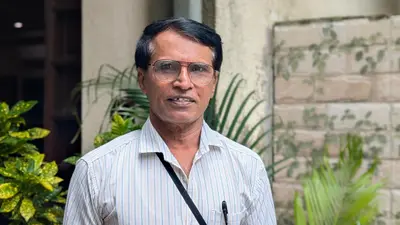
Life has taken a dramatic turn for Bhupathi, also known by the aliase Abhay, Mallojula Venugopal and Sonu. Once described as a senior and highly wanted Maoist, he reportedly carried a ₹6 crore bounty, with security agencies across six States pursuing him.
Now 70, Bhupathi is looking at a very different future after surrendering before the Maharashtra Police less than a year ago. His surrender was seen by authorities as a major development in the fight against Maoist insurgency in Maharashtra.
Bhupathi offered his own explanation of the decades long conflict. He argued that the Maoists did not view their struggle as a personal confrontation with the government, but as a movement that claimed to represent the interests of tribal communities.
We were representing the tribals. We fought with the system as the representatives of the adivasi, he said.
Bhupathi also argued that merely ending armed activity would not automatically resolve the underlying tensions in tribal regions. According to him, conflict would continue as long as tribal communities felt insecure or believed that Maoists provided protection and representation.
He called for what he described as radical changes and genuine rehabilitation for tribal communities, suggesting that development and rehabilitation must address the social and economic conditions that helped sustain the insurgency.
From Underground Movement to a Different Future
Bhupathi journey highlights the complicated nature of India's long-running Maoist conflict. For years, he was associated with an armed movement that challenged the state, while security forces attempted to dismantle its organisational network.
His surrender now places his life in a completely different context. The transition also raises questions about rehabilitation, reintegration and the challenges of rebuilding civilian life after decades connected with an underground insurgency.
At the same time, his claim that he was the person who ended Maoism should be understood as his own assessment, rather than an independently established fact. The decline of Maoist influence in Maharashtra has resulted from multiple factors, including security operations, surrender, government programme and changing conditions in affected communities.
The Bigger Question
Bhupathi comments shift the discussion from his personal transformation to the larger issue surrounding the insurgency. His argument is that security measures alone cannot permanently eliminate conflict unless tribal communities also experience safety, representation, development and meaningful rehabilitation.
Whether one agrees with his interpretation or not, his journey from a highly wanted Maoist figure to a man contemplating a new civilian future illustrates the dramatic changes that can occur after decades of armed conflict.
For Gadchiroli, the more important question may now be what comes after the guns fall silent- how can former insurgents be reintegrated, while ensuring that tribal communities receive the rights, security and opportunities that remain central to the region future?
Attribution: Editorial
Examine Raw Source