
Politics
World Edition
Paris Investigates Eiffel Tower, Women hindu delegation Out of Sight, Controversy
The report centres on an allegation that women were removed during a Hindu delegation Eiffel Tower visit, making the gender equality aspect the dominant narrative. However, the claim should be…
CMS Admin
Editorial · Honestly Biased
AI Narrative Bias Audit
The headline is relatively neutral but may carry implicit bias by foregrounding the allegation that women were removed, which could shape readers’ perceptions before the facts of the investigation are established.
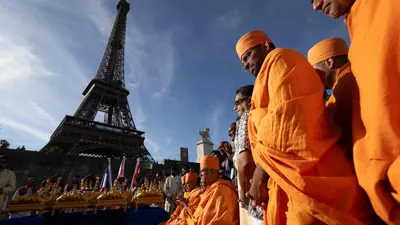
The Eiffel Tower, one of Paris’s most iconic landmark, was temporarily closed on Monday, September 7, 2026, after staff went on strike over allegations that female colleagues were removed from areas of the monument during a visit by a Hindu religious delegation.
Workers and management confirmed the closure, which came amid a growing controversy over how staff were reportedly treated during the private visit. The incident has triggered a debate over workplace equality, religious sensitivities and the management of high-profile cultural and religious events at public landmark.
The visit was associated with the Bochasanwasi Akshar Purushottam Swaminarayan Sanstha (BAPS), a Hindu spiritual movement. It took place on the same day as a cultural boat procession on the Seine organised by the BAPS movement, bringing members of the Hindu community and cultural participants together in the French capital.
Dispute Over Female Staff
At the centre of the controversy are allegations that female Eiffel Tower employees were asked to leave or stay away from certain areas during the delegation visit.
The reported decision prompted opposition from workers, eventually contributing to the strike and the closure of the Eiffel Tower. Employees' concerns have focused on whether the treatment of female colleagues was compatible with workplace equality and the principles expected at a major public attraction.
The precise circumstances surrounding the decision remain important. While the allegation has received significant attention, it should not be treated as an established fact until the investigation into the incident is completed.
Cultural Event Adds Another Dimension
The controversy coincided with a cultural event on the Seine organised by BAPS, giving the episode a broader cultural context.
The boat procession was part of a high-profile programme associated with the Hindu spiritual organisation and took place against the backdrop of Paris's international and multicultural character.
The timing of the Eiffel Tower visit and the river procession has brought additional scrutiny to the arrangements made for the delegation and the way the landmark handled the event.
Equality and Religious Sensitivities
The dispute has raised difficult questions about the balance between accommodating religious or cultural requirements and maintaining equal treatment for employees.
France has a strong legal and political tradition surrounding equality and secularism, while Paris regularly hosts religious, diplomatic and cultural delegations from around the world. Managing such visits can therefore involve competing expectations around protocol, privacy, religious practices and workplace rules.
The Eiffel Tower, meanwhile, is not simply a tourist attraction. It is one of France's most recognisable public symbols and welcomes millions of visitors, making any controversy involving its staff likely to attract international attention.
Investigation Expected to Establish the Facts
The key question now is what exactly happened during the visit and who made the decision concerning female employees.
An investigation is expected to establish whether women were actually removed from particular areas, why such an arrangement was made and whether it resulted from a request by the visiting delegation, a decision by event organisers or an internal management decision.
Those distinctions will be important in determining responsibility and understanding the circumstances behind the staff protest.
Until those facts are established, the controversy should be viewed through the lens of an allegation and an ongoing dispute rather than as definitive evidence of discrimination by either the visiting group or Eiffel Tower management.
A Symbolic Landmark at the Centre of a Wider Debate
The Eiffel Tower closure has turned an otherwise private and culturally significant visit into an international story about equality, religious accommodation and workplace rights.
For workers, the dispute is about how colleagues should be treated in their workplace. For management, the episode raises questions about how special visits should be organised. And for the wider public, it has become a test of how cultural and religious diversity can coexist with established workplace and equality standards.
As the investigation continues, the priority will be to establish what happened, clarify who was responsible for the disputed arrangements and ensure that future events at the Eiffel Tower can take place without compromising the rights of its employees.
Distribute This Chronicle
Independent commentary breaks corporate silence when readers circulate the ledger directly to their peers.
Attribution: Editorial
Examine Raw Source