Politics
World Edition
Trump-Xi Summit, Cameras Got the Smile, Silence Got the Real Headline
The Trump-Xi summit highlighted areas of cooperation and disagreement, while some sensitive issues received limited or no public discussion. The absence of clear statement on certain matters leaves…
CMS Admin
Editorial · Honestly Biased
AI Narrative Bias Audit
The headline frame the Trump-Xi summit around omission and diplomatic silence, subtly suggesting that what remained unspoken may reveal more than the leaders public statement.
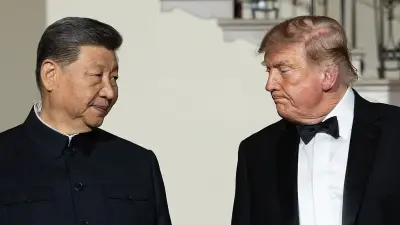
On Monday, China released more details about what was agreed during last week meeting between Chinese President Xi Jinping and US President Donald Trump, offering a clearer picture of several concrete out come. However, the summit did not produce a joint statement or a sweeping break through, with Washington and Beijing instead issuing separate accounts of the discussions.
That difference in messaging is notable because the meeting covered some of the most sensitive areas of the US, China relationship, including trade, artificial intelligence, technology and Taiwan. The two sides did reach limited agreements, but several major dispute remain unresolved.
Here are four things we now know and several things we still don't about what happened at the talks.
A New AI Dialogue and Communication Channel
One of the more concrete outcomes was an agreement to establish a new dialogue on artificial intelligence with further discussions expected later this year.
The two countries also agreed to create a communication channel for AI related incident. The aim is to provide a way for Washington and Beijing to communicate if developments involving AI create unexpected risks or misunderstanding.
That matter because the US and China are competing aggressively in advanced AI, while government and technology companies are increasingly debating how the technology should be governed and how potential risk should be managed.
AI was therefore more than a side issue at the summit. It formed part of a broader conversation about technology competition, economic security and the need to keep communication open even while strategic tension continue. Reuters had identified AI, trade, Taiwan and other security issue as major areas of focus ahead of the meeting.
Trade Truce, What Was Included And What Wasn't
China confirmed that the US, China trade truce would remain in place until 10 January 2027, extending the period during which both sides can continue negotiations.
The two countries also agreed to tariff reductions covering around $60 billion of goods, with each side identifying about $30 billion of non-sensitive trade for more favourable treatment. Products affected include Chinese household appliances and toys, as well as US agricultural products.
The agreement provides businesses with additional time and some greater predictability, but it does not resolve the broader economic dispute between the two countries.
And that is where the unanswered questions become important.
The reported arrangements did not amount to a comprehensive settlement of disagreements over areas such as rare earth supplies, advanced semiconductor restrictions and broader technology controls. Those issues remain part of the wider US, China economic relationship.
So, while the tariff truce creates more breathing room, it is better understood as another stage of negotiations rather than the end of the trade confrontation.
Taiwan, The Issue That Wasn't Discussed Much Publicly
Taiwan remained one of the most sensitive subjects surrounding the summit, even though it received relatively little attention in Trump public comments.
Beijing continues to regard Taiwan as part of China and opposes moves toward formal independence. Washington maintains relations with Taiwan and provides it with defensive weapons while following its longstanding policy regarding the island's status.
According to China account of the talks, Xi raised Taiwan with Trump and urged Washington to oppose Taiwanese independence.
Trump, however, offered limited public detail about the discussion, saying they did not talk about the issue very much.
That contrast between Beijing emphasis and Washington relatively restrained public comments leaves important questions unanswered about how the two sides intend to manage one of the most potentially dangerous flashpoints in their relationship.
The lack of a detailed public account does not necessarily indicate an agreement or disagreement behind closed doors. It does, however, mean that the public record provides only a limited picture of the conversation.
China May Be Opening More Doors to Foreign Investment
Another area highlighted by China was access for foreign financial companies.
Beijing said more foreign financial firms, including US backed banks, investment companies and insurer, would be able to apply to establish operations in China.
However, the companies would still have to comply with Chinese laws and regulatory requirements.
That distinction is important. Greater eligibility to apply for market access does not automatically mean unrestricted access to the Chinese financial market.
Foreign businesses have long faced regulatory and operational challenges when expanding in China, making implementation likely to matter as much as the announcement itself.
The Bigger Picture, Progress Without a Grand Bargain
The Trump-Xi summit produced several practical measure, a longer trade truce, tariff adjustment, new AI communication mechanisms and potential additional opportunities for foreign financial firm.
But some of the biggest strategic disagreements were left unresolved.
There was no comprehensive settlement covering the full range of trade dispute, no clear resolution of the technology confrontation and limited public information about the Taiwan discussion.
That makes the summit less a final settlement than another attempt to manage a relationship in which cooperation and competition are continuing at the same time.
In diplomacy, what leaders announce matters. But when two governments release separate account and leave sensitive subjects only partially explained, the gaps in the public record can become just as important not necessarily because they reveal a secret agreement, but because they show how much remains unresolved.
Distribute This Chronicle
Independent commentary breaks corporate silence when readers circulate the ledger directly to their peers.
Attribution: Editorial
Examine Raw Source