
Politics
Indian Edition
UPI Getsa New Price Tag, MDR Hike Stay, Rahul Gandhi vs Centre Heats Up
The UPI MDR fee hike reflects a policy debate over how digital payment networks should be funded and whether transaction cost should be shared by banks, payment providers, merchants, or consumers.…
CMS Admin
Editorial · Honestly Biased
AI Narrative Bias Audit
The narrative frames the UPI MDR fee hike primarily as a political confrontation between Rahul Gandhi and the Centre, giving greater emphasis to the dispute than to the technical and economic rationale behind the policy.
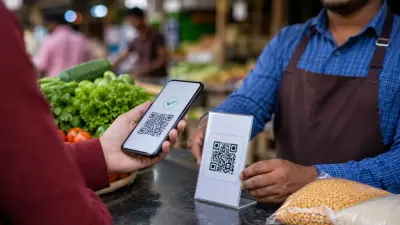
India Unified Payments Interface (UPI) is heading into a new phase, with the government confirming that there will be no rollback of the proposed 0.4% Merchant Discount Rate (MDR) on eligible person to merchant transaction above ₹2,000. The new framework is scheduled to take effect from October 15, 2026, while a legal challenge has already reached the Supreme Court.
The move has triggered a political dispute, with Congress leader Rahul Gandhi criticising the decision and alleging that it reflects US pressure. The government has rejected that allegation, saying the policy is aimed at the sustainability of the digital payment ecosystem and that the MDR will be paid by merchants rather than consumer.
1. Rahul Gandhi attacks the UPI fee
Rahul Gandhi has emerged as one of the most vocal critics of the new UPI pricing framework. Reacting to the decision, he accused Prime Minister Narendra Modi of yielding to US President Donald Trump and called for the proposed charge to be rolled back.
The Congress has also alleged that the change was linked to pressure from the United States and could benefit foreign card companies. These remain political allegations, while the government has denied that external pressure influenced the decision.
2. Centre says there was no foreign pressure
The government has rejected the opposition allegation that the MDR was introduced because of pressure from abroad.
Under the new framework, the 0.4% MDR applies to eligible person to merchant UPI transactions above ₹2,000. The charge is to be borne by the merchant, while person to person transfers remain free. For transactions of ₹75,000 or more, the MDR is capped at ₹300.
3. Why is the government defending the move?
The government argument centre on the cost and sustainability of maintaining India rapidly expanding digital payment infrastructure.
UPI requires banks, payment apps and other service providers to maintain technology, cybersecurity, customer support and transaction processing infrastructure. The new pricing model is intended to create a revenue stream for parts of this ecosystem after years of zero MDR on UPI merchant payments.
4. What exactly is MDR?
Merchant Discount Rate, or MDR, is the fee associated with processing a digital payment that is charged to the merchant.
The money can be distributed among the financial institutions and payment service providers involved in processing the transaction. Credit and debit card payments have traditionally operated with MDR, while UPI had largely remained under a zero MDR model for merchant transactions.
5. What is changing for UPI?
From October 15, 2026, eligible UPI payments made to merchants above ₹2,000 will attract an MDR of 0.4%.
For example-
₹5,000 transaction → ₹20 MDR
₹10,000 transaction → ₹40 MDR
₹50,000 transaction → ₹200 MDR
₹75,000 transaction → ₹300 MDR
Above ₹75,000 → capped at ₹300
The important distinction is that person to person UPI transfers remain free, while payment to merchants up to ₹2,000 also remain free.
6. Why introduce charges after years of free UPI?
UPI has grown into one of the world largest real time digital-payment systems, but its infrastructure is not cost free.
Banks, payment apps and other participants have continued to bear expenses associated with operating and maintaining the network. The new MDR framework is intended to shift part of those costs into a formal revenue model and make the ecosystem financially sustainable.
7. Could consumers ultimately pay?
Officially, the MDR is a merchant side charge, not a direct fee imposed on the customer.
However, the economic question is whether some businesses could eventually incorporate payment processing costs into their prices. That possibility has become part of the political debate, although the immediate framework does not authorise a direct UPI charge to consumers for these transactions.
8. What happens to small payments?
The new system does not make every UPI payment chargeable.
Person to person transactions remain free, while merchant payments up to ₹2,000 are also exempt. Reports indicate that these smaller transactions account for the overwhelming majority of UPI merchant payment volume, limiting the direct scope of the MDR.
9. Why has the decision become political?
The UPI debate has moved beyond fintech and into a wider argument over economic policy and India relationship with the United States.
Rahul Gandhi and other opposition leaders have linked the policy to alleged US pressure, while the government has rejected that interpretation. The disagreement therefore involves two separate questions- why the MDR was introduced and who ultimately bears its economic impact.
10. What happens next?
The MDR framework is scheduled to begin on October 15, 2026, but the policy is already facing a potential legal challenge in the Supreme Court. Meanwhile, the government has indicated that it has no plans to withdraw the decision.
For users, the immediate takeaway is that UPI is not becoming universally chargeable. Person to person transfer and eligible merchant payments up to ₹2,000 remain free, while the new 0.4% MDR targets specified higher value merchant transactions. The bigger debate is now about whether the new revenue model can sustain India digital payment infrastructure without eventually increasing cost for businesse or consumer.
Distribute This Chronicle
Independent commentary breaks corporate silence when readers circulate the ledger directly to their peers.
Attribution: Editorial
Examine Raw Source