
Politics
UK Edition
Westminster Gets the Warning, Wales, Scotland and Northern Ireland Say Change Is Coming
The remarks from the Welsh, Scottish and Northern Irish leader reflect growing political criticism of Westminster and renewed calls for greater regional autonomy. However, describing Westminster…
CMS Admin
Editorial · Honestly Biased
AI Narrative Bias Audit
The narrative frames Westminster as an outdated political centre nearing its end, while giving greater weight to the perspectives of Welsh, Scottish and Northern Irish leaders advocating greater regional autonomy.
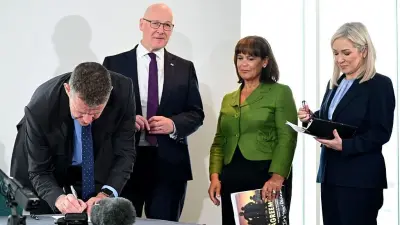
The political battle over the future of the United Kingdom has entered a new phase, with the first ministers of Wales, Scotland and Northern Ireland declaring that Westminster’s time is coming to an end.
The leaders of Plaid Cymru, the SNP and Sinn Féin signed an agreement on Monday arguing that no Westminster government should have the power to block democracy or prevent people in their respective nations from deciding their constitutional future.
The meeting brought together Scotland First Minister John Swinney, Wales First Minister Rhun ap Iorwerth and Northern Ireland First Minister Michelle O’Neill, alongside Sinn Fein president Mary Lou McDonald.
A united challenge to Westminster
The agreement represents a significant political moment because, for the first time since devolution began, Wales, Scotland and Northern Ireland have first ministers from parties that support their countries ultimately leaving the United Kingdom.
The memorandum states that each nation should be able to determine its future in its own way and in its own time.
Swinney described the meeting as a pivotal moment in the constitutional journey of the UK. He argued that the people of Scotland should have the opportunity to choose independence through a referendum.
O Neill similarly insisted that Northern Ireland had a right to determine its constitutional future, while McDonald said her party would not accept Westminster ruling out the possibility of a referendum.
Wales, however, is taking a more cautious approach.
Wales keeps the referendum timetable open
Ap Iorwerth declined to provide a timetable for a Welsh independence referendum, stressing that the decision ultimately belonged to the people of Wales.
He argued that there was growing recognition that Westminster was not working effectively for Wales and said greater powers and resources should be transferred closer to Welsh communities.
Plaid Cymru has already ruled out holding an independence referendum before the next Senedd election in 2030. The Welsh government also wants to establish a national commission intended to lay the foundations for future plans surrounding Welsh independence.
The Welsh government does not currently have the authority to hold an independence referendum itself.
Scotland renews its independence push
For Scotland, the constitutional debate remains considerably more advanced.
Swinney argued that Scotland should be allowed to decide its future and predicted that Scottish voters would choose independence if given another opportunity.
However, Westminster's position remains a major obstacle. The 2014 independence referendum ended with 55% voting to remain in the UK and 45% voting for independence.
Recent comments from Prime Minister Andy Burnham appeared to suggest that another referendum could potentially be considered if there were clear public support. However, he later clarified that another Scottish referendum remained off limits, highlighting the continuing disagreement between Edinburgh and Westminster.
Wales and Scotland join forces on powers and funding
Alongside the broader constitutional agreement, the Welsh and Scottish governments signed a separate cooperation agreement.
The two governments said they would work together to push for greater fairness in UK funding arrangements and increased powers over their constitutional future.
They also agreed to cooperate on issues including child poverty and strengthening relationships with the European Union.
A particularly contentious issue is the Barnett Formula, which determines how funding is allocated across parts of the UK. Welsh ministers have repeatedly argued that the existing system disadvantages Wales, while Scotland is generally considered to benefit from the arrangement.
Ap Iorwerth said Wales should at least receive some of the flexibilities already available to Scotland.
Westminster pushes back
The constitutional challenge has already triggered criticism from Labour, Conservatives and Reform UK politicians in Wales.
Labour Welsh leader Ken Skates accused Plaid Cymru of wanting to break up Britain and argued that the party was more interested in constitutional powers than governing effectively.
Welsh Conservative leader Darren Millar said the first minister should focus on problems facing the Welsh NHS and education system rather than independence.
Reform UK Welsh leader Dan Thomas also attacked ap Iorwerth, arguing that Wales domestic problem should take priority over the question of breaking up the UK.
The UK government, meanwhile, reiterated its commitment to the Union and said the prime minister wanted to deliver change across all four nations.
A constitutional battle is taking shape
The meeting has nevertheless underlined how dramatically the political landscape across the UK has changed.
Wales, Scotland and Northern Ireland now have first ministers from parties advocating significantly greater autonomy or independence. Their agreement does not establish a common timetable for breaking away from the UK, nor does it guarantee that any independence referendum will take place.
But it does send a clear political message to Westminster, the constitutional question is no longer confined to Scotland.
With the devolved leaders due to meet the prime minister next month, the debate over powers, funding and the future of the Union is likely to become increasingly difficult for Westminster to ignore.
Distribute This Chronicle
Independent commentary breaks corporate silence when readers circulate the ledger directly to their peers.
Attribution: Editorial
Examine Raw Source