
Politics
World Edition
When Rent Becomes a Luxury, Spain Takes the Protest Route
Protesters across Spain are calling for government action over rising housing costs, limited affordability and difficulties accessing homes. The protests highlight growing public concern about…
CMS Admin
Editorial · Honestly Biased
AI Narrative Bias Audit
The headline frame Spain housing crisis through the protesters demand for government action, without presenting the government position or broader policy context.
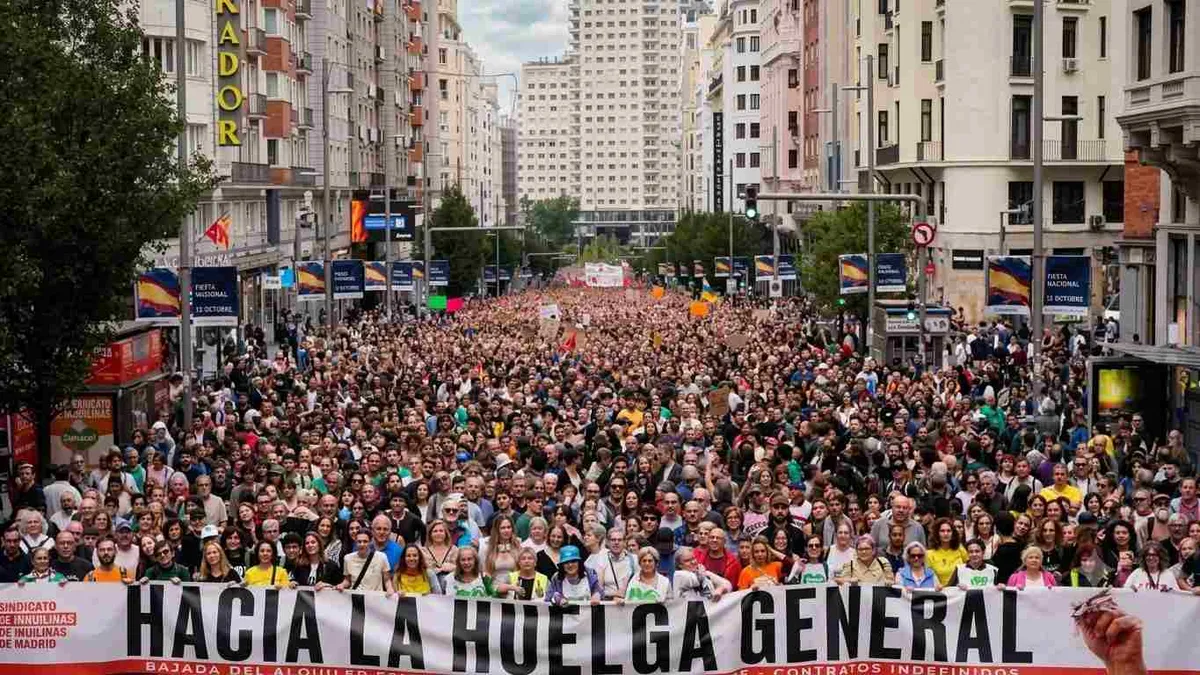
Thousands of protesters have taken to the streets across Spain demanding stronger tenant protections and action on rising housing costs, after Prime Minister Pedro Sanchez minority government failed to pass emergency housing legislation in Congress on Friday.
Around 50 demonstrations were planned across the country on Saturday, including in Madrid, Valencia and Barcelona. In Valencia, clashes were reported between some protesters and police near the Palau de les Arts Reina Sofia, where a real estate summit was being held.
The protests follow widespread anger over the eviction of 87 year old Maricarmen Abascal, who was forced to leave her home after being unable to afford a sharp rent increase. Her case became a focal point for a broader campaign demanding lower rents, greater protection from evictions and restrictions on investment funds purchasing residential properties.
In Madrid, one of the largest demonstrations took place, with estimate of attendance varying significantly. The city Tenants Union claimed around 500,000 people participated, while government officials estimated the crowd at about 70,000.
Protesters have also maintained an encampment at Puerta del Sol, one of Madrid main square, for several days.
We're not here for pleasure or comfort. We're here out of conviction, one protester, David, told Spanish public broadcaster RTVE ahead of the demonstration.
Government Housing Measures Rejected
The Sanchez government had introduced two separate housing decrees in an attempt to respond to the growing crisis.
The first included measures such as suspending evictions of vulnerable tenants until 2030, extending certain rental contracts for two years, increasing taxes on tourist apartments and restricting purchases of residential property by investment funds.
The second decree proposed automatic renewal of rental contracts, a key demand from sections of the political left and tenant organisations.
Both measures were rejected in Congress. MPs voted 178-172 against the first decree and 184-166 against the second.
Sanchez Socialist led coalition does not hold a parliamentary majority and therefore depends on support from smaller parties to pass legislation.
The conservative People Party (PP) and Vox had already opposed the proposals. The centre right, pro-independence Together for Catalonia (JxCat) subsequently signalled that it would also vote against the measures, leaving the government without enough support to secure their passage.
Housing Crisis Puts Pressure on Sánchez
The parliamentary defeat has added further political pressure on Sanchez and his coalition government, with speculation growing over whether an early general election could eventually be called. Spain next general election was otherwise expected next summer.
The government proposals were drafted rapidly after the eviction of Abascal triggered nationwide demonstrations.
Following the public backlash, the company owning her former flat, Urbagestion, negotiated an arrangement allowing her to return at a lower rent. Despite the resolution of her individual case, protest over housing affordability have continued.
Madrid Tenants Union has described the government's measures as insufficient and has called for a general strike over the housing crisis.
Spain Faces Significant Housing Shortage
The protest come amid wider concerns about the availability and affordability of housing across Spain.
The Bank of Spain has estimated that the country face a shortage of around 700,000 homes, based on the gap between housing demand and new construction.
According to Spain national statistics institute INE, house prices increased by 12.2% in the second quarter of 2026 compared with the previous year.
Rental costs have also increased. Real estate firm Idealista reported that rents rose by 8.5% in 2025, with Madrid recording a 9.7% increase.
Barcelona and Madrid were identified as Spain's most expensive cities for renting, with reported average rents of €23.80 and €22.70 per square metre respectively.
With housing affordability becoming a major public and political issue, Saturday demonstration have put further pressure on Spain government to find measures capable of addressing both rising costs and the country housing supply shortage.
Distribute This Chronicle
Independent commentary breaks corporate silence when readers circulate the ledger directly to their peers.
Attribution: Editorial
Examine Raw Source