
Tech
UK Edition
Just One Millisecond, Massive disturbance, Software Glitch Disrupt Flight
The report attributes the flight disruption to a software defect occurring within millisecond, highlighting how a seemingly tiny technical fault can trigger significant operational consequences. The…
CMS Admin
Editorial · Honestly Biased
AI Narrative Bias Audit
The headline places primary emphasis on the unusually small millisecond software defect, which can make the incident sound deceptively minor while the broader operational impact of the disruption receives less emphasis.
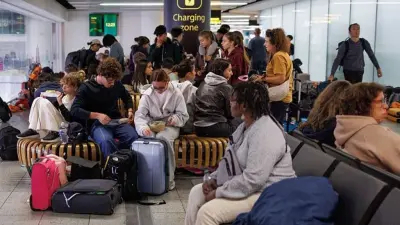
A software defect lasting just a fraction of a second triggered widespread disruption across UK airspace earlier this month, with hundreds of thousands of passengers affected and more than 2,000 flights reportedly cancelled.
The UK air traffic services provider, NATS, said in its preliminary report published on 18 September that the incident on 8 September originated in a small part of the National Airspace System, which supports the management of UK airspace.
According to NATS, the software was responsible for allocating identification codes to aircraft when manual requests were made. During one such request, a higher priority activity interrupted the process. When the original request resumed, a software defect caused it to produce corrupted data, affecting subsequent flight data updates.
The failure itself occurred in the space of a millisecond, NATS said. However, its operational consequences were far greater, as controllers were left with reduced information and restrictions had to be introduced to maintain safe traffic levels.
Six Hours of Airspace Restrictions
Although the technical problem was confined to flights handled by NATS London Area Control Centre, the resulting restrictions had to be applied across UK airspace while the system was restarted and flight data reloaded.
NATS said the restrictions remained in place for around six hours. While its operations returned to normal later that evening, the disruption continued for more than two days as airlines and airports dealt with aircraft and passenger backlogs.
Major airports including Heathrow, Gatwick, Luton and Glasgow were among those affected, while passengers reported delays, diversions, cancellations and unexpected expenses.
NATS chief executive Martin Rolfe apologised to passengers affected by the disruption and said the organisation primary responsibility was to keep UK airspace safe. He said safety had not been compromised during the incident.
Questions Over Resilience
The disruption has renewed questions about the resilience of the UK air traffic control infrastructure, particularly because the incident follows other significant NATS related disruptions in recent years.
Transport Secretary Heidi Alexander described the latest disruption as completely unacceptable and said there was an urgent need to understand why the technical issue was not identified and resolved before it caused widespread disruption.
The Civil Aviation Authority is reviewing the incident, while airlines have also raised concern about the financial consequences of the outage.
Airlines UK chief executive Tim Alderslade said airlines had been left to deal with the disruption and its costs. The industry body is seeking compensation from NATS and has called for a credible plan to improve the resilience of the air traffic-control system.
Passengers Left Counting the Cost
For some travellers, the technical failure translated into long waits, diversions and additional expenses.
One passenger, Addie Kitson, was travelling back from China when her flight was diverted to Stockholm. She spent hours on the aircraft before remaining at Stockholm airport for 19 hours.
Kitson said she incurred almost £100 in additional costs for food, Wi-Fi and other necessities, while receiving a £11 food voucher.
The disruption has also raised questions about passenger compensation. Under current rules, extraordinary circumstances can affect whether travellers are entitled to compensation for flight disruption, leaving some passengers frustrated about who should bear the costs.
NATS Promises Further Fixes
NATS said the software issue has been identified and that mitigation measures are already in place while a permanent fix under goes safety testing and deployment. The organisation also said it has invested more than £1bn in systems and technology over the past decade and plans to submit proposals to the Civil Aviation Authority for another £1bn of investment through 2033.
The preliminary report is not the final investigation. NATS said a full report will follow, while the wider regulatory review is expected to examine how the defect developed, why it was not detected earlier and what measures are required to prevent a similar disruption.
The episode illustrates how a technical fault lasting only milliseconds can have consequences lasting days when it affects infrastructure responsible for coordinating thousands of aircraft and millions of passenger journey.
Distribute This Chronicle
Independent commentary breaks corporate silence when readers circulate the ledger directly to their peers.
Attribution: Editorial
Examine Raw Source